
Get Quote
Contact us now to receive a detailed quotation.
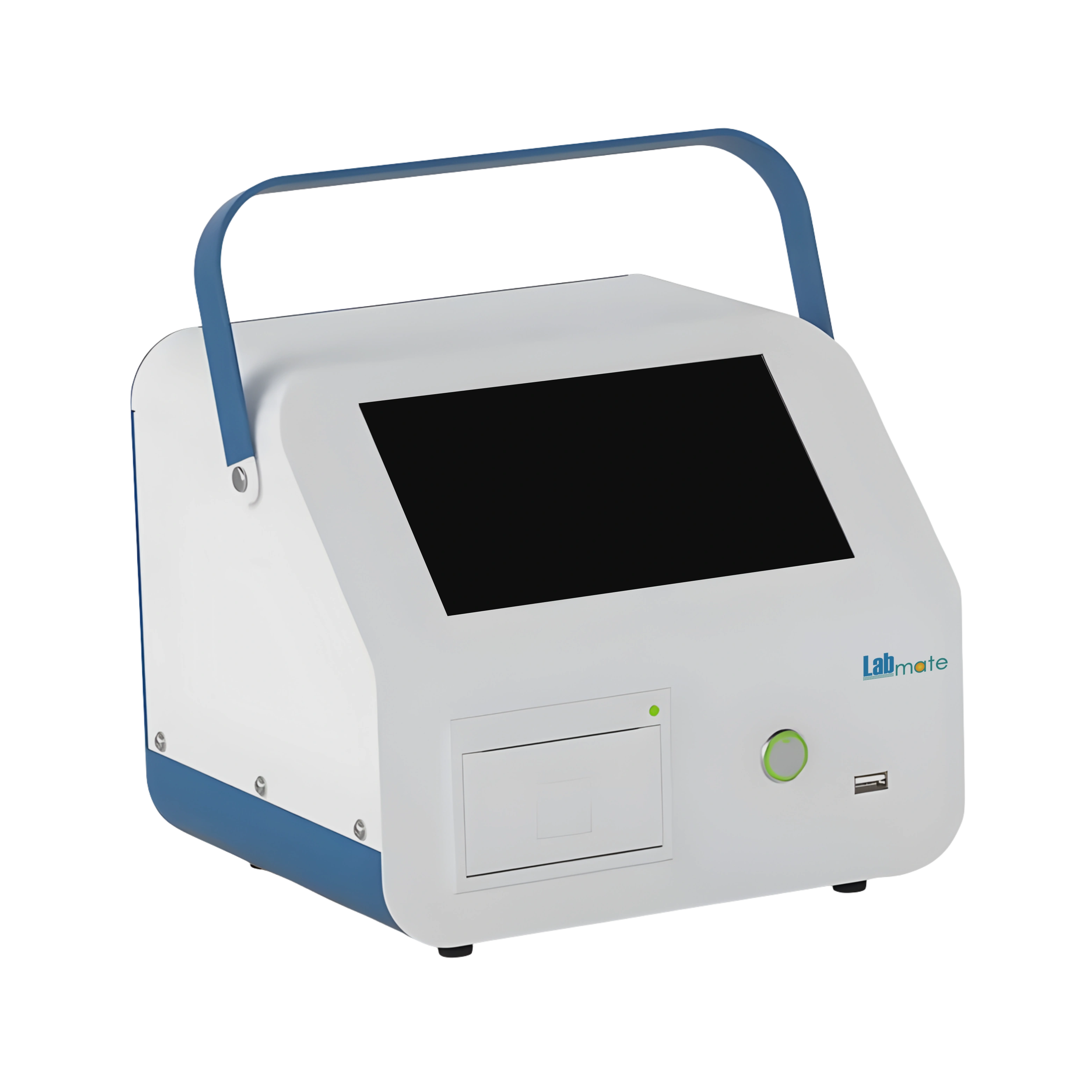
Labmate Dual Flow Airborne Particle Counter offers 0.3 µm particle measurement. They operate with dual airflow rates to detect both large and small airborne particles. Their integrated display provides real-time colloid data to ensure efficient environmental monitoring. They are equipped with advanced filtration to eliminate false positives from non-target microns in air. Our Dual Flow Airborne Particle Counter are primarily applied for cleanroom certification and contamination control in sensitive production areas.
$ 2450 / Each of 1
Selection Guide for Dual Flow Airborne Particle Counter
When selecting Dual Flow Airborne Particle Counter, customers should look for a particle size detection range of 0.3 to 10 µm, which covers most cleanroom contaminants. It provides dual flow rates, usually 1.0 CFM for routine monitoring and 50 LPM for faster sampling of larger areas. The device usually has 4 to 6 channels to monitor multiple particle sizes simultaneously, such as 0.3, 0.5, 1.0, 3.0, 5.0, and 10.0 µm. Selection should also consider compliance with standards like ISO 14644, GMP, and EU Annex 1 to ensure suitability for regulated environments. For pharmaceutical cleanrooms, models with 0.3 µm detection and ISO compliance are recommended, while faster sampling demand higher flow rates like 50 LPM. This range helps users choose the right model based on speed, sensitivity, and application needs.
Frequently Asked Questions
1 What factors affect the performance of Dual Flow Airborne Particle Counter?
Environmental factors like temperature, humidity and air pressure affect its performance.
2 What types of data can be logged by Dual Flow Airborne Particle Counter?
It can log data including particle concentration, particle size distribution, sampling time, airflow rate and other environmental parameters like temperature and humidity.
3 What is a Dual Flow Airborne Particle Counter?
A Dual Flow Airborne Particle Counter is an apparatus designed to detect and measure airborne particles in a specific volume of air.
4 How does a Dual Flow Airborne Particle Counter work?
It works by using two distinct airflows to simultaneously analyze particles in real-time, providing more accurate and detailed measurements of particle size and concentration.
5 What types of particles can be detected using Dual Flow Airborne Particle Counter?
It can detect particles such as dust, smoke, aerosols, bacteria, viruses and environmental pollutants.
6 Can Dual Flow Airborne Particle Counter detect particles in real-time?
It provide real-time particle concentration data, which is essential for monitoring and maintaining cleanroom conditions or environmental air quality.
7 What kind of maintenance does Dual Flow Airborne Particle Counter require?
Regular maintenance includes cleaning of air intake filters, checking of sensors, proper calibration and replacement of worn-out parts such as tubing or filters.
8 Can Dual Flow Airborne Particle Counter be used for environmental testing in hospitals?
It is used in hospitals to monitor air quality in operating rooms, sterile environments and laboratories in order to ensure compliance with air cleanliness standards and infection control.
9 Can Dual Flow Airborne Particle Counter be used in cleanroom qualification?
It is widely used in cleanroom qualification.
10 Can Dual Flow Airborne Particle Counter be used to monitor particle levels continuously?
It is ideal for continuous monitoring of particle levels in environments such as cleanrooms, air filtration systems or industrial processes.