Get Quote

Contact us now to receive a detailed quotation.

Need quick help? Chat with us on WhatsApp:

WhatsApp QR Code

OR

Plate Formats

Plate Type

Microplate Types

Microplate Compatibility

Microplate Type

Microplate Reader

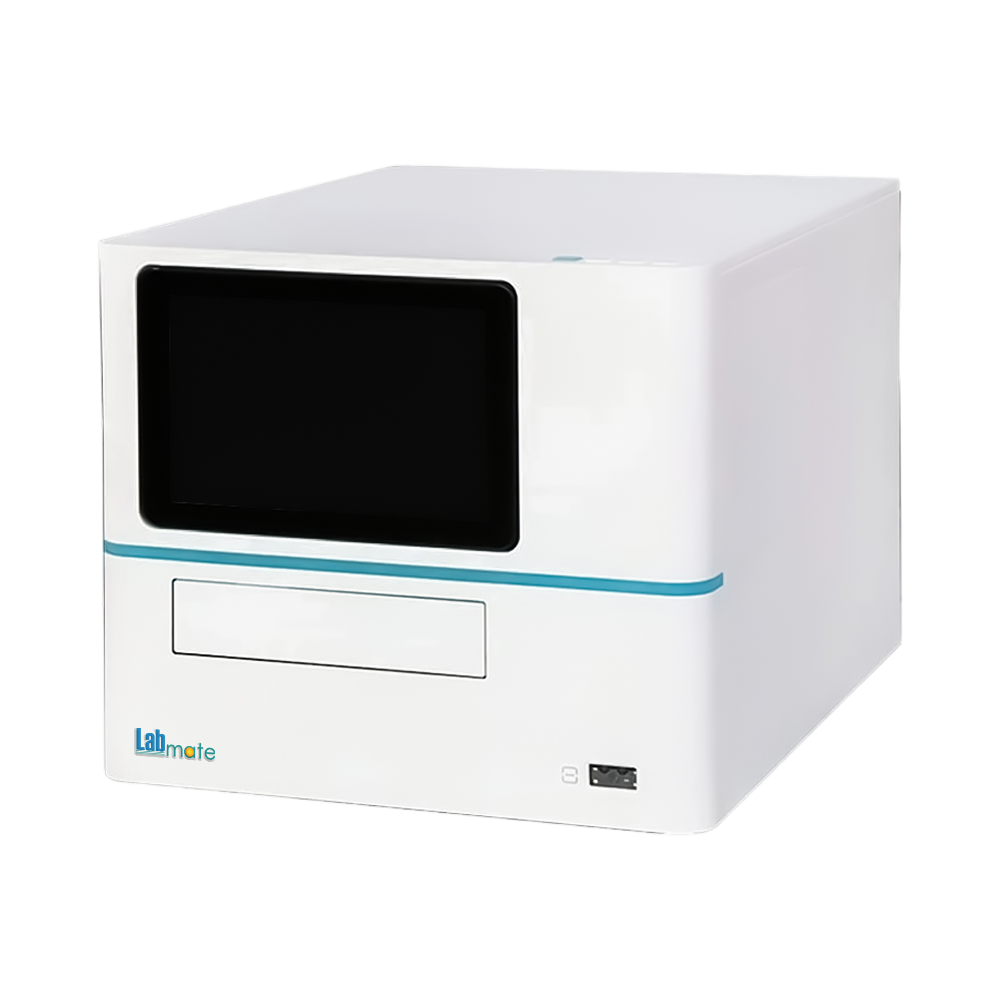
The Microplate Reader is an affordable photometer designed for efficiency and precision. It boasts an advanced 8-channel optic fiber system, allowing for the rapid reading of 96-well plates in a mere 5 seconds. This remarkable device is equipped with robust quality control (QC) functions and the capability for biocromatic measurements and calculations, ensuring accurate and dependable results for your laboratory needs. With its swift plate-reading capability and comprehensive QC features, the Labmate Microplate Reader significantly streamlines your workflow while maintaining data integrity. Whether you require quick measurements or sophisticated biocromatic analyses, this instrument delivers consistent and reliable performance, making it a valuable addition to any laboratory setup. Invest in Labmate Microplate Reader to enhance the efficiency and precision of your research or diagnostic work.

ELISA Microplate Reader LMER-601

  • Plate Type: 96 well/48 well
  • Wavelength Range: 400 to 800nm
  • Indication Range: 0.000 to 4.000 OD
  • Test Capacity: 12 tests per plate
  • Resolution: 0.001A

$ 4462.5 / Each of 1

ELISA Microplate Reader LMMR-M101

  • Plate Type: 96 well/48 well
  • Wavelength Range: 400 to 800nm
  • Indication Range: 0.000 to 4.000 OD
  • Test Capacity: 12 tests per plate
  • Resolution: 0.001A

$ 3250 / Each of 1

Microplate Reader LMMR-M102
  • Plate Type: 96 well/48 well
  • Wavelength Range: 400 to 800nm
  • Indication Range: 0.000 to 4.000 OD
  • Test Capacity: 12 tests per plate
  • Resolution: 0.001A

$ 3612.5 / Pack of 1

Microplate Reader LMMR-M103
  • Wavelength Range: 400nm to 630nm
  • Microplate Type: 96 well plate
  • Measure system: 8-channel optical system
  • Reading Range: 0.000 ~ 4.000 Abs
  • Bandwidth & Accuracy: 8nm ± 2nm

$ 3362.5 / Pack of 1

Microplate Reader LMRW-A100

  • Plate type: 96 well plate
  • Standard Wavelength: 405, 450, 492, 630 nm
  • Wavelength accuracy: ± 1 nm
  • Resolution: 0.001 Abs
  • Reading speed (Single wavelength): 5 secs for 96 well plate

$ 49000 / Each of 1

Microplate Reader LMRW-A101

  • Plate type: 96 well plate
  • Display: 6 ” LCD
  • Standard Wavelength: 405, 450, 492, 630 nm
  • Wavelength accuracy: ± 1 nm
  • Resolution: 0.001 Abs

$ 3675 / Each of 1

Microplate Reader LMRW-A102
  • Plate Formats: 96 and 384 wells
  • Detection Modes: Absorbance, fluorescence, luminescence
  • Absorbance Light Source: High-energy xenon flash lamp
  • Absorbance Detector: PD
  • Absorbance Wavelength Range: 200 to 1000nm, 1nm step

$ 32425 / Pack of 1

Microplate Reader LMMR-M104
  • Wavelength Range: 340 to 750nm
  • Filter Bandwidth: 8 to 10nm
  • Standard Filters: 405nm, 450nm, 492nm, 630nm
  • Filter: 8-bit filter wheel
  • Optical System: 13 channels

$ 3997.5 / Each of 1

Microplate Reader LMMR-A100

  • Wavelength Range: 200 to 1000 nm
  • Microplate Compatibility: 96-well plate, 8 × 12 format
  • Measurement Range: 0 to 4 Abs
  • Linear Range: 0 to 3 Abs, ± 2% (96-well plate)
  • Accuracy at 405 nm: ± 1% (0 to 3 Abs), ± 2% (3 to 4 Abs)

$ 13475 / Each of 1

Microplate Reader LMMR-A101

  • Wavelength Range: 380 to 1000 nm
  • Microplate Compatibility: 96-well plate, 8 × 12 format
  • Measurement Range: 0 to 4 Abs
  • Linear Range: 0 to 3 Abs, ± 2% (96-well plate)
  • Accuracy at 405 nm: ± 1% (0 to 3 Abs), ± 2% (3 to 4 Abs)

$ 15925 / Each of 1

Microplate Reader LMMR-A102
  • Wavelength Range: 200 to 1000 nm
  • Microplate Compatibility: 96-well plate, 8 × 12 format
  • Measurement Range: 0 to 4 Abs
  • Linear Range: 0 to 3 Abs, ± 2% (96-well plate)
  • Accuracy at 405 nm: ± 1% (0 to 3 Abs), ± 2% (3 to 4 Abs)

$ 7350 / Each of 1

Microplate Reader LMMR-A103
  • Wavelength Range: 380 to 1000 nm
  • Microplate Compatibility: 96-well plate, 8 × 12 format
  • Measurement Range: 0 to 4 Abs
  • Linear Range: 0 to 3 Abs, ± 2% (96-well plate)
  • Accuracy at 405 nm: ± 1% (0 to 3 Abs), ± 2% (3 to 4 Abs)

$ 5512.5 / Each of 1

Microplate Reader LMMR-A200

  • Detection Modes: Fluorescence, Absorbance, Chemiluminescence
  • Microplate Compatibility: 6/12/24/48/96/384 Microplate
  • Excitation Range: 320 to 1000 nm
  • Excitation Filter: 355, 485,544nm
  • Emission Range: 360 to 800 nm

$ 36750 / Each of 1

Microplate Reader LMMR-A201

  • Detection Modes: Fluorescence, Chemiluminescence
  • Microplate Compatibility: 6/12/24/48/96/384 Microplate
  • Excitation Wavelength Range: 320 to 1000 nm
  • Emission Wavelength Range: 360 to 800 nm
  • Wavelength Resolution: 1nm

$ 26950 / Each of 1

Microplate Reader LMMR-A300
  • Microplate Types: Supports 6 to 384 well plates; 96-well included
  • Light source: Xenon lamp
  • Temperature Control: RT +4 °C to 45 °C ± 0.5 °C at 37 °C
  • Dynamic Range: 0 to 4 OD range supported
  • Shaking: Linear and orbital shaking: Linear, annular, and double annular shaking modes available

$ 32000 / Each of 1

Selection Guide for Microplate Reader

When selecting Microplate Reader, customers should consider essential specifications that match their laboratory applications. Most models are compatible with 96-well plates, with some also supporting 48-well and 384-well formats, providing flexibility for varying throughput demands. The wavelength range is a key factor; options like 340–750 nm, 400–630 nm, and 400–800 nm allow for a broad spectrum of assays, including ELISA and enzyme kinetics. Standard wavelengths such as 405, 450, 492, and 630 nm are commonly used for accurate absorbance measurements in colorimetric assays. Selecting a reader with support for standard microplate types and multiple plate formats enhances usability and adaptability. Additionally, the availability of reliable technical support and maintenance services ensures long-term performance and user confidence. Evaluating these factors helps customers choose a microplate reader that fits their testing requirements and ensures dependable results.

Frequently Asked Questions

1 What is a Microplate Reader?

A Microplate Reader is an apparatus designed to detect biological, chemical, or physical events within the wells of a microplate.

2 How does Microplate Reader work?

It works by using optical detection methods such as absorbance, fluorescence, or luminescence to measure reactions in each well of a microplate.

3 Why is Microplate Reader important in drug discovery?

It is important in drug discovery because it enables high-throughput screening, allowing researchers to analyze thousands of samples quickly and accurately.

4 Can Microplate Reader be used for kinetic assays?

It is used for kinetic assays, allowing researchers to monitor changes in absorbance or fluorescence over time.

5 How is Microplate Reader used in ELISA assays?

It is used in ELISA assays to measure absorbance in microplate wells, quantifying the presence of specific proteins or antigens based on colorimetric changes.

6 Can Microplate Reader be used for cytotoxicity assays?

It can be used for cytotoxicity assays by detecting changes in absorbance or fluorescence that reflect cell viability or membrane integrity.

7 Can Microplate Reader be used for bacterial growth studies?

It can be used for bacterial growth studies by continuously measuring optical density, allowing researchers to monitor growth curves over time.

8 Can Microplate Reader be used for hormone detection?

It is commonly used for hormone detection in ELISA- or luminescence-based immunoassays, enabling accurate quantification of hormone levels in biological samples.

9 Can Microplate Reader be used in food safety testing?

It is used in food safety testing to detect contaminants, toxins, or pathogens via immunoassays or enzymatic reactions in microplate formats.

10 How is Microplate Reader used in environmental monitoring?

It is used in environmental monitoring for detecting pollutants, heavy metals, or microbial content using biochemical assays in water and soil samples.