

Get Quote
Contact us now to receive a detailed quotation.
Specifications
| Plate Type | 96 well/48 well |
| Wavelength Range | 400 to 800nm |
| Indication Range | 0.000 to 4.000 OD |
| Test Capacity | 12 tests per plate |
| Resolution | 0.001A |
| Accuracy | ±0.008A |
| Reproducibility | Less than or equal to 0.2% |
| Photodetector | Silicon Photodiode |
| Light Source | Controlled tungsten halogen lamp |
| Optical System | 8-channel fiber scanning, auto plate centering |
| Standard Filters | 405,450,492,630 nm |
| Shaking | Linear, 3 speed settings |
| Display | 10.4 inch Touch Screen + Windows System |
| Interface Connections | DVI, VGA, Network Interface, USB, Audio Interface, RS-232 |
| Dimensions | 460×350× 197mm |
| Weight | 10kg |
| Gross Weight | 18 kg |
Pricing
| Product | Price | Unit | Action |
|---|---|---|---|
| ELISA Microplate Reader LMER-601 | $ 4612.5 | Each of 1 |
Features
8-Channel Fiber Scanning System
Comprehensive Connectivity
Compact Bench-Top Design
Tungsten Halogen Lamp
Standard Filter Set
Applications
ELISA Microplate Reader LMER-601 is suitable for detecting viral and bacterial markers in infectious disease testing and aids quality monitoring in biopharmaceutical and clinical production.
Selection Guide
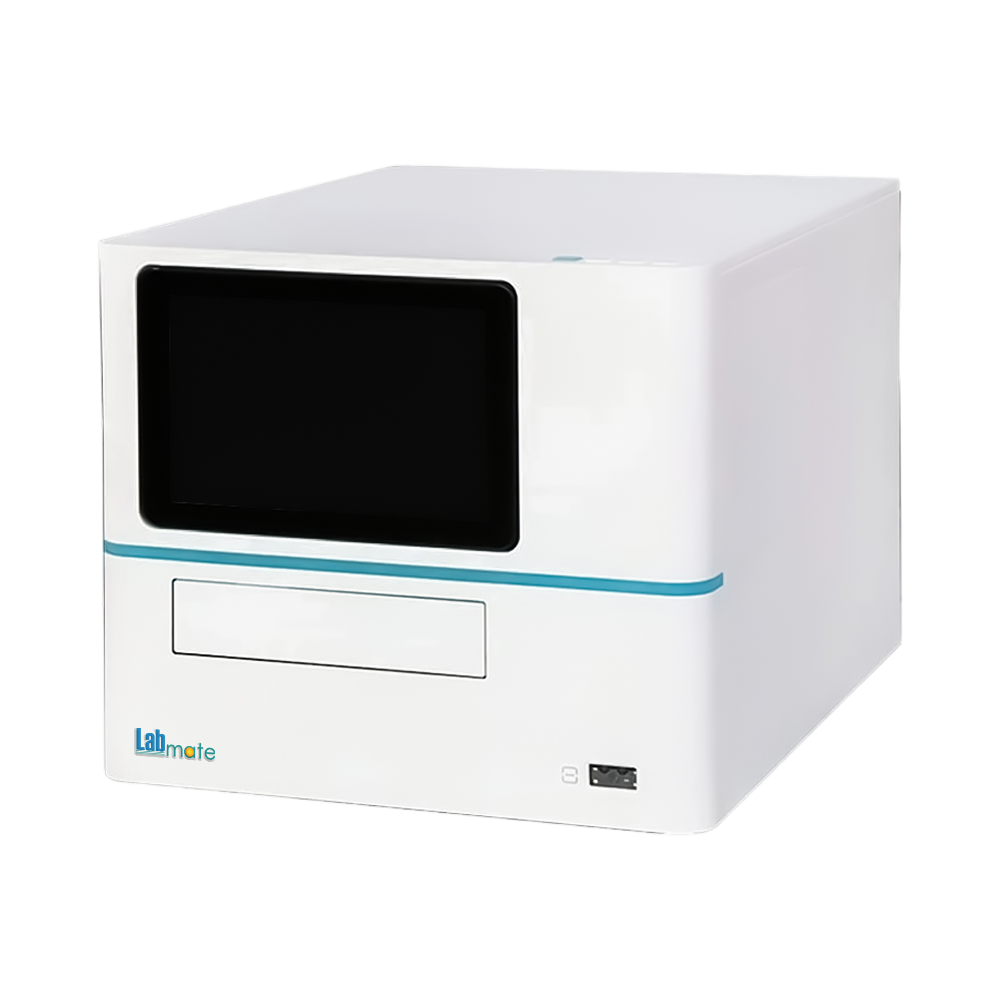
ELISA Microplate Reader LMER-601 is a specialized instrument designed for accurate absorbance measurements in ELISA and other microplate-based assays. It is widely used in clinical diagnostics, immunology research, biopharmaceutical development, and environmental monitoring. The reader supports 96-well and 48-well plate formats, providing flexibility for various assay types. With a broad wavelength range, it ensures accurate detection of colorimetric reactions critical for quantifying proteins, hormones, and antibodies. Backed by ISO and CE certifications, the device meets international standards for quality and safety. Its reliable performance, ease of use, and compatibility with standard assay protocols make it a suitable choice for laboratories conducting high-throughput testing and research studies.
Similar Products

$ 36900 / Each of 1

$ 13625 / Each of 1

$ 3825 / Each of 1

$ 27100 / Each of 1

$ 32575 / Pack of 1

$ 3512.5 / Pack of 1

$ 3762.5 / Pack of 1
$ 32150 / Each of 1

$ 16075 / Each of 1

$ 4147.5 / Each of 1

$ 3400 / Each of 1

$ 7500 / Each of 1

$ 49150 / Each of 1

$ 5662.5 / Each of 1
Frequently Asked Questions
1 What is a Microplate Reader?
A Microplate Reader is an apparatus designed to detect biological, chemical, or physical events within the wells of a microplate.
2 How does Microplate Reader work?
It works by using optical detection methods such as absorbance, fluorescence, or luminescence to measure reactions in each well of a microplate.
3 Why is Microplate Reader important in drug discovery?
It is important in drug discovery because it enables high-throughput screening, allowing researchers to analyze thousands of samples quickly and accurately.
4 Can Microplate Reader be used for kinetic assays?
It is used for kinetic assays, allowing researchers to monitor changes in absorbance or fluorescence over time.
5 How is Microplate Reader used in ELISA assays?
It is used in ELISA assays to measure absorbance in microplate wells, quantifying the presence of specific proteins or antigens based on colorimetric changes.
6 Can Microplate Reader be used for cytotoxicity assays?
It can be used for cytotoxicity assays by detecting changes in absorbance or fluorescence that reflect cell viability or membrane integrity.
7 Can Microplate Reader be used for bacterial growth studies?
It can be used for bacterial growth studies by continuously measuring optical density, allowing researchers to monitor growth curves over time.
8 Can Microplate Reader be used for hormone detection?
It is commonly used for hormone detection in ELISA- or luminescence-based immunoassays, enabling accurate quantification of hormone levels in biological samples.
9 Can Microplate Reader be used in food safety testing?
It is used in food safety testing to detect contaminants, toxins, or pathogens via immunoassays or enzymatic reactions in microplate formats.
10 How is Microplate Reader used in environmental monitoring?
It is used in environmental monitoring for detecting pollutants, heavy metals, or microbial content using biochemical assays in water and soil samples.