
Get Quote
Contact us now to receive a detailed quotation.
Microplate Washers fill each well of a plate or strip with wash buffer and then aspirate the liquid. This step removes unbound antibody, antigen and conjugate between ELISA steps. Washing heads with 8 or 12 channels handle flat, U and V-bottom plates. Both 96 and 48 well plates and strips fit. Wash volumes range from 10 to 3000 uL per well. Residual liquid stays below 1 uL, and the top model leaves 0.65 uL or less. Low residue means lower background signal and better assay sensitivity. Up to four buffer bottles support multi-step protocols. Typical uses include ELISA, immunoassays and cell-based assays in hospital labs, blood banks and research institutes.
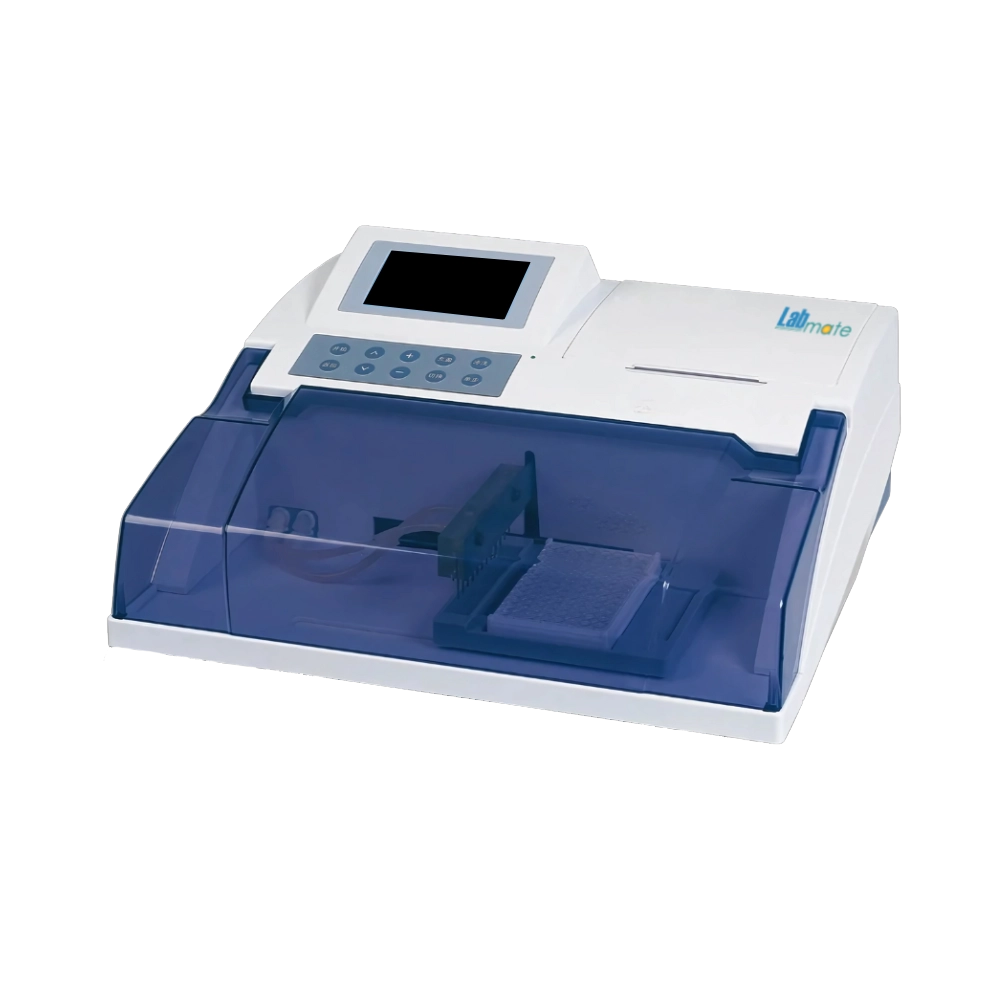
$ 3937.5 / Pack of 1
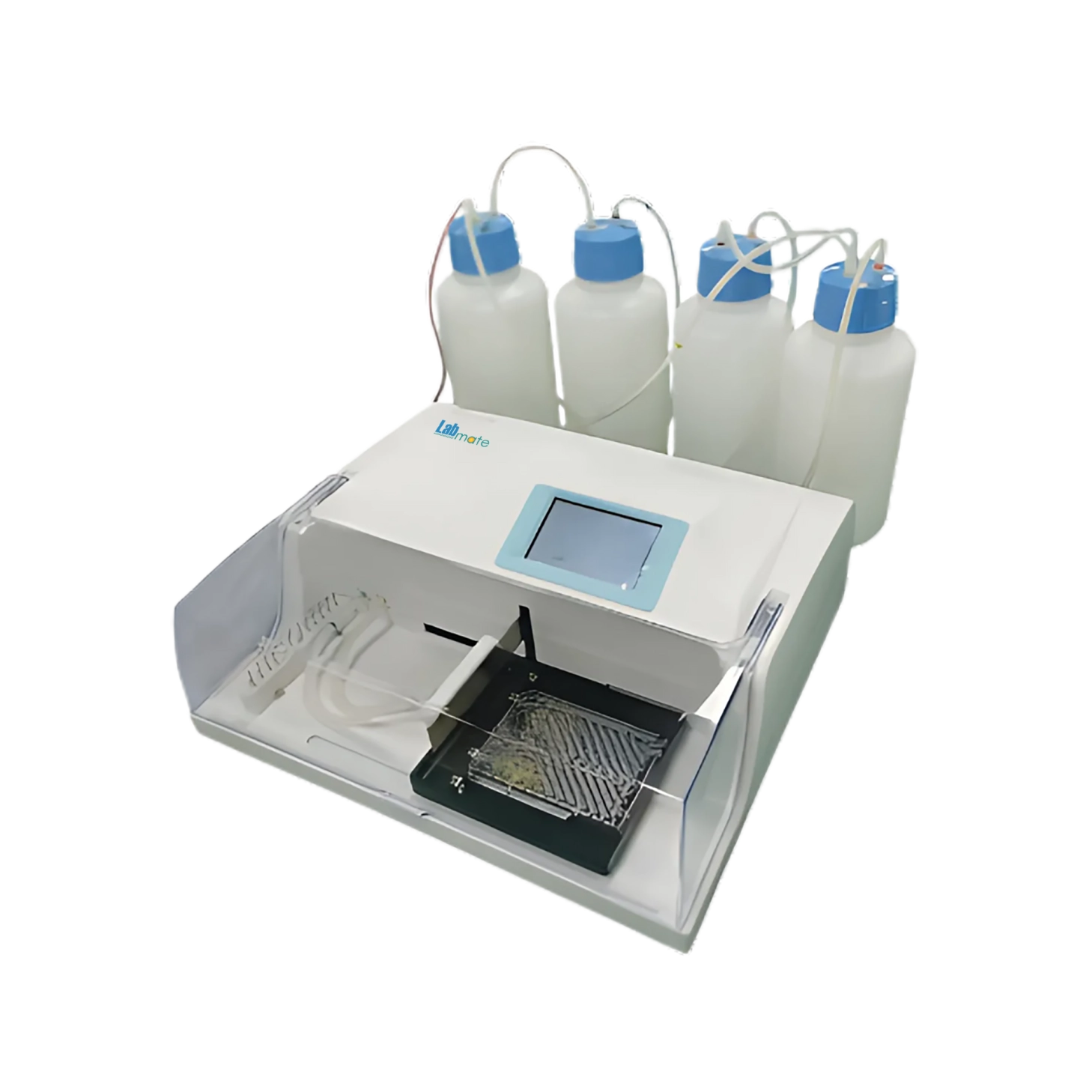
$ 3662.5 / Pack of 1

$ 4900 / Each of 1
Selection Guide for Microplate Washer
When selecting Microplate Washer, it is important to evaluate features that directly impact performance and efficiency in routine lab workflows. The washing heads, available in configurations such as 1×8 and 1×12, determine how many wells are washed simultaneously. 1×8 is suitable for lower throughput, while 1×12 is ideal for faster processing in high-throughput environments. The low residual liquid volume, typically less than 1 µL or even as low as ≤0.65 μL, ensures effective aspiration, reducing background noise and improving assay sensitivity. Washing bottle capacity options like 3 × 2L or 1 × 4L provide ample volume for continuous washing cycles without frequent refilling, enhancing workflow convenience. Additionally, compatibility with standard 96-well microplates makes these washers widely applicable in ELISA, immunoassays, and cell-based studies. Overall, selecting the right combination of washing head type, liquid handling precision, and buffer capacity helps ensure accurate results and smooth operation.
Frequently Asked Questions
1 What is a Microplate Washer?
A Microplate Washer is an apparatus designed to automate the washing steps in assays performed in microplates, such as ELISA, by dispensing wash buffer and removing liquid from the wells.
2 How does Microplate Washer work?
It operates by aspirating and dispensing wash solutions into the wells of a microplate in a programmed sequence to remove unbound substances and reduce background signal.
3 Why is Microplate Washer important in ELISA procedures?
It ensures consistent and thorough washing of microplates, which is critical for minimizing variability and improving the accuracy of ELISA results.
4 What kind of maintenance does Microplate Washer require?
Regular maintenance includes cleaning of fluidic system, checking for clogs, and running cleaning solutions to prevent contamination and ensure longevity.
5 How does Microplate Washer benefit high-throughput screening applications?
In high-throughput screening, it significantly speeds up the wash steps, increases consistency across plates, and reduces manual errors, making it ideal for processing large sample volumes efficiently.
6 How does Microplate Washer contribute to clinical diagnostics workflows?
In clinical diagnostics, it ensures that test procedures such as serological assays are performed with precision and reproducibility, contributing to reliable patient results.
7 Can Microplate Washer be used in pharmaceutical research?
It is commonly used in pharmaceutical research for washing assay plates during drug screening processes, helping researchers analyze compound effects with higher accuracy.
8 How does Microplate Washer support quality control in manufacturing labs?
It supports quality control by enabling precise and repeatable wash steps in assays that test for contaminants, stability, or efficacy of manufactured products.
9 Is Microplate Washer useful in food safety testing?
It is used in food safety testing labs during immunoassays that detect pathogens, allergens, or toxins, ensuring clean wells for accurate measurements.
10 What role does Microplate Washer play in environmental monitoring assays?
In environmental monitoring, it is used during immunoassays that detect pollutants or toxins in water and soil samples, ensuring clean backgrounds for clear detection.