

Get Quote
Contact us now to receive a detailed quotation.
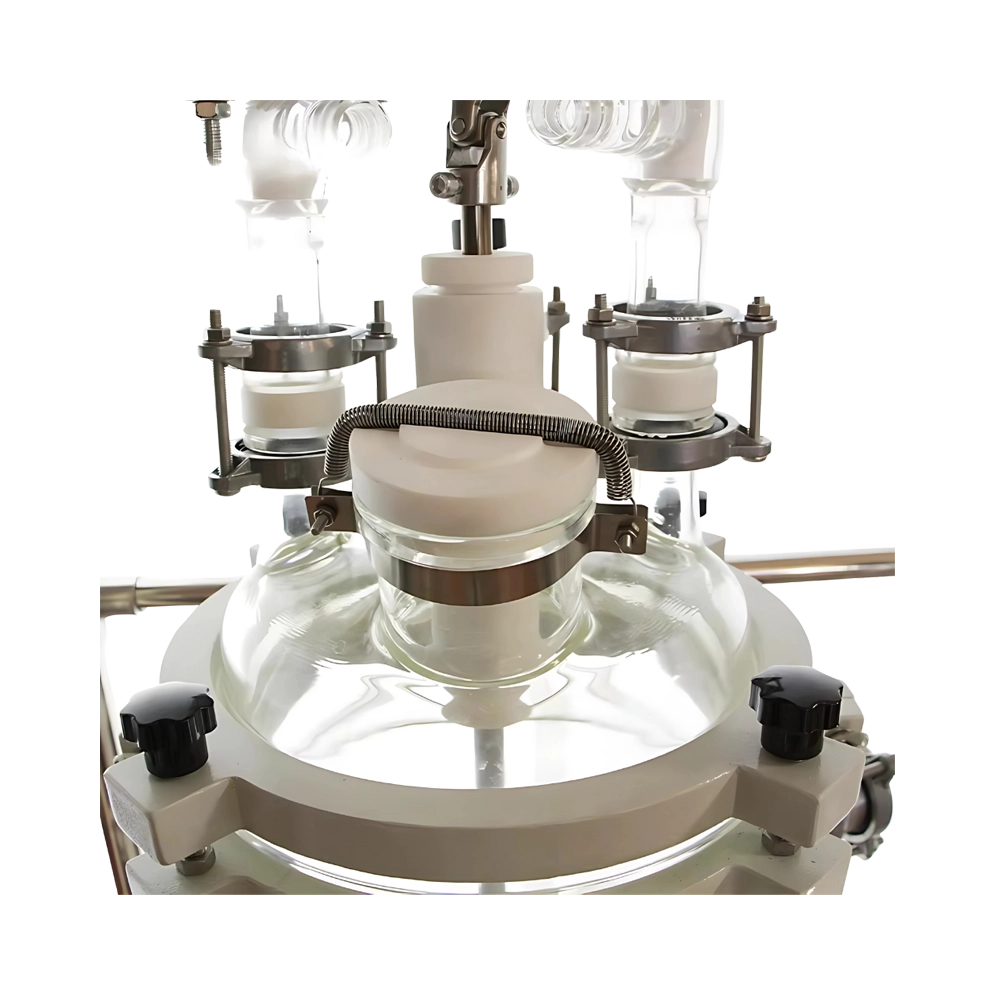
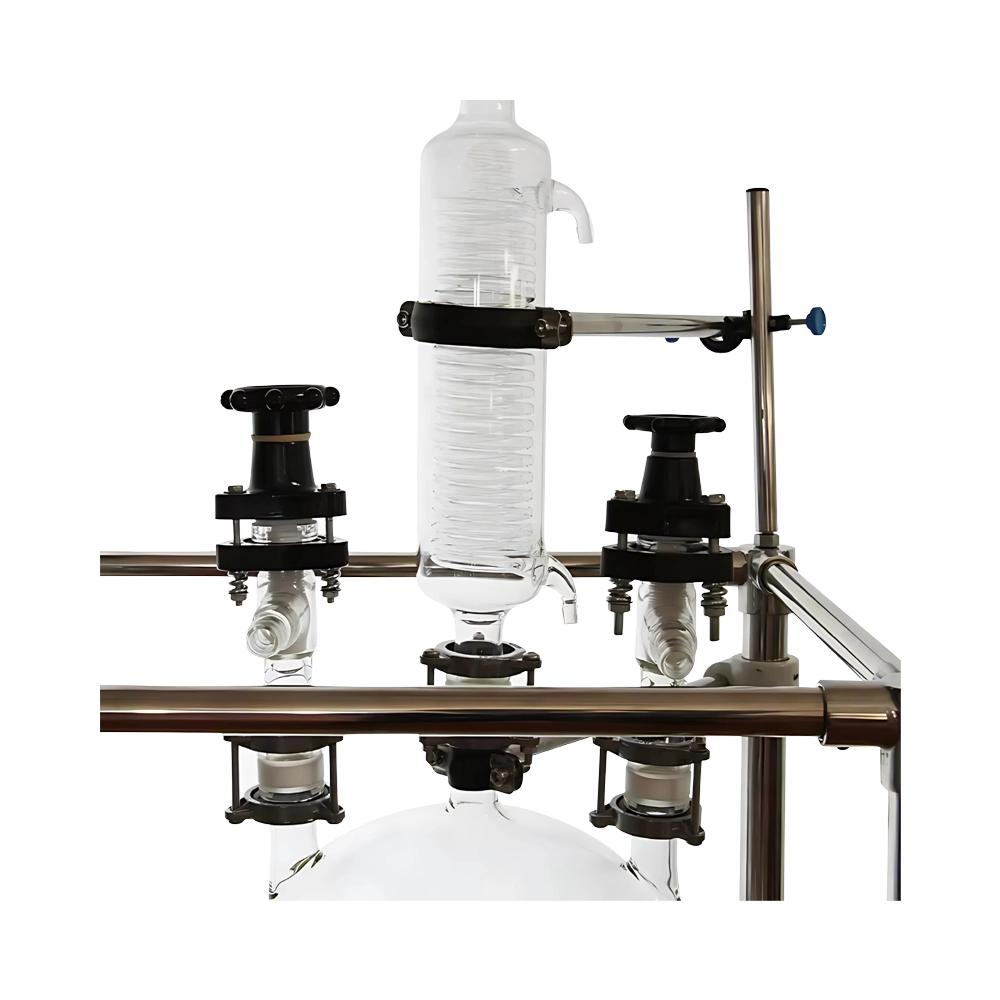
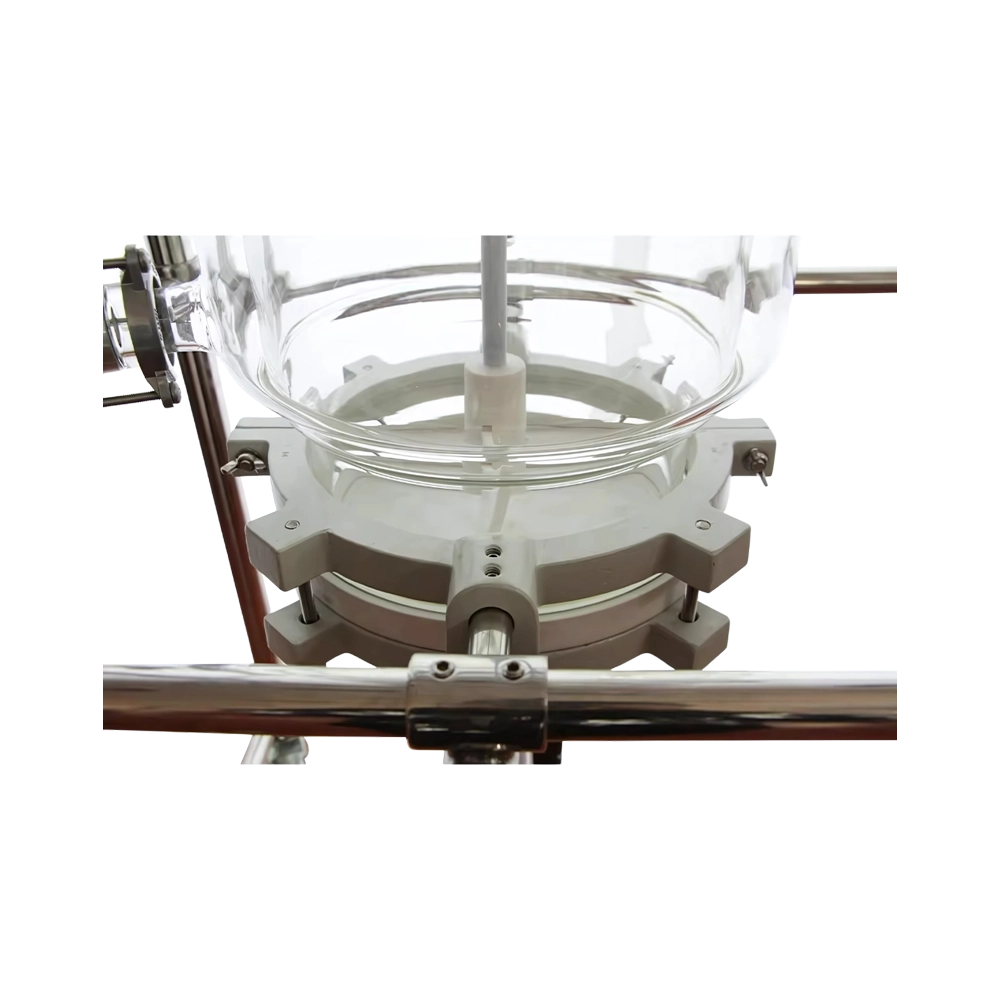
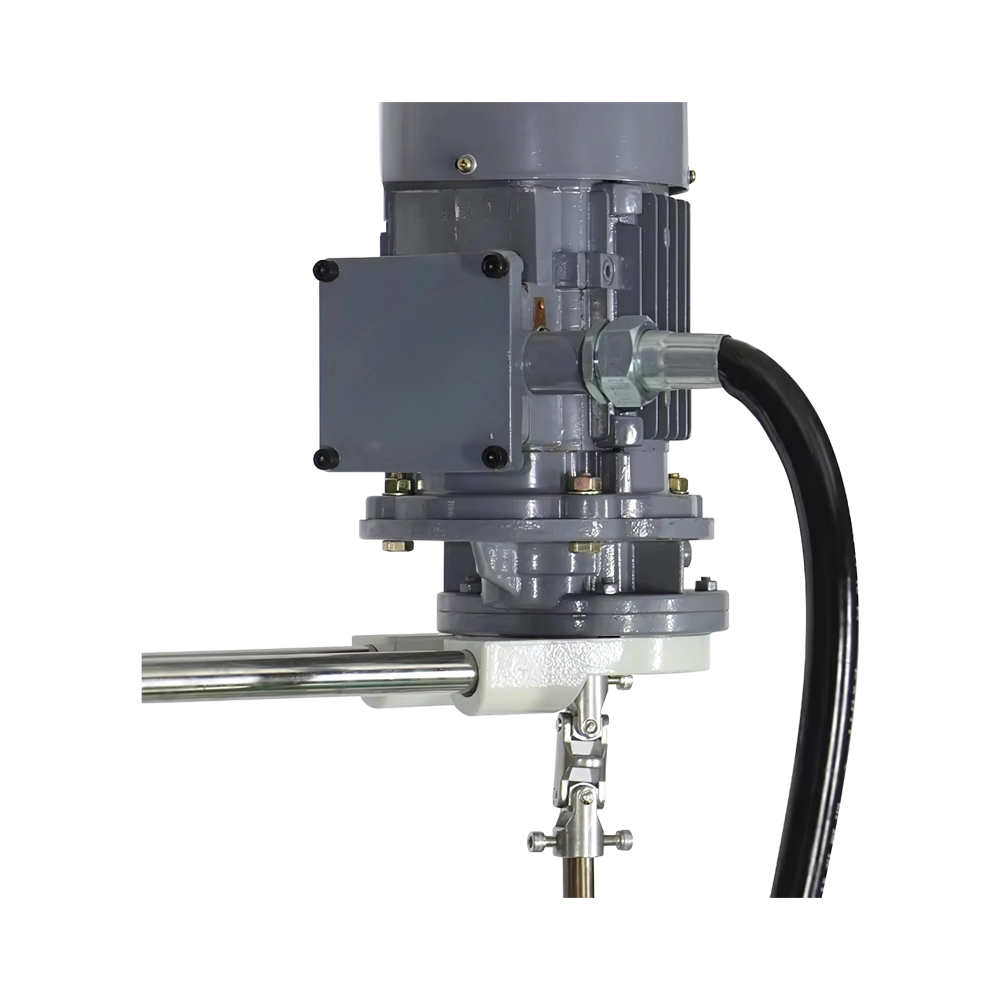
Jacketed Glass Reactor LMJGR-A111 is designed to hold maximum volume of 10 L. It features high grade glass offering low expansion and thermal durability. Incorporates digital frequency controller allowing flexible adjustment of stirring speed. Equipped with PTFE sealing ring delivering reliable securing and resistance to reactive substances. Our Reactor is ideal for crystallization, mixing, and solid-liquid separation.
Specifications
| Reactor Volume | 10 L |
| Jacket Volume | 3.5 L |
| Receiving Flask Volume | 10 L |
| Operating Temperature Range | -80°C to 200°C |
| Jacketed Pressure | Less than or equal ±0.03 MPa |
| Kettle Pressure | -0.098 MPa |
| Rotation Speed Range | 0 to 500 rpm |
| Speed Control Mode | Frequency conversion |
| Glass Material | High borosilicate 3.3 |
| Frame Material | SUS304 |
| Sealing Parts Material | Fluorine |
| Stirrer Sealing Type | Skeleton oil seal |
| Stirring Power | 180 W |
| Filtration Area | 0.03 m² |
| Dimension | 1000×500×1600 mm |
Pricing
| Product | Price | Unit | Action |
|---|---|---|---|
| Jacketed Glass Reactor LMJGR-A111 | $ 9725 | Each of 1 |
Features
Discharge valve
Explosion-proof structure
Enhanced operational safety
Caster wheel support
Digital temperature display
Vacuum suction filtration
Effortless disassembly
Applications
Jacketed Glass Reactor LMJGR-A111 is employed for crystallization, suction filtration, stirring, and solid-liquid separation processes across chemical, pharmaceutical, and research industries.
Similar Products

$ 3800 / Each of 1

$ 3887.5 / Each of 1

$ 4112.5 / Each of 1

$ 2400 / Each of 1

$ 3337.5 / Each of 1

$ 11275 / Each of 1

$ 13062.5 / Each of 1

$ 7600 / Each of 1

$ 10250 / Each of 1

$ 3300 / Each of 1

$ 3137.5 / Each of 1

$ 10387.5 / Each of 1

$ 29625 / Each of 1

$ 3700 / Each of 1

$ 13875 / Each of 1
Frequently Asked Questions
1 What is a Jacketed Glass Reactor?
A Jacketed Glass Reactor is a laboratory or industrial reactor that features a double-layered glass vessel, allowing for precise temperature control by circulating heating or cooling fluids through the outer jacket.
2 How does Jacketed Glass Reactor work?
It works by circulating thermal fluids (such as water, oil, or glycol) through the outer jacket, which maintains a stable internal temperature for the reactions occurring inside the glass vessel.
3 Can Jacketed Glass Reactor be used for pharmaceutical synthesis?
It is widely used in pharmaceutical synthesis due to its excellent temperature control and chemical resistance, which are essential for producing high-purity compounds.
4 Is Jacketed Glass Reactor suitable for polymerization reactions?
It is highly suitable for polymerization reactions because it allows controlled heating or cooling, preventing runaway reactions and enabling better product quality.
5 How is Jacketed Glass Reactor used in essential oil extraction?
It is used in essential oil extraction through solvent-based methods, where temperature control is critical to preserve volatile compounds and improve yield.
6 Can Jacketed Glass Reactor be used in pilot-scale chemical production?
It is commonly used in pilot-scale chemical production to replicate lab-scale processes before full-scale manufacturing.
7 How is Jacketed Glass Reactor used in API development?
It is essential in Active Pharmaceutical Ingredient (API) development for maintaining reaction conditions that are critical to producing high-purity drug compounds.
8 Can Jacketed Glass Reactor be used in nanomaterials synthesis?
It is often used in the synthesis of nanomaterials, where precise control over temperature and mixing is essential for size and shape control.
9 Can Jacketed Glass Reactor be used in petrochemical research?
It is commonly used in petrochemical research for controlled hydrocarbon synthesis, catalyst testing, and process development.
10 Can Jacketed Glass Reactor be used for biofuel research and development?
It is useful in biofuel R&D for conducting controlled reactions involving biomass conversion, transesterification, or catalytic upgrading.