

Get Quote
Contact us now to receive a detailed quotation.
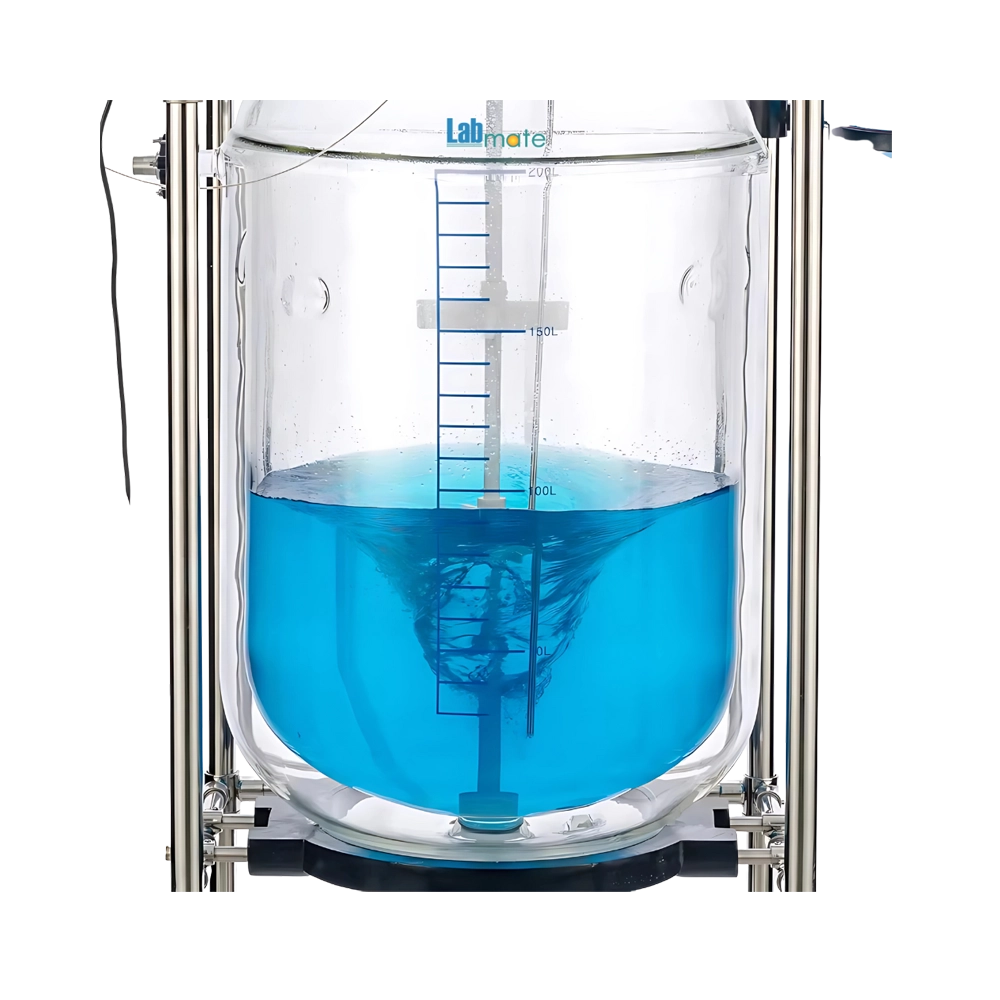
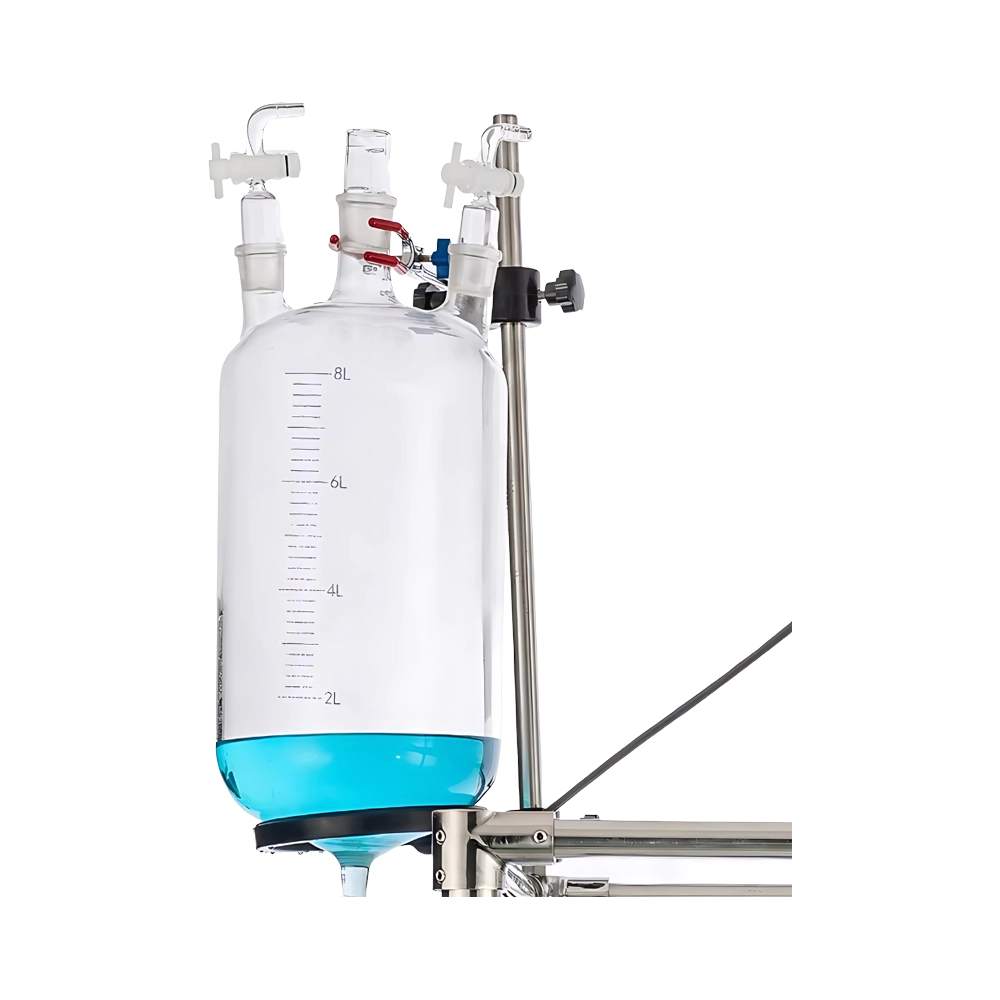
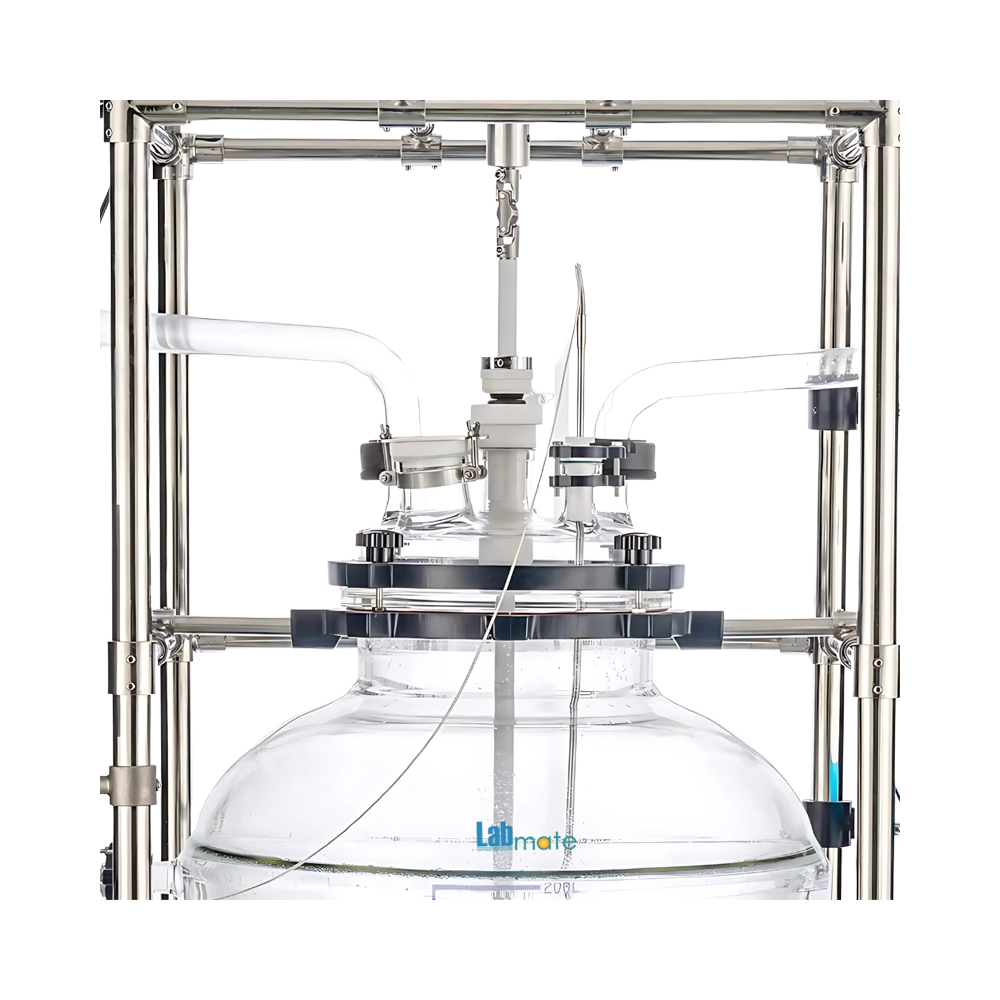
Jacketed Glass Reactor LMJGR-B113 offers 150 liters of reactor volume. It features sensor pot for internal temperature measurement. Equipped with jacket circulation outlet, it enables easy discharge of circulated thermal liquid. Incorporates speed regulator that allows controlled stirring performance throughout experimental procedures. Our Glass Reactor is ideal for distillation, crystallization, and solvent recovery in research and industrial settings.
Specifications
| Reactor Volume | 150 L |
| Jacket Volume | 35 L |
| Dropping Funnel Volume | 5 L |
| Receiving Bottle Volume | 10 L |
| Operating Temperature Range | -80°C to 250°C |
| Vacuum Degree | 0.098 MPa |
| Temperature Measurement Accuracy | ±1°C |
| Rotation Speed Range | 0 to 450 rpm |
| Stirring Power | 200W1/3 |
| Glass Vessel Lid Diameter | 340 mm |
| Dimension | 1280×850×2730 mm |
| Weight | 155 Kg |
Pricing
| Product | Price | Unit | Action |
|---|---|---|---|
| Jacketed Glass Reactor LMJGR-B113 | $ 10387.5 | Each of 1 |
Features
Dual-seal
Solid charging port
Universal coupling joint
Smooth-rolling casters
Stable frame structure
Bottom drain port
Leakproof
Applications
Jacketed Glass Reactor LMJGR-B113 is commonly employed for synthesis, distillation, reflux, crystallization, and solvent recovery in laboratories, pharmaceuticals, and research facilities.
Similar Products

$ 3337.5 / Each of 1

$ 19562.5 / Each of 1

$ 4362.5 / Each of 1

$ 6500 / Each of 1

$ 13062.5 / Each of 1

$ 7600 / Each of 1

$ 6862.5 / Each of 1

$ 3225 / Each of 1

$ 2650 / Each of 1

$ 10250 / Each of 1

$ 3800 / Each of 1

$ 2262.5 / Each of 1

$ 3500 / Each of 1

$ 7037.5 / Each of 1

$ 7387.5 / Each of 1
Frequently Asked Questions
1 What is a Jacketed Glass Reactor?
A Jacketed Glass Reactor is a laboratory or industrial reactor that features a double-layered glass vessel, allowing for precise temperature control by circulating heating or cooling fluids through the outer jacket.
2 How does Jacketed Glass Reactor work?
It works by circulating thermal fluids (such as water, oil, or glycol) through the outer jacket, which maintains a stable internal temperature for the reactions occurring inside the glass vessel.
3 Can Jacketed Glass Reactor be used for pharmaceutical synthesis?
It is widely used in pharmaceutical synthesis due to its excellent temperature control and chemical resistance, which are essential for producing high-purity compounds.
4 Is Jacketed Glass Reactor suitable for polymerization reactions?
It is highly suitable for polymerization reactions because it allows controlled heating or cooling, preventing runaway reactions and enabling better product quality.
5 How is Jacketed Glass Reactor used in essential oil extraction?
It is used in essential oil extraction through solvent-based methods, where temperature control is critical to preserve volatile compounds and improve yield.
6 Can Jacketed Glass Reactor be used in pilot-scale chemical production?
It is commonly used in pilot-scale chemical production to replicate lab-scale processes before full-scale manufacturing.
7 How is Jacketed Glass Reactor used in API development?
It is essential in Active Pharmaceutical Ingredient (API) development for maintaining reaction conditions that are critical to producing high-purity drug compounds.
8 Can Jacketed Glass Reactor be used in nanomaterials synthesis?
It is often used in the synthesis of nanomaterials, where precise control over temperature and mixing is essential for size and shape control.
9 Can Jacketed Glass Reactor be used in petrochemical research?
It is commonly used in petrochemical research for controlled hydrocarbon synthesis, catalyst testing, and process development.
10 Can Jacketed Glass Reactor be used for biofuel research and development?
It is useful in biofuel R&D for conducting controlled reactions involving biomass conversion, transesterification, or catalytic upgrading.