
Get Quote
Contact us now to receive a detailed quotation.
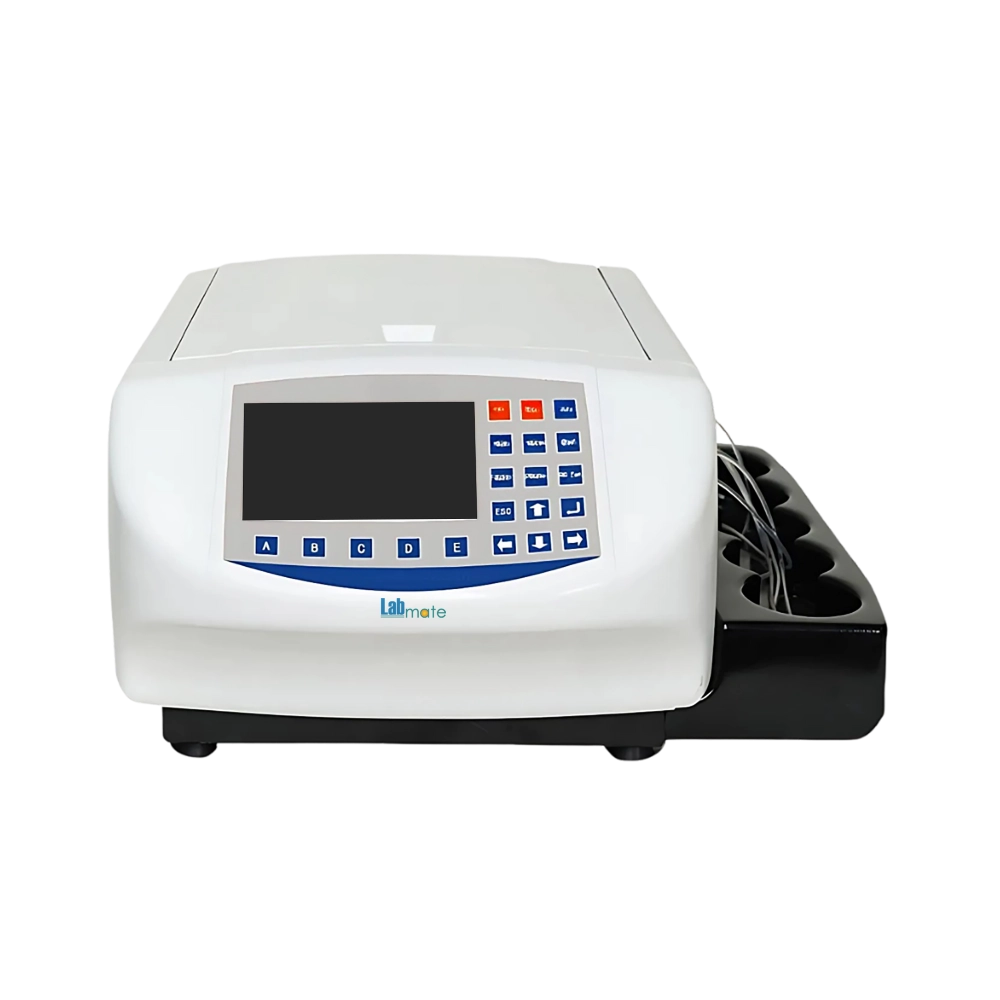
Automated Stainer
Labmate Single Automated Hematology Stainer offers vertical or horizontal installation with 12 or 16 slide capacity respectively. They follow conventional spray dyeing methods for uniform and vibrant staining without peeling. Their brushless DC motor enhances safety and longevity while minimizing power consumption and noise. These provide customizable decolorization settings and automatic reagent adjustments. Our Stainer efficiently stains blood smears, bone marrow, and chromosomes in hematology labs, research facilities, and diagnostics.

$ 16950 / Each of 1
$ 18350 / Each of 1
Frequently Asked Questions
1 What is a Single Automated Hematology Stainer?
A Single Automated Hematology Stainer is an apparatus designed to automatically stain blood samples for hematological analysis.
2 How does Single Automated Hematology Stainer work?
It works by automating key steps of the staining process that includes loading of slides, applying stains, washing and drying.
3 What types of stains can be used in Single Automated Hematology Stainer?
It supports Wright's stain and Giemsa stain for routine Hematology slides.
4 How does Single Automated Hematology Stainer improve safety in laboratories?
It ensures accurate staining, reduces risk of diagnostic errors and lowers the risk of exposure to lab technicians due to hazardous chemicals and reagents.
5 What kind of maintenance does the Single Automated Hematology Stainer require?
Regular maintenance includes cleaning of staining chamber, replacement of pumps or trays, checking of reagent levels and proper calibration.
6 Is proper training needed to use Single Automated Hematology Stainer?
Training is necessary to understand the mechanism of loading slides, configure settings and ensure proper maintenance.
7 Can Single Automated Hematology Stainer be used for any type of blood smear?
It can be used for a variety of blood smears including peripheral blood and bone marrow.
8 Can Single Automated Hematology Stainer help in diagnosing diseases?
It helps in assessing cell morphology, identifying abnormalities and diagnosing conditions such as infections, blood disorders and cancers.