
Get Quote
Contact us now to receive a detailed quotation.
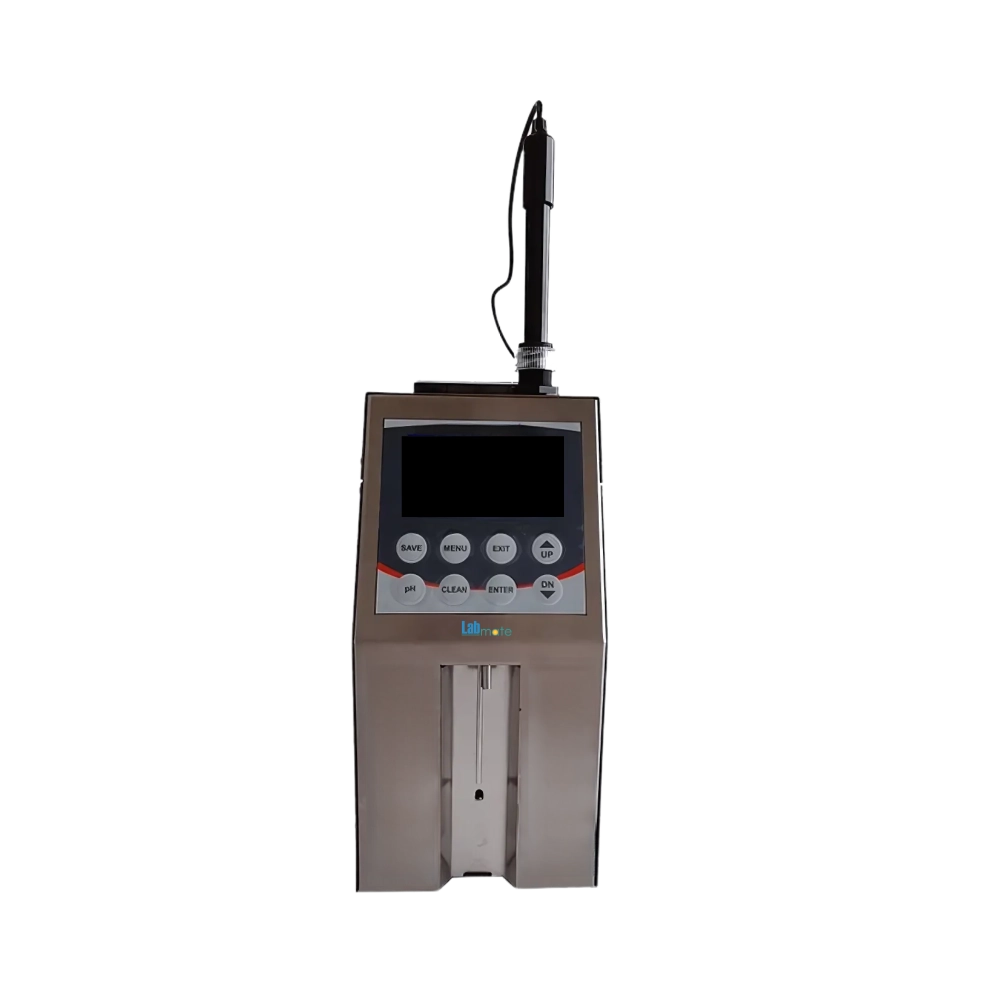
Milk Analyzer LMMIA-B100 is designed for reliable milk composition analysis with sample volume of 20 ml. It features self-calibration without computer, simplifying maintenance and operation. Integrates USB connection for direct PC connectivity. Equipped with built-in keypad, it offers easy navigation. Our Milk Analyzer is ideal for dairy farms and labs, ensuring quality control of milk components such as fat, protein, pH, etc.
Specifications
| Sample Volume | 20 ml |
| Processing Rate | 50 samples/hour |
| Fat Content | 0 to 25 % ± 0.10 % |
| Solids-Non-Fat (SNF) Content | 3 to 40 % ± 0.15 % |
| Density | 1000 to 1160 kg/m³ ± 0.3 kg/m³ |
| Protein Content | 2 to 15 % ± 0.15 % |
| Lactose Content | 0.01 to 20 % ± 0.20 % |
| Water Content | 0 to 70 % ± 3.0 % |
| Salt Content | 0.4% to 4℅ ±0.05% |
| Interface | RS 232, USB |
| Temperature Range | 1˚C to 42˚C |
| Humidity | 0 to 80℅ RH |
| Dimensions | 110×280×195 mm |
| Weight | 2 Kg |
Pricing
| Product | Price | Unit | Action |
|---|---|---|---|
| Milk Analyzer LMMIA-B100 | $ 2475 | Each of 1 |
Features
Ultrasonic technology
Chemical-free procedure
User-friendly interface
One-button measurement and cleaning
Moisture-resistant panel
Standard Accessories
Accessory Name | Unit |
Sample Cups | Set |
Cleaning Solution - Daily | Piece |
Cleaning Solution - Weekly | Piece |
Applications
Milk Analyzer LMMIA-B100 is ideal for dairy farms, milk processing plants, laboratories, and quality control centers for measuring fat, protein, lactose, water content and pH of various milk types.
Selection Guide
Milk Analyzer LMMIA-B100 is best suited for laboratories, dairy farms, and food processing units requiring rapid and reliable milk quality assessment. With a minimal sample volume of 20 ml and a processing rate of up to 50 samples per hour, it supports efficient high-throughput testing. This model is particularly suited for research studies or routine quality checks involving fat and SNF (solids-not-fat) analysis, providing fat content measurements from 0 to 25% with ±0.10% accuracy and SNF content from 3 to 40% with ±0.15% accuracy. The wide SNF range makes it suitable for varied milk types, including standardized and fortified milk. Selection can also be supported by its alignment with quality standards and certifications typically required in food safety and dairy research labs.
Similar Products
$ 3175 / Each of 1
Frequently Asked Questions
1 What is a Milk Analyzer?
A Milk Analyzer is an apparatus designed to measure and evaluate the composition and quality of milk.
2 How does a Milk Analyzer work?
It works on the principle of different technologies such as infrared spectroscopy, ultrasonic sensors and density measurement to analyze the chemical composition of milk.
3 Why is Milk Analysis using Milk Analyzer Important?
It is necessary in order to ensure that the milk meets quality standards and is safe for consumption.
4 What parameters can be measured using Milk Analyzer?
It can measure a variety of parameters such as fat content, protein content, lactose levels, total solids, density, pH levels, Somatic Cell Count (SCC) and water content.
5 Can Milk Analyzer detect adulteration?
It is commonly used to detect adulterants such as water, starch, urea and detergents added to milk.
6 What kind of maintenance does Milk Analyzer require?
Routine maintenance includes regular calibration, proper cleaning of sample containers as well as periodic checks for wear and tear.
7 Is Milk Analyzer suitable for large-scale dairy operations?
It is engineered for both small-scale and large-scale operations.
8 Can Milk Analyzer be used for testing milk quality in milk processing plants?
It is widely used in milk processing plants in order to ensure that the milk meets required standards for fat, protein and other components before being processed into dairy products.
9 Can Milk Analyzer be used in research environment?
It is used in research for studying milk composition, developing new dairy products and exploring the nutritional aspects of milk and dairy farming.
10 Is Milk Analyzer affected by temperature?
Temperature influences the accuracy of measurements in case of fat content, protein and other components.