
Get Quote
Contact us now to receive a detailed quotation.
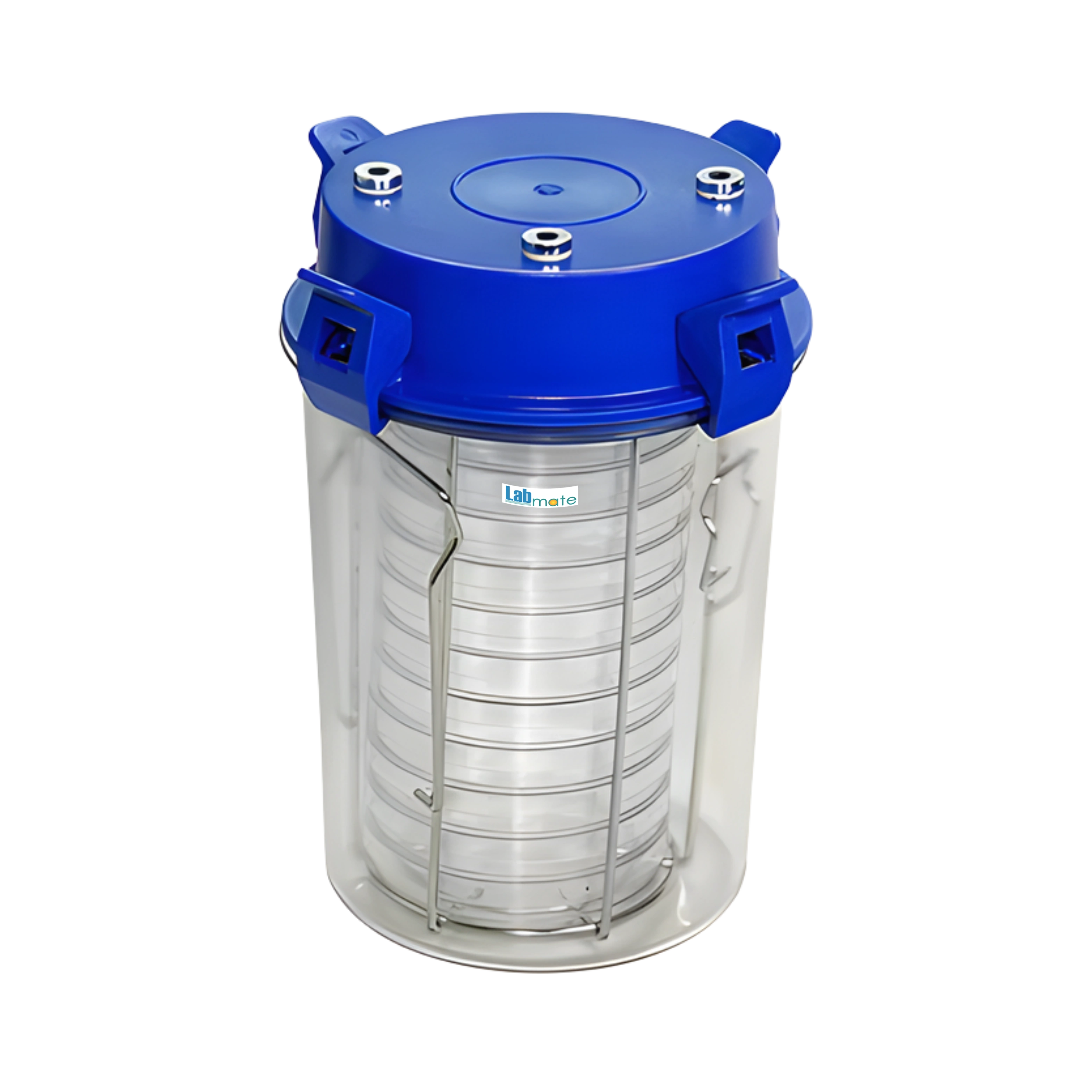
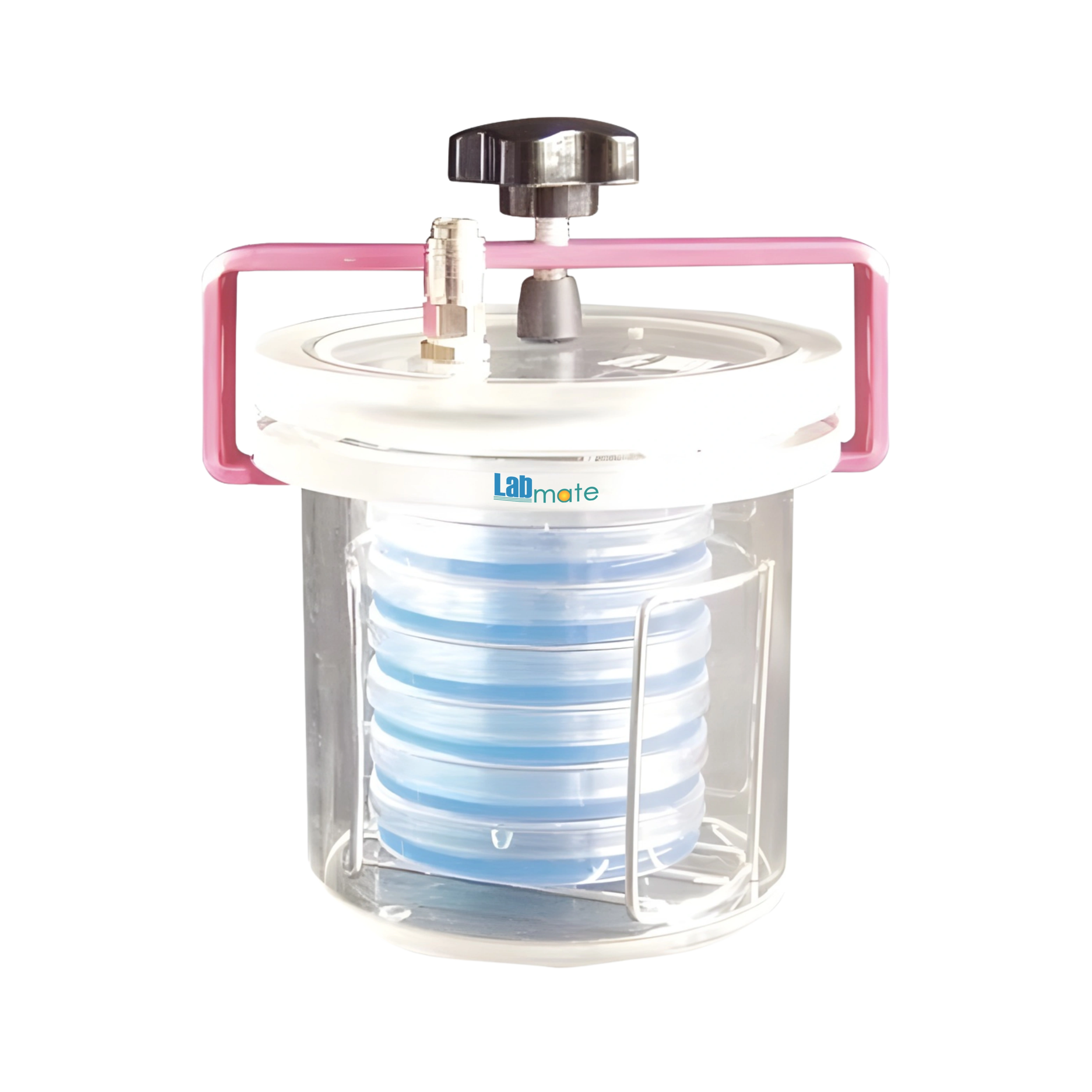
Anaerobic Jar LMAJ-C100 offers a capacity of 2.5 liters for cultivating biological and microbiological cultures. Built from durable PVC material that resists chemical interactions effectively. It features a stainless-steel bracket to hold culture dishes or flasks securely. Integrated with stackable configuration for 12 culture dishes or one 300 ml flask, supporting different samples. Our Anaerobic Jar incorporates a tight-sealing lid that prevents air ingress during incubation period.
Specifications
| Capacity | 2.5 L |
| Material | PVC |
| Standard Configuration | Jar + 1 stainless steel bracket |
| Contents Compatibility | 1 stack of 12 dishes or 1×300 ml conical flask |
| Height | 210 mm |
| Diameter | Φ125 mm |
| Dimension (L×B×H) | 100×50×210 mm |
| Packaging Dimension (L×B×H) | 270×250×500 mm |
| Net Weight | 0.5 kg |
| Gross Weight | 3 kg |
Pricing
| Product | Price | Unit | Action |
|---|---|---|---|
| Anaerobic Jar LMAJ-C100 | $ 1900 | Each of 1 |
Features
Transparent Body
Corrosion-Shielded
Thermal Tolerance
Replaceable O-Sealing Ring
Compact and Lightweight
Standard Accessories
| Model No. | Accessory |
| LMAJ-C100-J1 | Jar Body |
| LMAJ-C100-P1 | Petri Dish Holder |
| LMAJ-C100-C1 | Connectors (i.e. Gas Inlet/Outlet Valves) |
| LMAJ-C100-P2 | Pressure Gauge |
| LMAJ-C100-B1 | Box of Catalyst |
| LMAJ-C100-T1 | Gas Tubings |
Optional Accessories
| Model No. | Accessory |
| LMAJ-C100-G1 | Gas-Generating Pack (C-1) |
| LMAJ-C100-S1 | Sealing Ring |
| LMAJ-C100-S2 | Spare Valve (Female Connector) |
Applications
Anaerobic Jar LMAJ-C100 is crucial for cultivating anaerobic bacteria, fermentation studies, microbial research, antibiotic sensitivity testing, and maintaining oxygen-free conditions in clinical and research laboratories.
Selection Guide
Anaerobic Jar LMAJ-C100 is designed for users such as microbiologists, clinical researchers, pharmaceutical scientists, and environmental analysts who require strict oxygen-free conditions for their work. It is suitable for applications like culturing anaerobic bacteria in clinical diagnostics, food microbiology, pharmaceutical testing, and environmental studies. With a 2.5 L capacity, this jar suits small to medium-scale laboratories. Made from lightweight and corrosion-resistant PVC, it accommodates either one stack of 12 Petri dishes or a single 300 ml conical flask, providing flexibility for various experimental needs. Its basic setup consists of the jar and one stainless steel bracket to securely hold samples. This model is an excellent choice for laboratories following GLP and GMP standards, where reliable anaerobic conditions and material safety are essential.


Similar Products
$ 1687.5 / Each of 1
$ 1625 / Each of 1
$ 1612.5 / Each of 1
$ 1562.5 / Each of 1
$ 1712.5 / Each of 1

$ 1675 / Each of 1
Frequently Asked Questions
1 What is an Anaerobic Jar LMAJ-C100?
An Anaerobic Jar LMAJ-C100 is a PVC anaerobic jar used in laboratories to cultivate microorganisms in oxygen-free environments by vacuum pumping out air.
2 How does an Anaerobic Jar LMAJ-C100 work?
An Anaerobic Jar LMAJ-C100 works on the principle of creating an anaerobic environment by evacuating air using a vacuum pump.
3 Can Anaerobic Jar LMAJ-C100 be used for pharmaceutical quality control?
Anaerobic Jar LMAJ-C100 is ideal for testing anaerobic contamination in sterile pharmaceutical products.
4 Can Anaerobic Jar LMAJ-C100 be used in veterinary microbiology?
Anaerobic Jar LMAJ-C100 helps in isolating anaerobic bacteria from animal infections for diagnosis.
5 Is Anaerobic Jar LMAJ-C100 helpful for probiotic research?
Anaerobic Jar LMAJ-C100 supports the growth of anaerobic gut flora strains used in probiotic development.
6 Can Anaerobic Jar LMAJ-C100 be used in the development of anaerobic biofertilizers?
Anaerobic Jar LMAJ-C100 enables cultivation of anaerobic microbes used in sustainable agriculture.
7 Can Anaerobic Jar LMAJ-C100 be used for testing anaerobic antibiotic susceptibility?
Anaerobic Jar LMAJ-C100 provides controlled anaerobic conditions for evaluating drug resistance in anaerobes.
8 Is Anaerobic Jar LMAJ-C100 suitable for genetic studies of anaerobes?
Anaerobic Jar LMAJ-C100 provides an environment for cultivating genetically modified anaerobic strains.
9 Is Anaerobic Jar LMAJ-C100 suitable for cultivating gut microbiota anaerobically?
Anaerobic Jar LMAJ-C100 mimics the guts anaerobic environment for cultivating intestinal microbes.
10 What kind of maintenance does Anaerobic Jar LMAJ-C100 require?
Routine maintenance includes cleaning the lid, O-ring seal, verifying the integrity of the gasket seal and ensuring the vacuum pump functions properly.
11 What is an Anaerobic Jar?
An Anaerobic Jar is an apparatus designed to create an oxygen-free environment for growing anaerobic bacteria.
12 How does Anaerobic Jar work?
It creates an oxygen-free environment by using a chemical packet that absorbs oxygen.
13 What types of organisms are grown in Anaerobic Jar?
It is used to grow anaerobic bacteria such as Clostridium spp., Bacteroides spp. and Fusobacterium spp.
14 Can Anaerobic Jar be used for both liquid and solid cultures?
It can be used for both liquid and solid cultures.
15 What is the difference between an Anaerobic Jar and an Anaerobic Chamber?
An Anaerobic Jar is a small, portable device that creates anaerobic conditions in a sealed container, whereas an Anaerobic Chamber consists of large controlled environment for handling cultures without exposure to oxygen.
16 Can Anaerobic Jar be used to grow facultative anaerobes?
It is used to grow facultative anaerobes, as they can survive both in presence and absence of oxygen.
17 Can Anaerobic Jar be used to culture both pathogenic and non-pathogenic bacteria?
It can culture both pathogenic and non-pathogenic anaerobic bacteria.
18 Can Anaerobic Jar be used in a clinical setting?
It is commonly used in clinical microbiology to isolate and grow anaerobic bacteria from samples like blood, tissue and body fluids.
19 Can Anaerobic Jar be used to study biofilms?
It is used to culture anaerobic bacteria that form biofilms.
20 Can Anaerobic Jar be used in research applications?
It is commonly used in research for studying physiology, biochemistry and genetics of anaerobic microorganisms.