
Get Quote
Contact us now to receive a detailed quotation.
Specifications
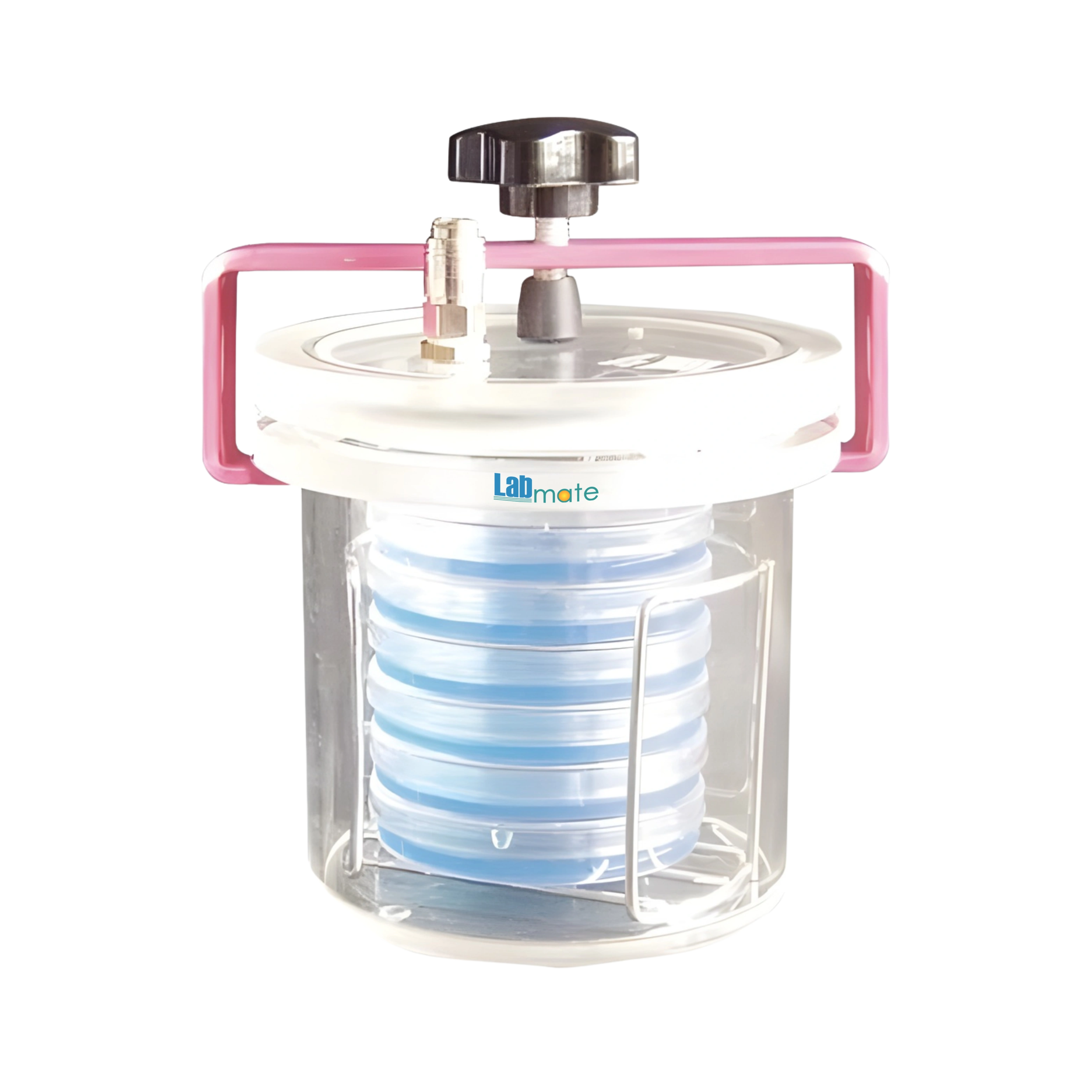
| Type | Pumping Jar |
| Capacity | 2.5 L |
| Contents | 1 stack of 12 Petri dishes |
| Petri Dish Holder | 25 R |
| Material | PMMA |
| Clamp | Colored stainless steel clamp |
| O-Ring | Yes |
| Time Duration | 3 to 5 minutes per cycle |
| Petri Dish Diameter | 90 to 100 mm |
| Jar Dimension (Ф × H) | 130 × 240 mm |
| Packaging Dimension (L×W×H) | 245 × 215 × 395 mm |
| Gross Weight | 2.8 kg |
Pricing
| Product | Price | Unit | Action |
|---|---|---|---|
| Anaerobic Jar LMAJ-A101 | $ 1625 | Each of 1 |
Features
Pumping-Type
High-Quality PMMA Material
O-Ring Leakproof Sealing
Wide Base for Stability
Corrosion-Resistant Build
Applications
Our Anaerobic Jar LMAJ-A101 is essential for isolating oxygen-deprived microbes from soil, sediment or wastewater samples.
Selection Guide
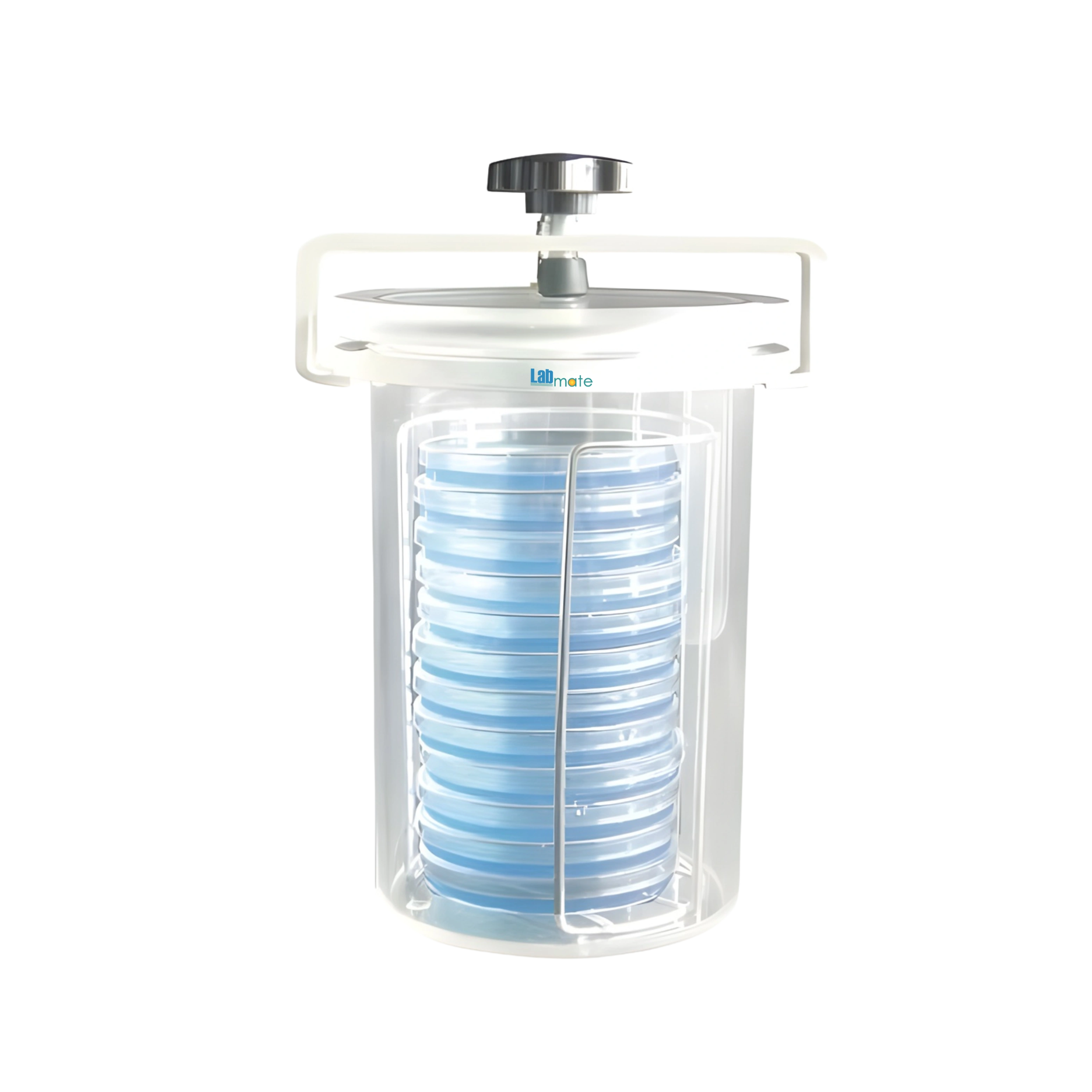
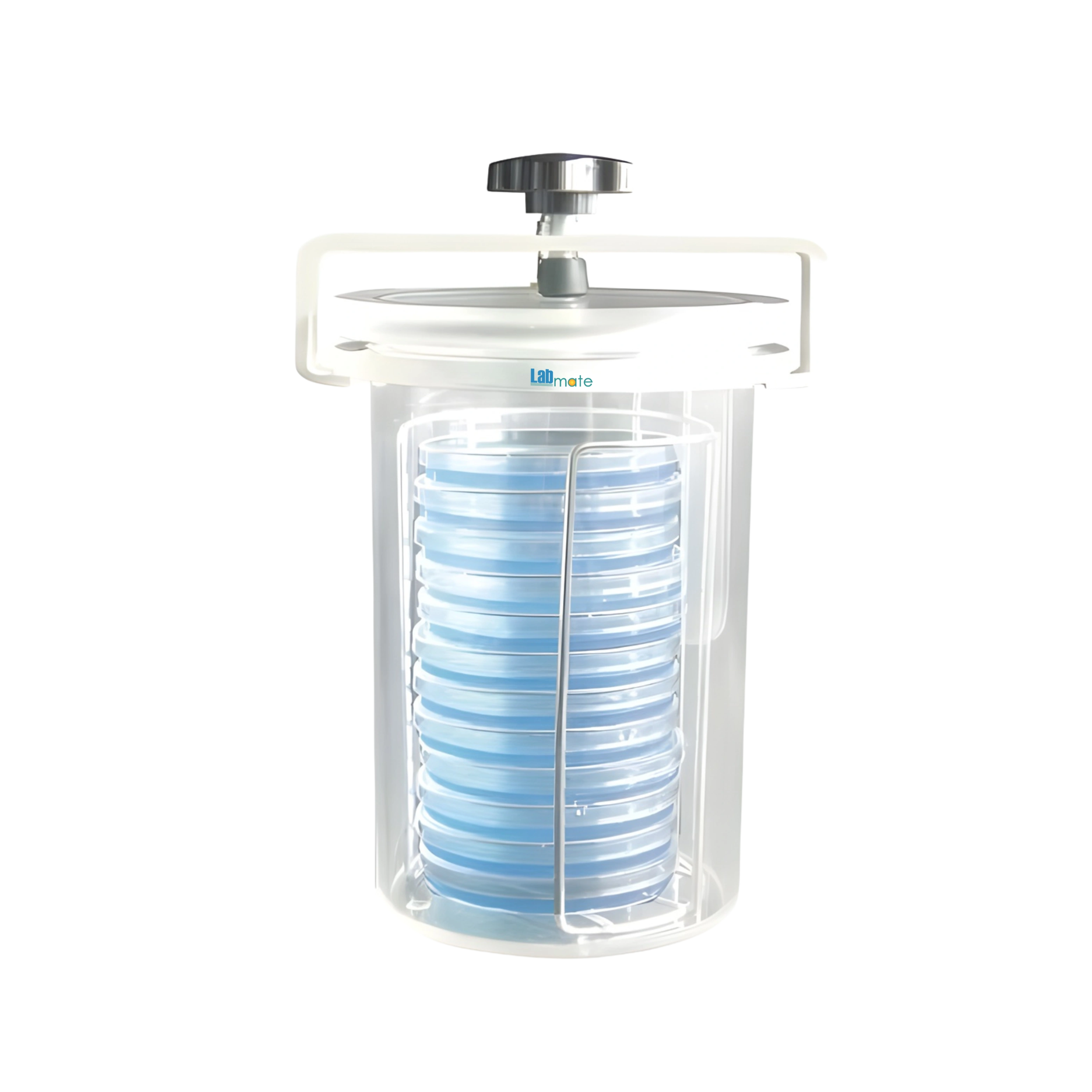
Anaerobic Jar LMAJ-A101 is suitable for microbiology research that requires strict oxygen-free environments, such as culturing anaerobic bacteria in clinical, pharmaceutical, and environmental studies. Its moderate capacity suits laboratories that need to process multiple samples simultaneously without occupying excessive space. This is a pumping-type device with a 2.5 L capacity, designed to hold one stack of 12 Petri dishes and equipped with a 25 R Petri dish holder. Users should select this jar for experiments involving the isolation of anaerobic pathogens, antibiotic susceptibility testing, and anaerobic fermentation studies. The pumping mechanism provides consistent oxygen removal, supporting GLP-compliant protocols and reproducible results.


Similar Products
$ 1900 / Each of 1

$ 1675 / Each of 1
$ 1712.5 / Each of 1
$ 1562.5 / Each of 1
$ 1687.5 / Each of 1
$ 1612.5 / Each of 1
Frequently Asked Questions
1 What is an Anaerobic Jar LMAJ-A101?
An Anaerobic Jar LMAJ-A101 is a pumping-type anaerobic chamber used to cultivate oxygen-sensitive microbes (anaerobes) in a laboratory setting.
2 How does an Anaerobic Jar LMAJ-A101 work?
An Anaerobic Jar LMAJ-A101 removes oxygen via vacuum and converts leftover oxygen to water using hydrogen and a catalyst.
3 Can Anaerobic Jar LMAJ-A101 be used for food safety testing?
Anaerobic Jar LMAJ-A101 is used to detect anaerobic pathogens in food samples.
4 Can Anaerobic Jar LMAJ-A101 support microbial research in hospitals?
Anaerobic Jar LMAJ-A101 helps grow pathogenic anaerobes for clinical diagnostics.
5 Is Anaerobic Jar LMAJ-A101 used in industrial biotechnology processes?
Anaerobic Jar LMAJ-A101 facilitates the growth of anaerobic microbes used in fermentation and bioprocessing.
6 Does Anaerobic Jar LMAJ-A101 work for biofilm research involving anaerobes?
Anaerobic Jar LMAJ-A101 provides the anaerobic environment required for studying biofilms of anaerobic microbes.
7 Is Anaerobic Jar LMAJ-A101 useful in wastewater treatment studies?
Anaerobic Jar LMAJ-A101 is used to cultivate anaerobic microbes important in wastewater bioremediation.
8 Can Anaerobic Jar LMAJ-A101 be used in microbiome transplant research?
Anaerobic Jar LMAJ-A101 helps grow and maintain anaerobic microbes used in fecal microbiota transplantation studies.
9 Can Anaerobic Jar LMAJ-A101 be used for culturing anaerobic bacteria involved in oil degradation?
Anaerobic Jar LMAJ-A101 supports the growth of anaerobes that degrade hydrocarbons in oil-contaminated environments.
10 What kind of maintenance does Anaerobic Jar LMAJ-A101 require?
Anaerobic Jar LMAJ-A101 requires regular cleaning, O-ring inspection, and checking for airtight seals and proper valve function.
11 What is an Anaerobic Jar?
An Anaerobic Jar is an apparatus designed to create an oxygen-free environment for growing anaerobic bacteria.
12 How does Anaerobic Jar work?
It creates an oxygen-free environment by using a chemical packet that absorbs oxygen.
13 What types of organisms are grown in Anaerobic Jar?
It is used to grow anaerobic bacteria such as Clostridium spp., Bacteroides spp. and Fusobacterium spp.
14 Can Anaerobic Jar be used for both liquid and solid cultures?
It can be used for both liquid and solid cultures.
15 What is the difference between an Anaerobic Jar and an Anaerobic Chamber?
An Anaerobic Jar is a small, portable device that creates anaerobic conditions in a sealed container, whereas an Anaerobic Chamber consists of large controlled environment for handling cultures without exposure to oxygen.
16 Can Anaerobic Jar be used to grow facultative anaerobes?
It is used to grow facultative anaerobes, as they can survive both in presence and absence of oxygen.
17 Can Anaerobic Jar be used to culture both pathogenic and non-pathogenic bacteria?
It can culture both pathogenic and non-pathogenic anaerobic bacteria.
18 Can Anaerobic Jar be used in a clinical setting?
It is commonly used in clinical microbiology to isolate and grow anaerobic bacteria from samples like blood, tissue and body fluids.
19 Can Anaerobic Jar be used to study biofilms?
It is used to culture anaerobic bacteria that form biofilms.
20 Can Anaerobic Jar be used in research applications?
It is commonly used in research for studying physiology, biochemistry and genetics of anaerobic microorganisms.