
Get Quote
Contact us now to receive a detailed quotation.
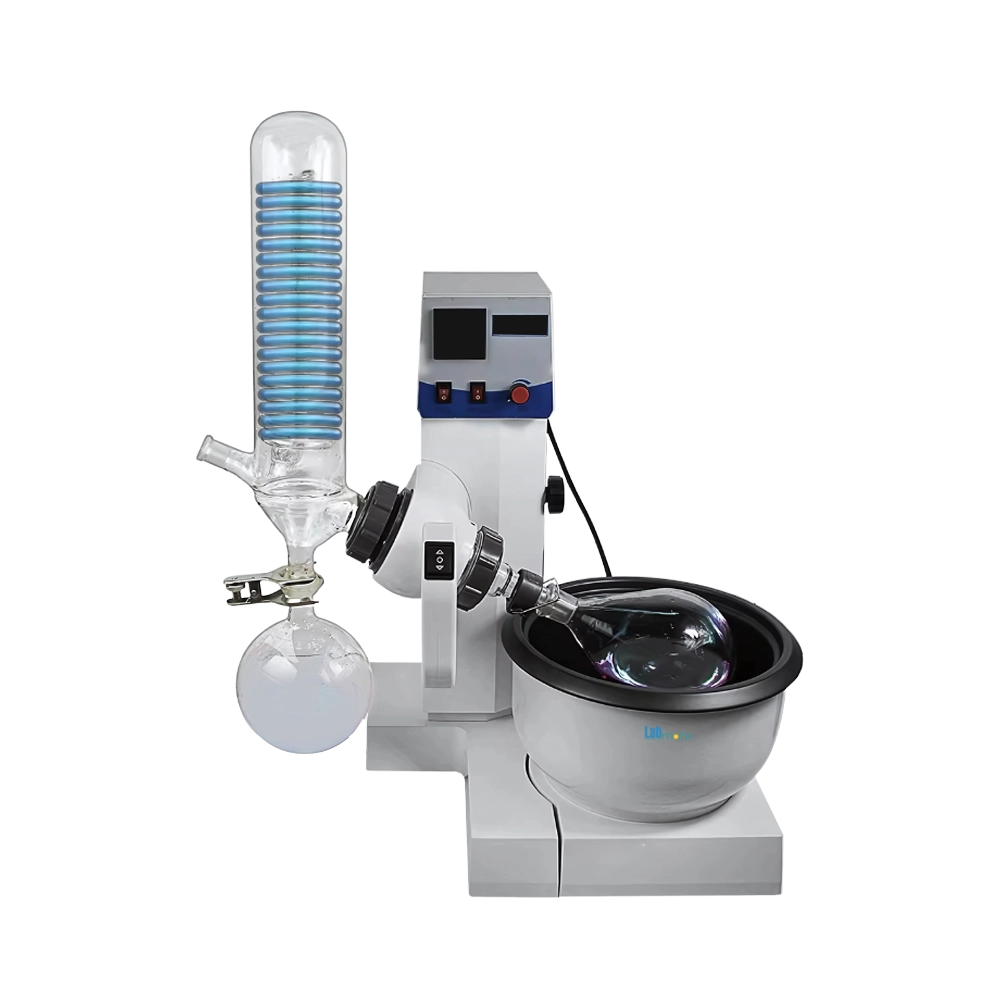
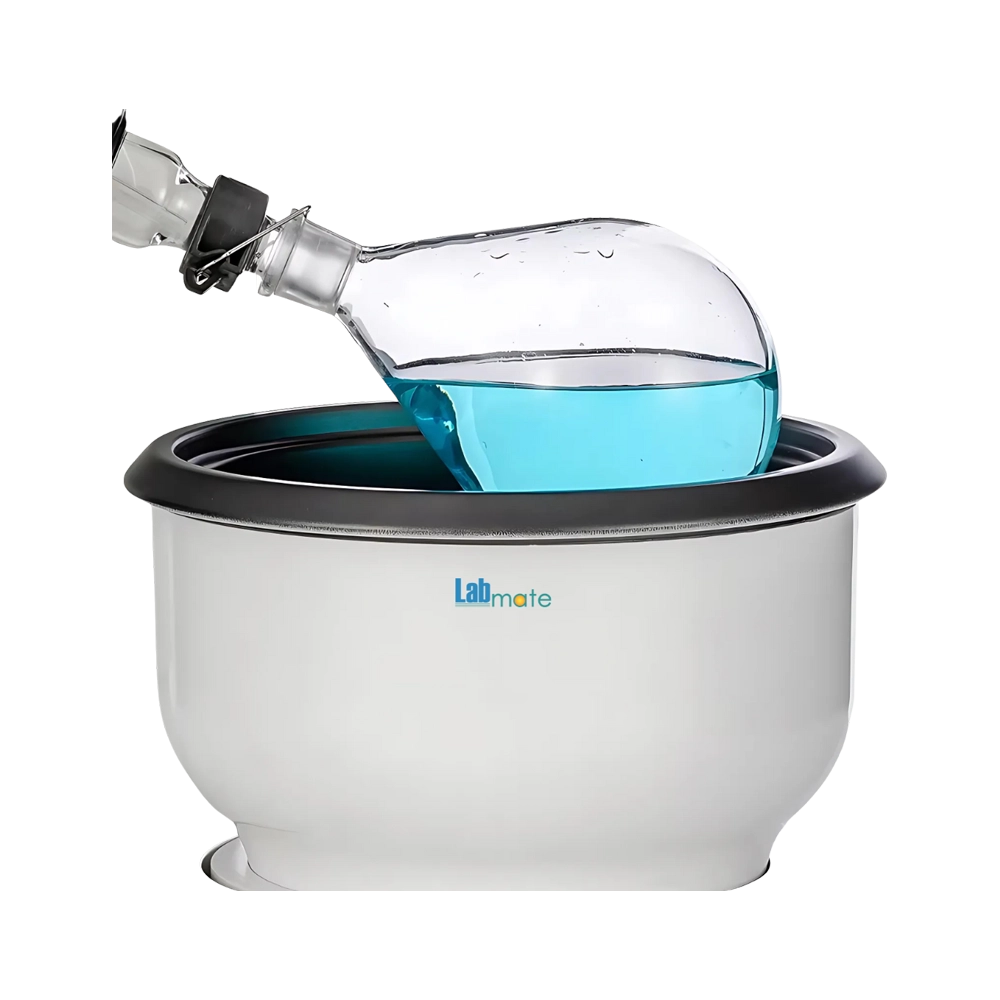
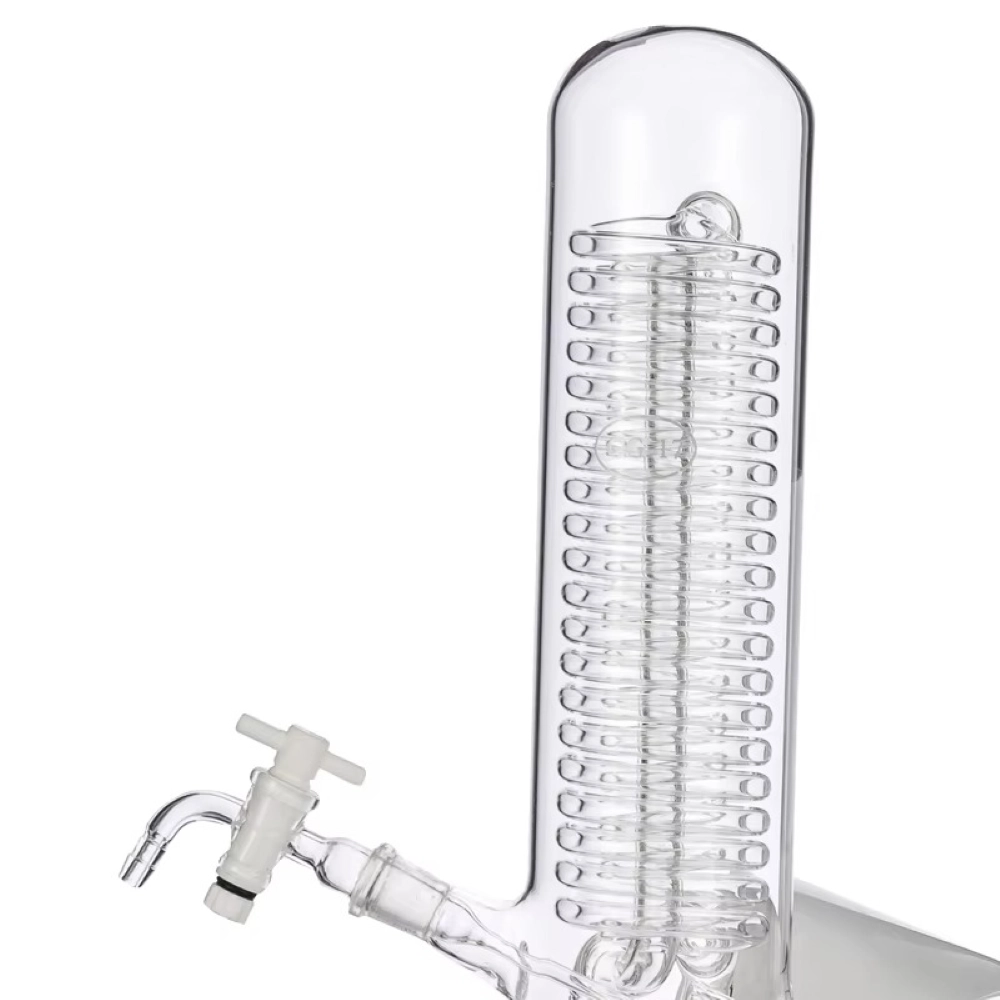
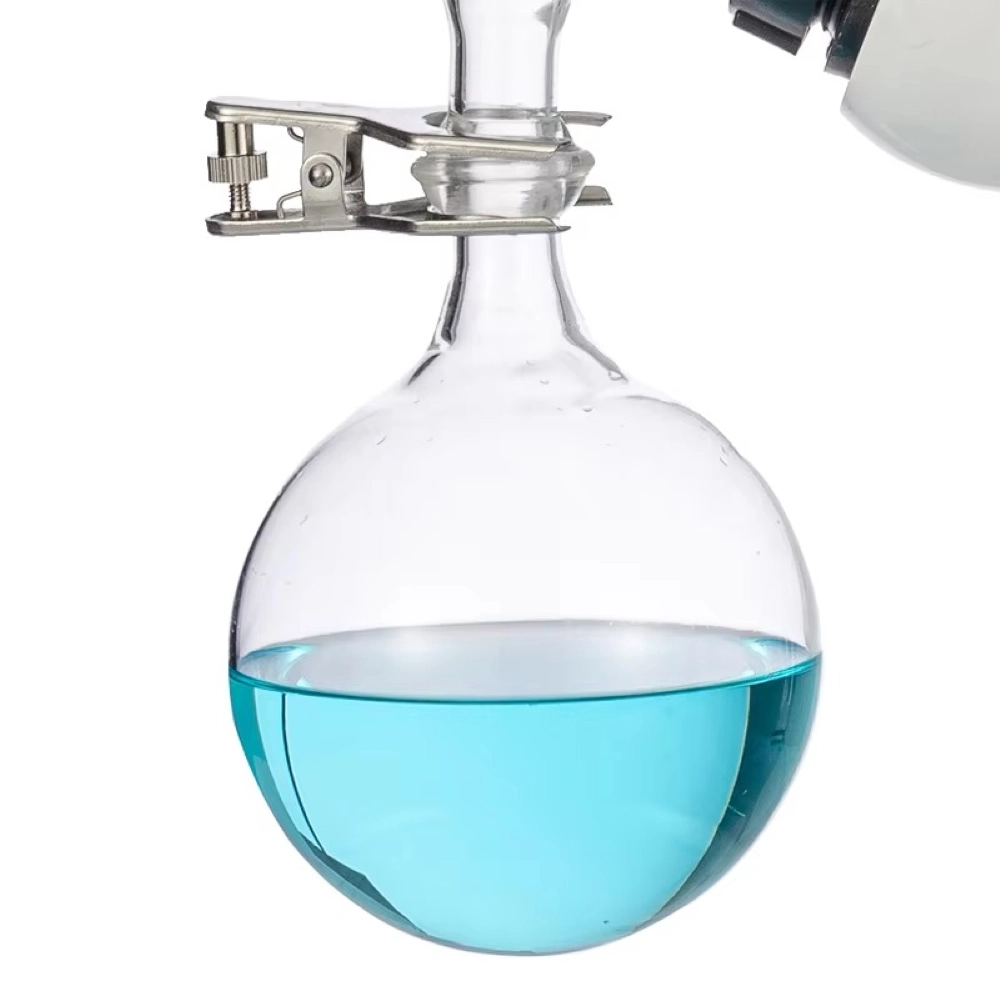
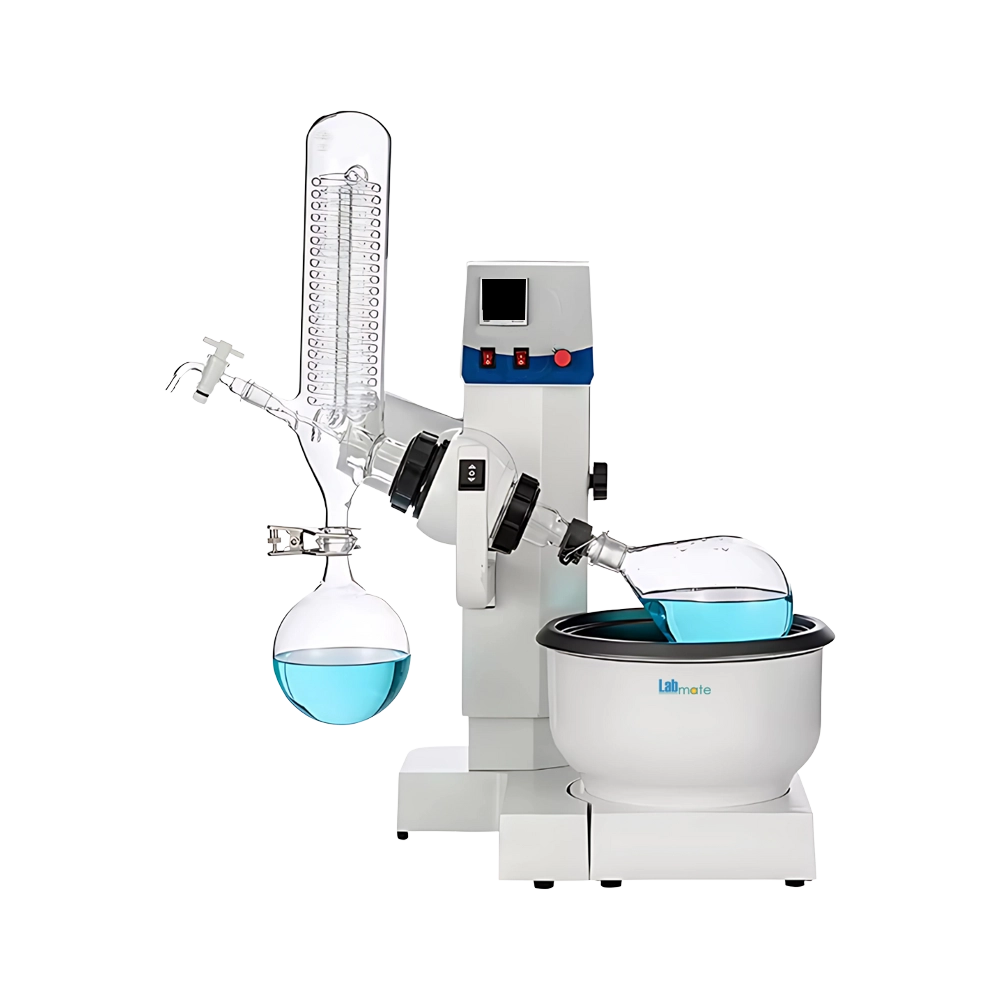
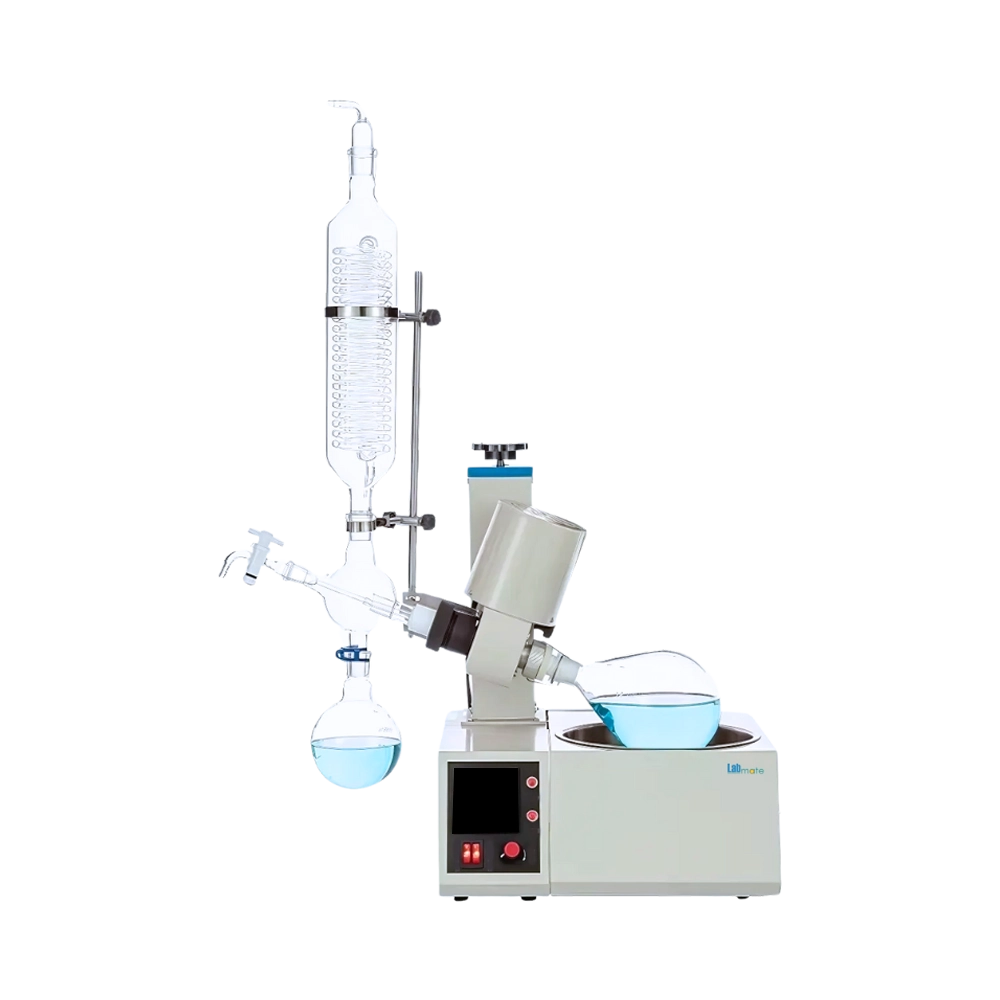
Rotary Evaporator LMRE-C200 is designed with flask capacity of 1 liter. It maintains constant temperature under vacuum to form broad film on bottle walls for efficient evaporation. Equipped with glass condenser, it efficiently cools vapor and enhances solvent recycling. Incorporates an electric lifting mechanism that allows for reliable handling. Our Rotary Evaporator is ideal for concentration and separation in biopharmaceutical laboratories.
Specifications
| Rotary Bottle Volume | 1 L |
| Collection Bottle Volume | 1 L |
| Bath Volume | 6.2 L |
| Speed Range | 0 to 200rpm |
| Working Temperature Range | RT to 99℃ (Water bath), RT to 180℃ (Oil bath) |
| Temperature Control Accuracy | +/-1℃ |
| Control Panel | Digital temperature display |
| Vacuum Degree | 0.098 MPa |
| Lifting Mode | Electric |
| Lifting Distance | 120 mm |
| Condensing Area | 0.17 m² |
| Rotating Motor Power | 40W |
| Lifting Motor Power | 20W |
| Heating Power | 1200W |
| Power Consumption | 1260W |
| Power Supply | 220 to 240V/50Hz |
| Rotary Bottle Diameter | 131mm |
| Collection Bottle Diameter | 131mm |
| Bath Dimension (L×H) | 235×145 mm |
| Dimension (W×D×H) | 630×400× (690 to 810) mm |
| Weight | 20.5 Kg |
Pricing
| Product | Price | Unit | Action |
|---|---|---|---|
| Rotary Evaporator LMRE-C200 | $ 2700 | Each of 1 |
Features
High vacuum seal
Corrosion resistance
Dual safety fuses
Double coil design
Lifting handle
Optional Accessories
| Accessory | Unit | Quantity |
| Vacuum Pump | Each | 1 |
| Circulating Chiller | Each | 1 |
Applications
Rotary Evaporator LMRE-C200 ensures concentration, crystallization, drying, separation, and solvent recovery in pharmaceutical, chemical, and biopharmaceutical laboratories under controlled and safe conditions.
Similar Products
$ 2325 / Each of 1
$ 2881.25 / Each of 1

$ 4312.5 / Each of 1
$ 3006.25 / Each of 1
$ 7700 / Each of 1
$ 2162.5 / Each of 1

$ 2537.5 / Each of 1
$ 1762.5 / Each of 1

$ 3100 / Each of 1

$ 2375 / Each of 1
$ 2925 / Each of 1

$ 6750 / Each of 1
$ 1862.5 / Each of 1

$ 3737.5 / Each of 1
$ 8050 / Each of 1
Frequently Asked Questions
1 Why is Rotary Evaporator preferred in pharmaceutical formulation?
It is preferred in pharmaceutical formulation for drying active pharmaceutical ingredients and concentrating drug solutions under mild, controlled conditions.
2 Can Rotary Evaporator be used in polymer research?
It is used in polymer research to remove solvents from polymer solutions during synthesis or modification processes.
3 How is Rotary Evaporator applied in environmental testing?
It is applied in environmental testing for concentrating analytes from water or soil extracts, improving the detection of pollutants or residues.
4 How is Rotary Evaporator used in academic teaching labs?
It is used in academic teaching labs to demonstrate solvent evaporation techniques and train students in practical aspects of sample concentration.
5 How does Rotary Evaporator assist in essential oil production?
It assists in essential oil production by efficiently removing solvents from plant extracts, preserving the integrity of volatile aromatic compounds.
6 Why is Rotary Evaporator used in QC labs of chemical manufacturing?
It is used in QC labs of chemical manufacturing to remove solvents from test batches for purity analysis and ensure final product specifications are met.
7 What is a Rotary Evaporator?
A Rotary Evaporator is an apparatus designed to efficiently and gently remove solvents from samples by evaporation under reduced pressure.
8 How does Rotary Evaporator work?
It works by rotating a flask containing the sample while applying vacuum and heat, which lowers the boiling point and facilitates the evaporation of the solvent.
9 What types of solvents can be removed using Rotary Evaporator?
It is used to remove a wide range of volatile solvents such as ethanol, methanol, acetone, and hexane.
10 How is Rotary Evaporator used in organic chemistry?
It is used in organic chemistry to remove solvents from reaction mixtures, concentrating and purifying organic compounds without exposing them to high temperatures.