
Get Quote
Contact us now to receive a detailed quotation.
Labmate Pocket Colorimeter are designed for on-site water quality analysis . They are integrated with silicon photodiode and measures absorbance from 0.01-0.25mg/L and 0.01-0.75 mg/L . They have IP67 waterproof rating. They have support manual or automatic calibration to ensure accurate results over time. Our Pocket Colorimeter are easy-to-use, often featuring one-button or simple multi-button operations.
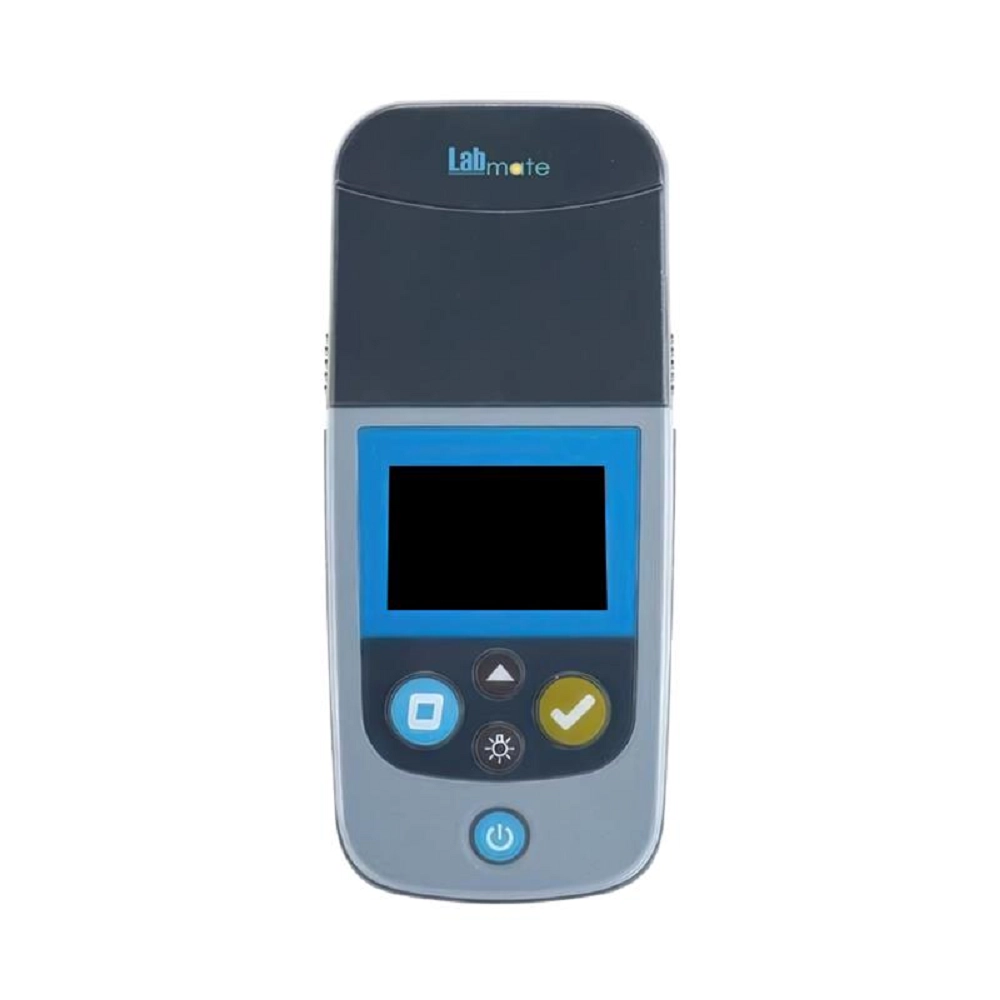
$ 2562.5 / Pack of 1
Selection Guide for Pocket Colorimeter
When selecting Pocket Colorimeter, customers should consider measurement range, method compatibility, and operating conditions. This compact device is suitable for field or on-site water testing, particularly for ozone analysis, with two measurement ranges, 0.01 to 0.25 mg/L and 0.01 to 0.75 mg/L, based on the Indigo Trisulfonate method. Its absorbance range of 0 to 2.5 Abs provides reliable detection, while silicon photodiode detectors provide high sensitivity. The instrument is compatible with 1 cm and 25 mm sample cells (both 10 mL), making it versatile for various water samples. With an operating range of 0 to 50 °C and 0 to 90% relative humidity, it performs well in diverse field environments. Pocket Colorimeter typically comes with certifications like CE marking, ISO 9001 manufacturing compliance, and RoHS, ensuring that quality, safety, and environmental standards are met, critical for laboratories and regulatory testing agencies.
Frequently Asked Questions
1 What is a Pocket Colorimeter?
A Pocket Colorimeter is a compact, portable apparatus designed to measure the concentration of specific substances in water through colorimetric analysis.
2 How does Pocket Colorimeter work?
It works by measuring the color change in a water sample, which corresponds to the concentration of a specific substance.
3 Can Pocket Colorimeter be used in water quality testing?
It is used in water quality testing to measure parameters like chlorine, pH, and ammonia, ensuring that the water meets safety and environmental standards.
4 Is Pocket Colorimeter useful for aquaculture?
It is commonly used in aquaculture to monitor water quality parameters like ammonia, nitrites, and pH, ensuring a healthy environment for aquatic life.
5 Can Pocket Colorimeter be used in agriculture?
It is used to monitor soil and irrigation water quality, particularly for parameters like nitrates and phosphates, optimizing crop health and yield.
6 Can Pocket Colorimeter be used in hydroponics?
It is used to measure nutrient levels such as nitrogen, phosphorus, and potassium in the water, ensuring optimal plant growth and health.
7 Is Pocket Colorimeter useful for pharmaceutical applications?
It is used to test water and raw material quality, ensuring that production processes meet strict quality control and safety standards.
8 Can Pocket Colorimeter be used in oil and gas industries?
It is used to monitor water quality in cooling systems, detecting contaminants like chloride or sulfides that could affect equipment efficiency and safety.
9 How is Pocket Colorimeter used in the mining industry?
It is used to analyze water samples from mine sites to test for contaminants like cyanide, metals, and pH, ensuring that water discharged into the environment meets safety standards.
10 Can Pocket Colorimeter be used for environmental impact studies?
It is essential for environmental impact studies, allowing researchers to analyze pollutants in water bodies, monitor ecosystems, and assess the effects of industrial or agricultural runoff.