
Get Quote
Contact us now to receive a detailed quotation.
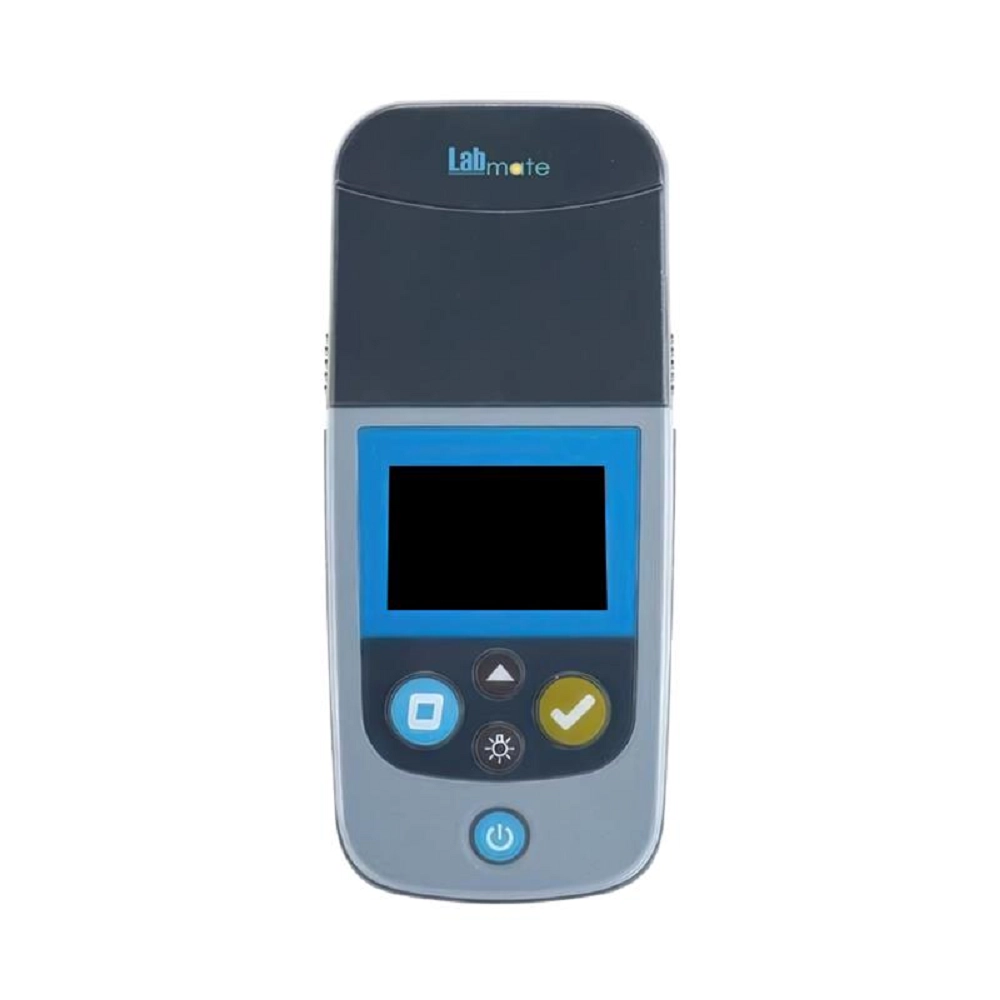
Pocket Colorimeter LMPC-A100 is integrated with a silicon photodiode and measures absorbance from 0 to 2.5 Abs. Our colorimeter covers a wide range of ozone concentrations 0.01 to 0.25 mg/L and 0.01 to 0.75 mg/L. It is compatible with sample cells 1 cm and 25 mm with a capacity of 10 mL accommodating various sample preparation needs.
Specifications
| Ozone Measurement Range | 0.01 to 0.25 mg/L O30.01 to 0.75 mg/L O3 (Indigo Trisulfonate method) |
| Absorbance | 0 to 2.5 Abs |
| Sample Cell Compatibility | 1 cm (10 mL), 25 mm (10 mL) |
| Detector | Silicon photodiode |
| Operating Conditions | 0 to 50 °C, 0 to 90% RH |
| Source Lamp | Light emitting diode (LED |
| Rating | IP67, waterproof at 1 m for 30 minutes |
| Wavelength | ±2 nm |
| Spectral Bandwidth | 15 nm filter bandwidth |
| Display | LCD with backlight |
| Power Supply | Four AAA alkaline batteries(5000 tests) |
| Data Storage | 50 measurements |
| Dimensions (H × W × D) | 34 mm × 69 mm × 157 mm |
| Weight | 0.25 kg |
Pricing
| Product | Price | Unit | Action |
|---|---|---|---|
| Pocket Colorimeter LMPC-A100 | $ 2412.5 | Pack of 1 |
Features
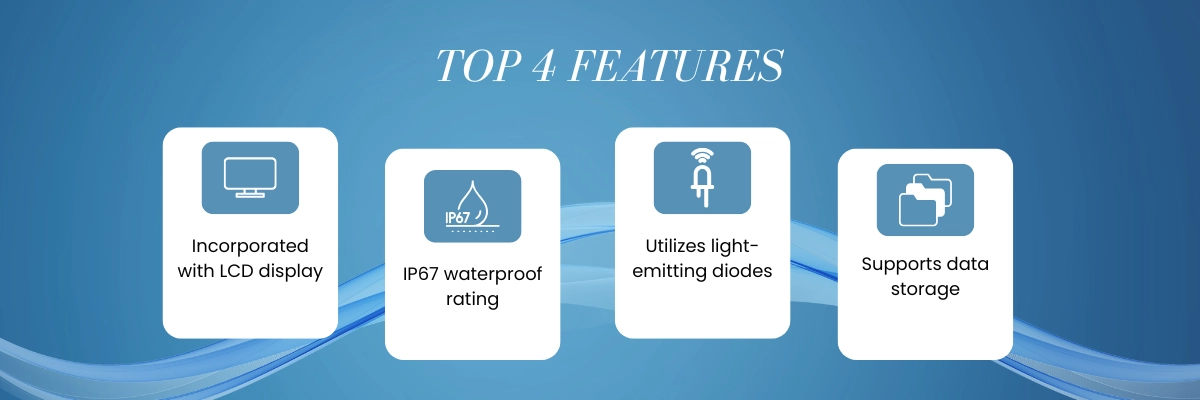
Incorporated with LCD display
IP67 waterproof rating
Utilizes light-emitting diodes
Supports data storage
Applications
Pocket Colorimeter is widely utilized for ozone disinfection and ozone oxidation monitoring, ozone disinfection control, and remote testing
Selection Guide
Pocket Colorimeter LMPC-A100 is a compact, user-friendly instrument designed for quick and accurate on-site water analysis. Based on research applications, it is widely used in environmental monitoring, wastewater treatment, field water testing, and industrial process control. Its portability and ease of use make it suitable for field researchers, technicians, and quality control personnel who require reliable results outside the lab. The colorimeter supports various water quality parameters such as chlorine, nitrate, phosphate, and ammonia using standard reagent methods. Equipped with a silicon photodiode detector and a compatible sample cell system, it ensures dependable absorbance measurement accuracy. The device is certified with ISO 9001 and CE compliance, assuring customers of its quality and performance standards. Customers looking for a durable, efficient, and certified portable testing solution can confidently select this model for both routine and research-based applications.

Frequently Asked Questions
1 What is a Pocket Colorimeter?
A Pocket Colorimeter is a compact, portable apparatus designed to measure the concentration of specific substances in water through colorimetric analysis.
2 How does Pocket Colorimeter work?
It works by measuring the color change in a water sample, which corresponds to the concentration of a specific substance.
3 Can Pocket Colorimeter be used in water quality testing?
It is used in water quality testing to measure parameters like chlorine, pH, and ammonia, ensuring that the water meets safety and environmental standards.
4 Is Pocket Colorimeter useful for aquaculture?
It is commonly used in aquaculture to monitor water quality parameters like ammonia, nitrites, and pH, ensuring a healthy environment for aquatic life.
5 Can Pocket Colorimeter be used in agriculture?
It is used to monitor soil and irrigation water quality, particularly for parameters like nitrates and phosphates, optimizing crop health and yield.
6 Can Pocket Colorimeter be used in hydroponics?
It is used to measure nutrient levels such as nitrogen, phosphorus, and potassium in the water, ensuring optimal plant growth and health.
7 Is Pocket Colorimeter useful for pharmaceutical applications?
It is used to test water and raw material quality, ensuring that production processes meet strict quality control and safety standards.
8 Can Pocket Colorimeter be used in oil and gas industries?
It is used to monitor water quality in cooling systems, detecting contaminants like chloride or sulfides that could affect equipment efficiency and safety.
9 How is Pocket Colorimeter used in the mining industry?
It is used to analyze water samples from mine sites to test for contaminants like cyanide, metals, and pH, ensuring that water discharged into the environment meets safety standards.
10 Can Pocket Colorimeter be used for environmental impact studies?
It is essential for environmental impact studies, allowing researchers to analyze pollutants in water bodies, monitor ecosystems, and assess the effects of industrial or agricultural runoff.