

Get Quote
Contact us now to receive a detailed quotation.

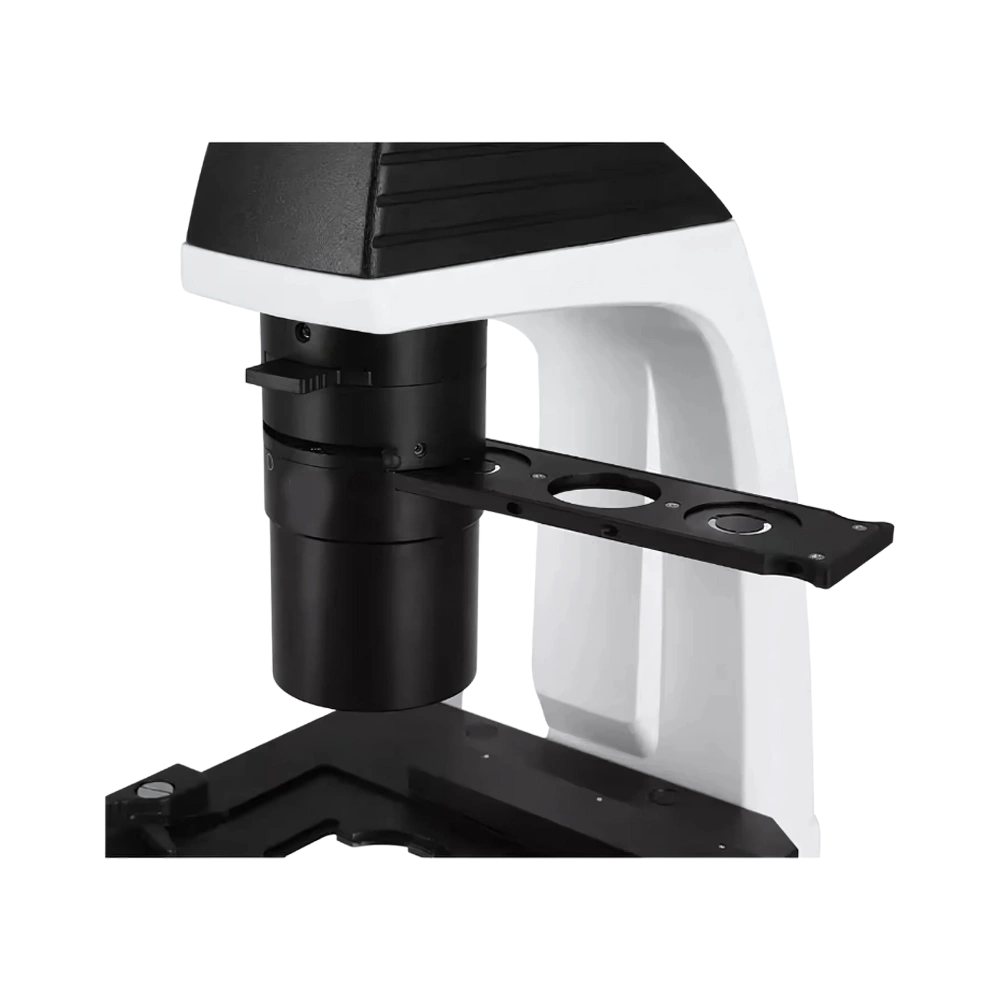
Specifications
| Head Type | Seidentopf trinocular, 45° tilt, 48 to 76 mm eye distance, 100% or 80/20 light split |
| Eyepiece | 10X magnification, 22 mm view |
| Nosepiece | 5-hole rotating (quintuple) |
| LWD Infinity Plan Objectives | 10x/0.25 (W.D.= 8.3 mm), 20x/0.40 (W.D.= 7.2 mm), 40x/0.60 (W.D.= 3.4 mm) |
| LWD Infinity Plan Phase Contrast Objectives | 20x/0.40 (W.D.=7.2 mm) |
| Contrast Rings (Annular Spot) | 20x and 40x |
| Condenser | Detachable LWD type, Numerical Aperture: 0.3 |
| Working Distance | 72 mm (with condenser), 195 mm (without) |
| Color Filters | Blue, Green |
| Mechanical Stage Size | 241×210 mm |
| Stage Movement Range | 128 × 80 mm, fits 96-well plates |
| Round Plate Diameter | 118 mm |
| Culture Dish Holder Diameter | 54 mm |
| Light Source | 6V/30W halogen, Koehler type |
| Net Weight | 16 kg |
| Gross Weight | 18 kg |
| Packaging Dimensions | 660 × 600 × 340 mm |
Pricing
| Product | Price | Unit | Action |
|---|---|---|---|
| Inverted Fluorescence Microscope LMIF-502 | $ 5050 | Each of 1 |
Features
Phase Contrast Capability
Detachable Long Working Distance (LWD) Condenser
Spacious Mechanical Stage
Sturdy Build
Efficient Halogen Illumination
Optional Accessories
| Model no. | Accessory |
| LMIF-502-DC1 | Digital Camera |
Applications
Inverted Fluorescence Microscope LMIF-502 facilitates high-contrast visualization of cell-pathogen interactions for virology and microbial research and ideal for monitoring cell organization and structural development in tissue engineering.
Similar Products

$ 6700 / Each of 1

$ 4550 / Pack of 1

$ 3275 / Each of 1

$ 3962.5 / Each of 1
Frequently Asked Questions
1 What is an Inverted Microscope?
An Inverted Microscope is a laboratory apparatus designed to examine large & live specimens in culture dishes in order to allow easy access to the sample from underneath.
2 What is the difference between an Inverted and Upright Microscope?
In Inverted Microscope the objective lenses are positioned beneath the specimen whereas in Upright Microscope the objective lenses are positioned above the specimen.
3 Can Inverted Microscope be used for non-biological samples?
It is used in materials science and microelectronics for studying thin films, microstructures and other small-scale samples.
4 Can Inverted Microscope be used for time-lapse imaging?
It is engineered to help researchers in monitoring living cells over extended periods without disturbing the sample.
5 Can Inverted Microscope be used for multi-well plates or larger samples?
It can be used for working with multi-well plates, petri dishes and other large sample containers.
6 Can Inverted Microscope be used for 3D imaging?
Inverted Microscope equipped with confocal or structured illumination module can perform 3D imaging.