

Get Quote
Contact us now to receive a detailed quotation.
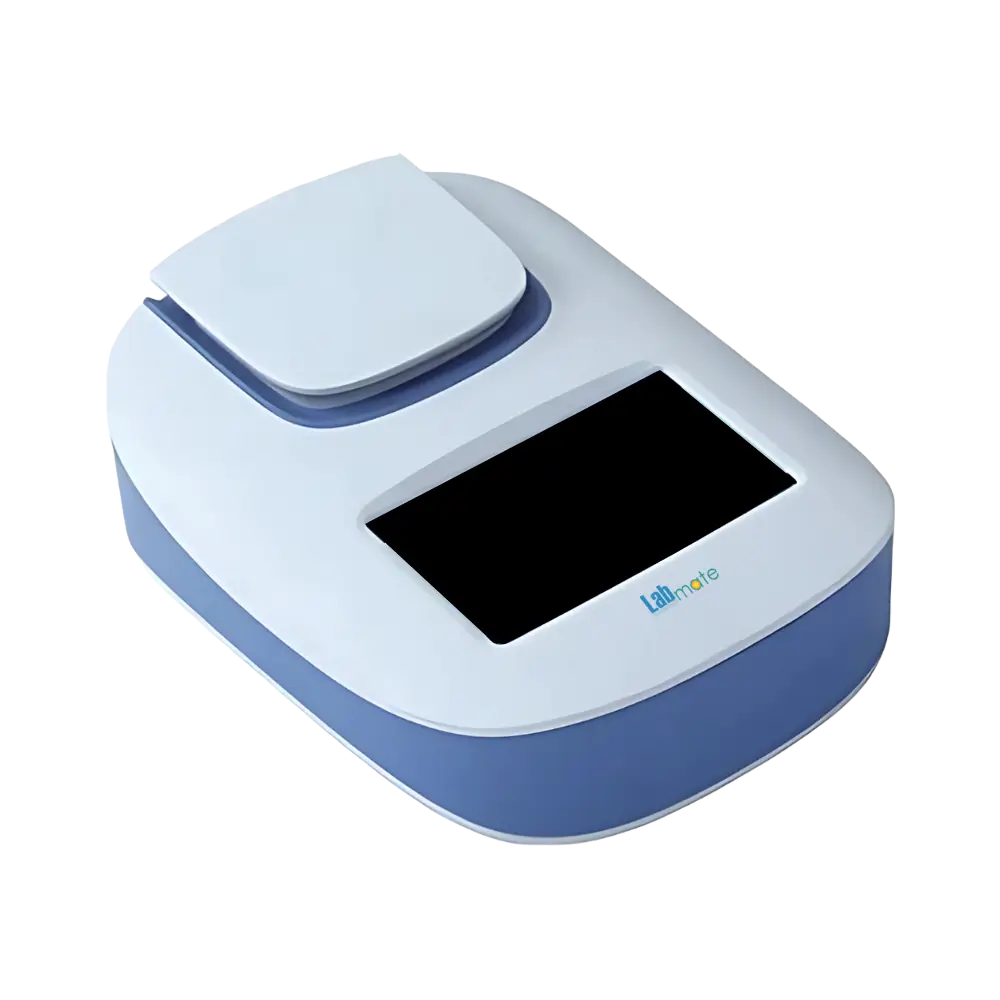
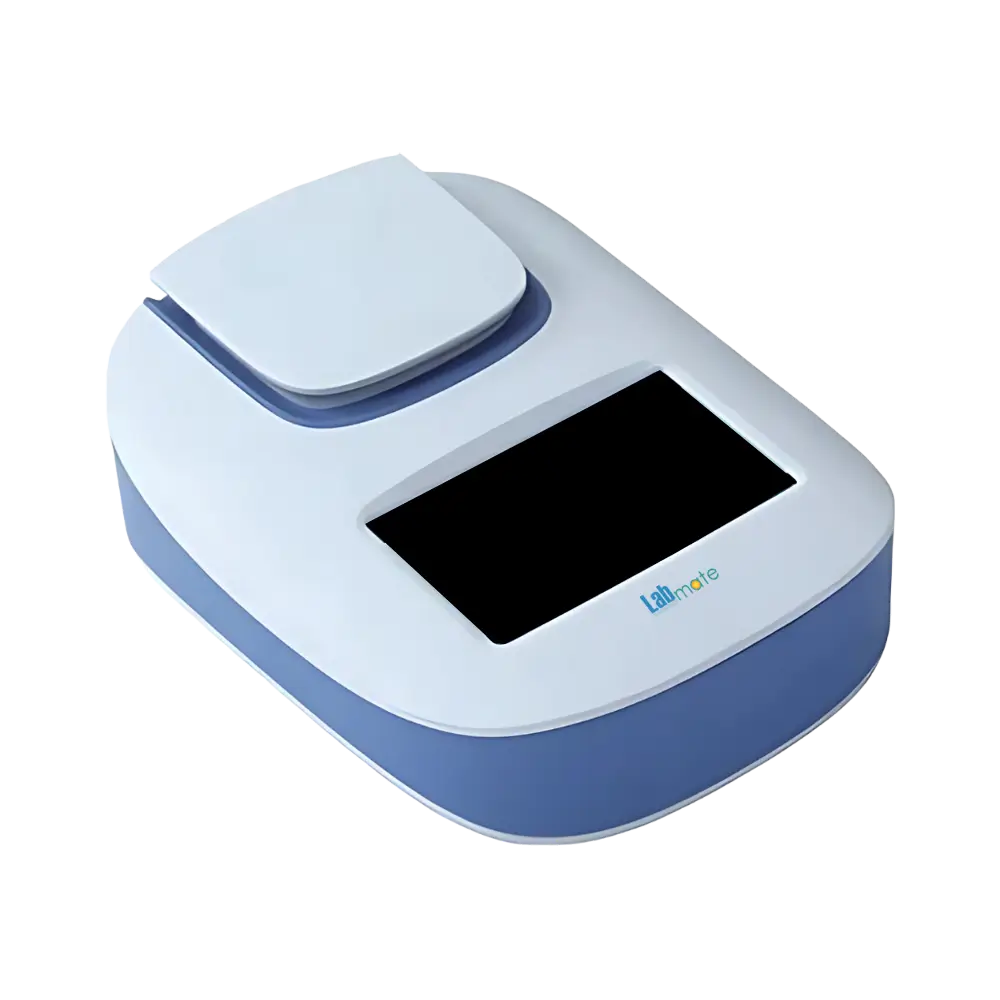
Fluorometer features a measurement time of 3 seconds, ensuring fast and accurate results. Accommodates minimal sample volume range of 1 to 20μl. Feature Intuitive touch screen interface simplifies operation and enables for easy data input. Equipped with a monochrome LED light source. Our Fluorometer is a versatile tool, ideal for a broad range of applications in molecular biology, biochemistry, and life science research.
Specifications
| Excitation Wavelength | 470/625 nm (standard), 365/525 nm (optional) |
| Emission Wavelength | 525/690 nm (standard), 460/620 nm (optional) |
| Sample Volume | 1 to 20μl |
| Sample Capacity | 1 Detector photodiode |
| Concentration Range | 0.01ng/μl-120ng/μl (dsDNA HS), 0.2ng/μl-2000ng/μl (dsDNA BR), 0.05ng/μl-240ng/μl (Oligo), 0.1mg/ml-20mg/ml (protein BR) |
| Measurement Time | 3 seconds |
| Display | Touch screen display |
| Tube Type | 0.5ml PCR tube |
| Voltage | DC12V 2A |
| Programs Stored | 10000 |
| Channel Number | 2 |
| Data Export | U Disk |
| Data Format | CSV, PDF |
| Repeatability | < 1.5% |
| Data Interface | USB (Type A) x2, USB (Type B) x1 |
| Calibration Method | 2- or 3-point calibration |
| Response Range | Five orders of magnitude |
| Linearity (R²) | ≥ 0.995 |
| Net Weight | 1.0 Kg |
Pricing
| Product | Price | Unit | Action |
|---|---|---|---|
| Fluorometer LMFMR-B100 | $ 6837.5 | Each of 1 |
Features
Data Export & Connectivity
Compact and Lightweight
Quick Assessment
Digital Display
Applications
Fluorometer enables the detection of environmental pollutants and biomolecules in water and soil samples using fluorescence-based assays.
Selection Guide
Fluorometer LMFMR-B100 is perfect for researchers seeking accurate fluorescence measurements in compact volumes. It supports dual standard excitation/emission wavelengths (470/625 nm and 525/690 nm) and provides optional wavelength flexibility (365/525 nm and 460/620 nm), making it suitable for a variety of fluorescence-based studies such as nucleic acid quantification, protein assays, and enzyme kinetics. With a minimal sample volume requirement of just 1–20 μl and a single-sample capacity, it is especially useful for high-value or limited samples often used in molecular biology, clinical diagnostics, and biochemical experiments. The integrated photodiode detector ensures high sensitivity and reliability. Customers should also consider its performance in peer-reviewed research, ease of integration into lab workflows, and available certifications that ensure compliance with laboratory standards, making it a practical choice for precision-driven applications.
Similar Products

$ 4475 / Each of 1
$ 4475 / Pack of 1
$ 4475 / Each of 1
Frequently Asked Questions
1 What is a Fluorometer?
A Fluorometer is an apparatus designed to measure the fluorescent light emitted by the sample with the aid of ultraviolet rays.
2 Can Fluorometer be used to measure fluorescence in living organisms?
It is used for in vivo fluorescence imaging that detects the fluorescence of substances within living organisms.
3 What is the difference between a Fluorometer and a Luminometer?
A Fluorometer measures light emitted from a sample due to fluorescence, whereas a Luminometer measures light emitted from a chemical reaction.
4 What types of samples can be measured using Fluorometer?
It can measure wide variety of samples such as biological, environmental, chemical as well as food and beverage samples.
5 What is a Calibration curve in Fluorometer?
A calibration curve is a plot used to relate the fluorescence intensity to the concentration of a substance.
6 Can Fluorometer be used in medical diagnostics?
It is used in medical diagnostics for detecting substances such as biomarkers, disease-related proteins and infectious agents.