

Get Quote
Contact us now to receive a detailed quotation.
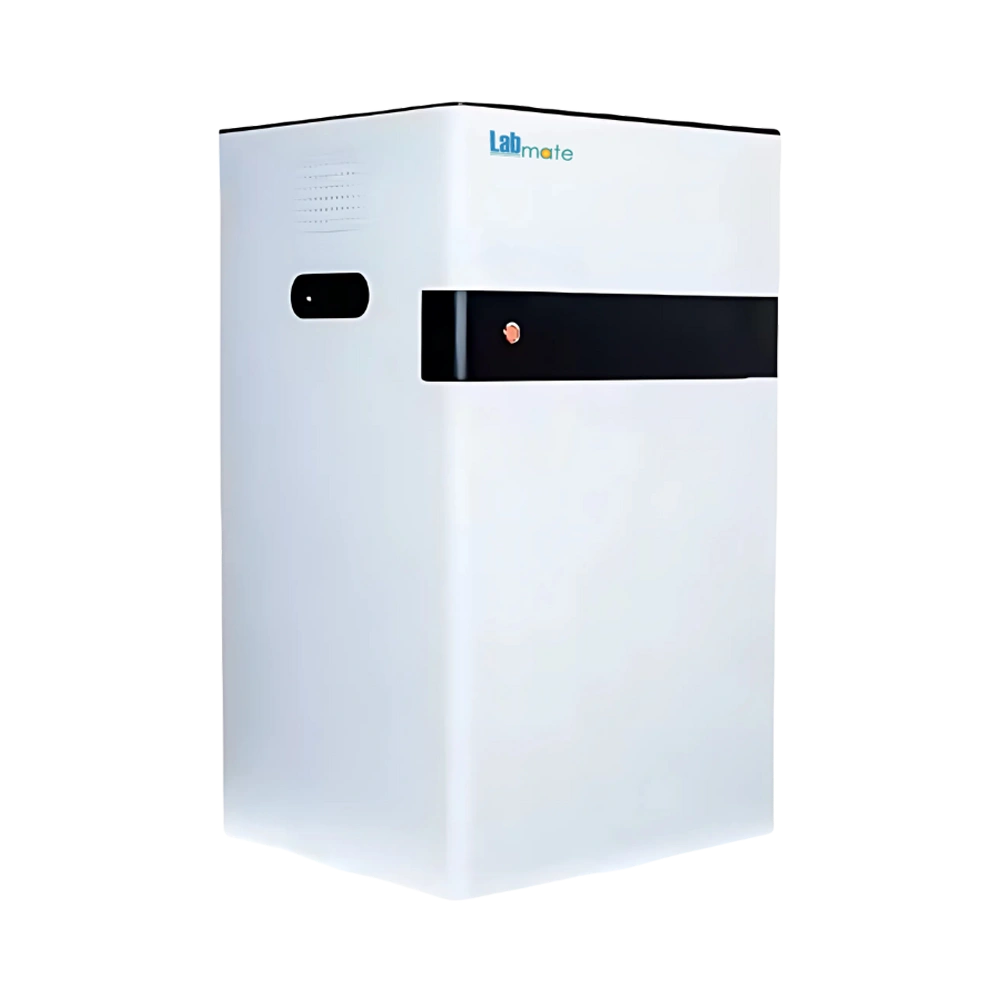
Chemiluminescence Imaging System LMCIS-B401 is equipped with -30°C cooling temperature. Its cooled back-illuminated CMOS camera with 6-megapixel resolution ensures clear image capture. It includes auto focus function ensuring reliable visualization without manual adjustments. Its 4-layer manual sample tray allows flexible placement and efficient handling of multiple samples. Our Chemiluminescence Imaging System is suitable for chemiluminescent detection, western blot, gel documentation.
Specifications
| Camera Type | Cooled Back-illuminated CMOS |
| Resolution | 6 Megapixels |
| Pixel Size | 4.54 × 4.54 μm |
| Regulated Cooling Temperature | -30°C |
| Dynamic Range | 4.8 OD |
| Pixel Density | 16-bit (65,536 Grey Scales) |
| Lens | Electronic Lens F0.95 |
| Sample tray | 4 layers |
| Imaging Area (Gel Doc and Protein Gels) | 21 × 26 cm |
| Filter Wheel | 5-Position Standard Filter Wheel |
| Dimensions | 500 × 550 × 880 mm |
| Weight | 27 Kg |
Pricing
| Product | Price | Unit | Action |
|---|---|---|---|
| Chemiluminescence Imaging System LMCIS-B401 | $ 15900 | Each of 1 |
Features
Multi-mode imaging
High sensitivity
UV Transillumination
White LED Transillumination
SHST capture software
SHST Analysis
Optional Accessories
Model No | Accessory |
LMCIS-B401-C1 | Blue LED transmission |
LMCIS-B401-C2 | Blue light source+ Filter |
LMCIS-B401-C3 | Green light source+ Filter |
LMCIS-B401-C4 | Red light source+ Filter |
LMCIS-B401-C5 | F0.8 Lens Replacement |
Applications
Chemiluminescence Imaging System LMCIS-B401 is suitable for chemiluminescent detection, western blot, nucleic acid gel visualization, gel documentation and protein electrophoresis like SDS-PAGE, in biomedical and molecular biology laboratories.
Selection Guide
Chemiluminescence Imaging System LMCIS-B401 is a high-performance imaging solution designed for advanced research applications such as Western blotting, protein quantification, and nucleic acid detection. It is widely used in molecular biology, proteomics, and biomedical studies where high sensitivity and accuracy are critical. Featuring a cooled CCD or sCMOS camera, it ensures low background noise and excellent detection of low-intensity chemiluminescent signals. The system supports multiple imaging modes, including chemiluminescence, fluorescence, and visible light, providing versatility for various experimental needs. With ISO and CE certifications, it meets international standards for quality and safety, making it suitable for both academic research and pharmaceutical laboratories operating under GLP/GMP conditions. This model is ideal for researchers seeking a reliable, sensitive, and multi-functional imaging platform that aligns with rigorous scientific and regulatory requirements.
Similar Products


$ 13712.5 / Each of 1

$ 15650 / Each of 1

$ 21037.5 / Each of 1

$ 11275 / Each of 1

$ 9212.5 / Each of 1

$ 20687.5 / Each of 1

$ 13587.5 / Each of 1

$ 18150 / Each of 1
Frequently Asked Questions
1 What is a Chemiluminescence Imaging System?
A Chemiluminescence Imaging System is an apparatus designed to use the emission of light from a chemical reaction to visualize and analyze specific biological or chemical processes.
2 How does a Chemiluminescence Imaging System work?
It works by detecting light emitted from a chemical reaction to visualize specific targets in biological samples.
3 Can Chemiluminescence Imaging System be used for quantitative analysis?
It can be used for quantitative analysis by measuring the intensity of the emitted light, which correlates with the amount of the target substance.
4 What types of samples are suitable for analysis using Chemiluminescence Imaging System?
It is ideal for analyzing biological samples such as proteins, DNA, and RNA, particularly when these samples are labeled with chemiluminescent substrates or probes.
5 Can Chemiluminescence Imaging System be used for Western blot analysis?
It is commonly used in Western blot analysis to detect specific proteins with high sensitivity and clarity.
6 Can Chemiluminescence Imaging System detect low-abundance proteins?
It excels at detecting low-abundance proteins due to its high sensitivity and low background noise.
7 Can Chemiluminescence Imaging System be used in clinical diagnostics?
It is used in clinical diagnostics to detect biomarkers, hormones, or pathogens through chemiluminescent immunoassays.
8 Is Chemiluminescence Imaging System helpful in drug discovery research?
It supports drug discovery by enabling sensitive assays for target validation, biomarker detection, and pharmacokinetics.
9 Can Chemiluminescence Imaging System be used for cell-based assays?
It can be used for cell-based assays by detecting chemiluminescent signals from cellular activity or reporter gene expression.
10 How is Chemiluminescence Imaging System used in environmental testing?
It is used in environmental testing to detect trace contaminants or toxins through chemiluminescent biosensors.