

Get Quote
Contact us now to receive a detailed quotation.
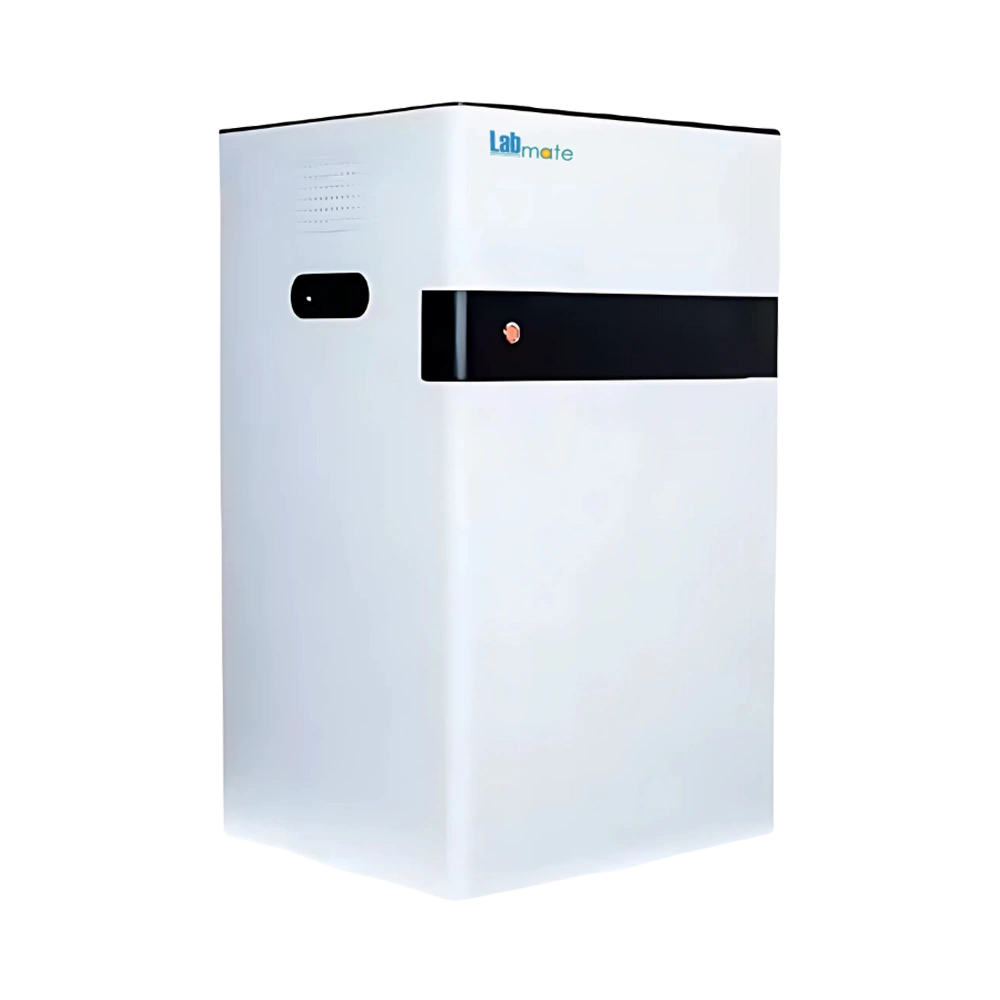
Chemiluminescence Imaging System LMCIS-B400 offers 9 megapixels resolution. It offers multi-mode capability allowing easy transition between ECL detection, fluorescent analysis, and gel documentation. It features 4-layer manual sample tray for flexible and efficient operation. Its UV and white LED transilluminators support versatile visualization of nucleic acids and protein gels. Our Chemiluminescence Imaging System is suitable for life science, research, and clinical diagnostics.
Specifications
| Camera Type | Cooled Back-illuminated CMOS |
| Resolution | 9 Megapixels |
| Pixel Size | 3.76 × 3.76 μm |
| Regulated Cooling Temperature | -30°C |
| Dynamic Range | 4.8 OD |
| Pixel Density | 16-bit (65,536 Grey Scales) |
| Lens | Electronic Lens F0.95 |
| Sample tray | 4 layers |
| Imaging Area (Gel Doc and Protein Gels) | 21 × 26cm |
| Filter Wheel | 5-Position Standard Filter Wheel |
| Dimensions | 500 × 550 × 880 mm |
| Weight | 27 Kg |
Pricing
| Product | Price | Unit | Action |
|---|---|---|---|
| Chemiluminescence Imaging System LMCIS-B400 | $ 11275 | Each of 1 |
Features
High sensitivity
Intuitive software
Auto focus function
SHST capture software
SHST Analysis
Optional Accessories
Model No | Accessory |
LMCIS-B400-C1 | Blue LED transmission |
LMCIS-B400-C2 | Blue light source+ Filter |
LMCIS-B400-C3 | Green light source+ Filter |
LMCIS-B400-C4 | Red light source+ Filter |
LMCIS-B400-C5 | F0.8 Lens Replacement |
Applications
Chemiluminescence Imaging System LMCIS-B400 is suitable for ECL-based chemiluminescence, fluorescent Western blot analysis, gel documentation, and SDS-PAGE protein separation, across life science, research, and clinical diagnostics.
Selection Guide
Chemiluminescence Imaging System LMCIS-B400 is a high-performance solution designed for advanced research applications such as Western blot analysis, DNA/RNA imaging, and protein interaction studies that require sensitive detection of chemiluminescent signals. It features a cooled back-illuminated CCD or sCMOS camera, high quantum efficiency, low background noise, and a wide dynamic range suitable for capturing low-abundance targets with high clarity and precision. The system is widely used in molecular biology, biochemistry, and pharmaceutical research due to its reliability in both qualitative and quantitative analysis. With certifications such as ISO and CE, the model meets international safety and quality standards, making it suitable for regulated laboratory environments. Researchers can select this model with confidence based on their need for high sensitivity, long-exposure imaging, and compatibility with advanced imaging software for efficient data analysis.
Similar Products

$ 13587.5 / Each of 1

$ 9212.5 / Each of 1


$ 13712.5 / Each of 1

$ 15900 / Each of 1

$ 21037.5 / Each of 1

$ 18150 / Each of 1

$ 20687.5 / Each of 1

$ 15650 / Each of 1
Frequently Asked Questions
1 What is a Chemiluminescence Imaging System?
A Chemiluminescence Imaging System is an apparatus designed to use the emission of light from a chemical reaction to visualize and analyze specific biological or chemical processes.
2 How does a Chemiluminescence Imaging System work?
It works by detecting light emitted from a chemical reaction to visualize specific targets in biological samples.
3 Can Chemiluminescence Imaging System be used for quantitative analysis?
It can be used for quantitative analysis by measuring the intensity of the emitted light, which correlates with the amount of the target substance.
4 What types of samples are suitable for analysis using Chemiluminescence Imaging System?
It is ideal for analyzing biological samples such as proteins, DNA, and RNA, particularly when these samples are labeled with chemiluminescent substrates or probes.
5 Can Chemiluminescence Imaging System be used for Western blot analysis?
It is commonly used in Western blot analysis to detect specific proteins with high sensitivity and clarity.
6 Can Chemiluminescence Imaging System detect low-abundance proteins?
It excels at detecting low-abundance proteins due to its high sensitivity and low background noise.
7 Can Chemiluminescence Imaging System be used in clinical diagnostics?
It is used in clinical diagnostics to detect biomarkers, hormones, or pathogens through chemiluminescent immunoassays.
8 Is Chemiluminescence Imaging System helpful in drug discovery research?
It supports drug discovery by enabling sensitive assays for target validation, biomarker detection, and pharmacokinetics.
9 Can Chemiluminescence Imaging System be used for cell-based assays?
It can be used for cell-based assays by detecting chemiluminescent signals from cellular activity or reporter gene expression.
10 How is Chemiluminescence Imaging System used in environmental testing?
It is used in environmental testing to detect trace contaminants or toxins through chemiluminescent biosensors.