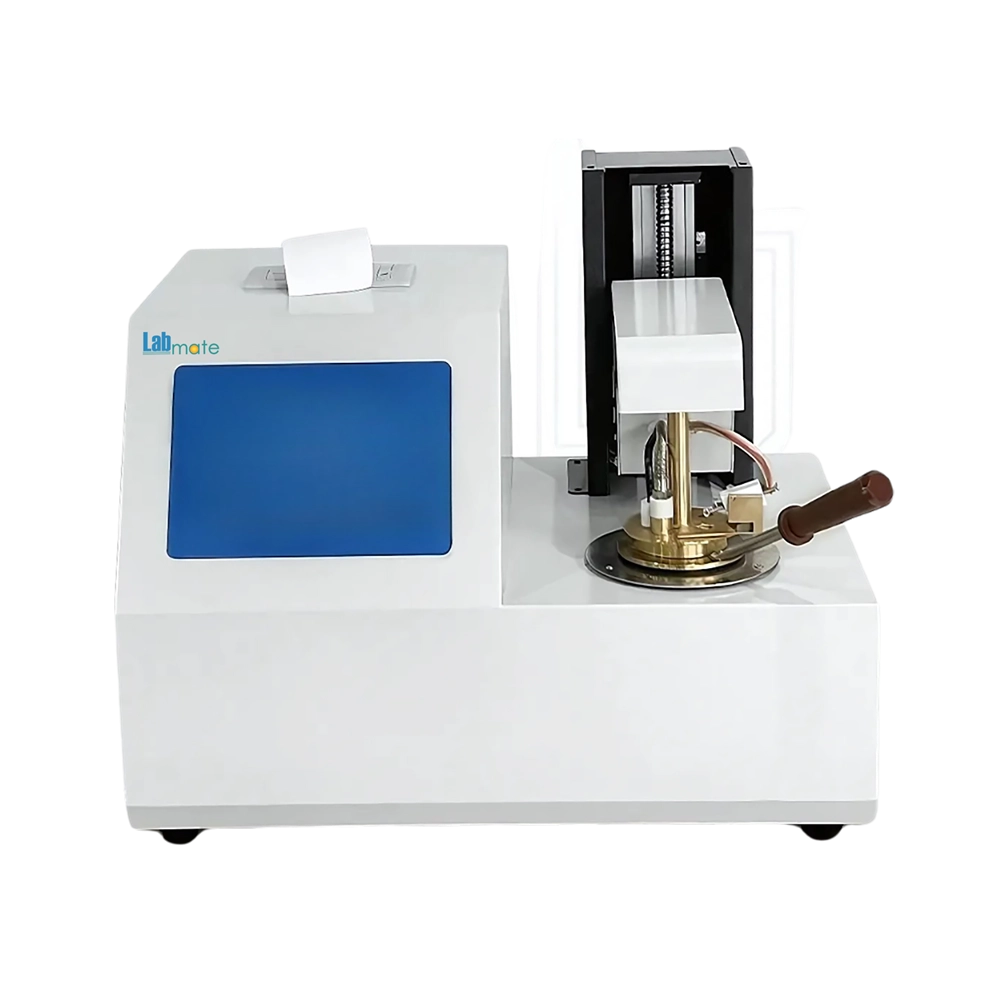

Get Quote
Contact us now to receive a detailed quotation.
Specifications
| Ambient Temperature | 10 °C to 40 °C |
| Relative Humidity | ≤ 80 % |
| Measurement Range | Ambient Temperature to 250°C |
| Flash Point | Lower than 104 °C, error is 2°C,Higher than 104 °C, error is 6°C |
| Resolution | 0.1°C |
| Precision | 0.005 |
| Gas Flame | 3 to 4 mm |
| Power Consumption | 350 W |
| Dimension | 550 × 470 × 500 mm |
Pricing
| Product | Price | Unit | Action |
|---|---|---|---|
| Pensky-Martens Flash Point Tester LMPFT-A101 | $ 8625 | Pack of 1 |
Features
Measurement Range
Ambient temperature to 250 degrees Celsius
Temperature Resolution
0.1 degree Celsius
Gas Flame Ignition
3 to 4 millimeter flame
Pressure Adjustment
Automatic atmospheric correction
Programmed Functions
Guide testing and data analysis
Result Storage
Automatic analysis and storage
Sample Flexibility
Accepts a range of sample sizes
Operating Environment
10 to 40 degrees Celsius
Power Consumption
350 watts
Compact Body
550 by 470 by 500 millimeters
Applications
Applications: Petrochemicals | Pharmaceuticals | Transportation
Functions: Closed Cup Flash Point Testing | Petroleum Product Testing | Biodiesel Testing | Gas Oil Testing | Fuel Blend Testing
Similar Products

$ 10737.5 / Pack of 1

$ 2312.5 / Pack of 1
Frequently Asked Questions
1 What is a Pensky-Martens Flash Point Tester LMPFT-A101?
A Pensky-Martens Flash Point Tester LMPFT-A101 is an apparatus designed to determine the flash point of petroleum products, biodiesel, solvents, and other flammable liquids using a closed cup method.
2 Is Pensky-Martens Flash Point Tester LMPFT-A101 suitable for quality control in lubricant manufacturing?
Pensky-Martens Flash Point Tester LMPFT-A101 is ideal for quality control labs in lubricant manufacturing to ensure safety and performance compliance.
3 Can Pensky-Martens Flash Point Tester LMPFT-A101 be used in environmental testing laboratories?
Pensky-Martens Flash Point Tester LMPFT-A101 is used in environmental testing labs to assess waste oil and solvent flash points for safe disposal or recycling.
4 How does Pensky-Martens Flash Point Tester LMPFT-A101 support experimental research in thermal stability of liquids?
Pensky-Martens Flash Point Tester LMPFT-A101 supports experimental research by providing precise flash point data critical for studying the thermal stability and volatility of complex liquid compounds.
5 Can Pensky-Martens Flash Point Tester LMPFT-A101 be used for analyzing unknown liquid mixtures in forensic labs?
Forensic labs use Pensky-Martens Flash Point Tester LMPFT-A101 to estimate the flammability profile of unknown or confiscated liquid samples during investigations.
6 How does Pensky-Martens Flash Point Tester LMPFT-A101 support research on sustainable solvent development?
Pensky-Martens Flash Point Tester LMPFT-A101 enables researchers to assess flash points of new bio-derived solvents, aiding in the development of safer, greener alternatives to conventional solvents.
7 Is Pensky-Martens Flash Point Tester LMPFT-A101 used in quality control for petrochemical products?
Pensky-Martens Flash Point Tester LMPFT-A101 is commonly used in petrochemical industries for routine quality control of fuels, lubricants, and other volatile liquids.
8 Can Pensky-Martens Flash Point Tester LMPFT-A101 be used to test hydraulic fluids in industrial systems?
Pensky-Martens Flash Point Tester LMPFT-A101 is used to test the flash point of hydraulic fluids to ensure they meet safety and performance specifications under high-temperature conditions.
9 Is Pensky-Martens Flash Point Tester LMPFT-A101 appropriate for evaluating waste liquid combustibility in recycling plants?
Pensky-Martens Flash Point Tester LMPFT-A101 is often used in recycling and waste management facilities to determine if waste liquids are classified as combustible or hazardous.
10 Is Pensky-Martens Flash Point Tester LMPFT-A101 appropriate for use in specialty chemical development labs?
Pensky-Martens Flash Point Tester LMPFT-A101 is frequently used in specialty chemical R&D labs to test prototype formulations and screen for flammable properties.
11 What is a Pensky-Martens Flash Point Tester?
A Pensky-Martens Flash Point Tester is an apparatus designed to determine the flash point of petroleum products and other liquids using a closed cup method.
12 How does Pensky-Martens Flash Point Tester work?
It works by gradually heating a sample in a closed cup and introducing an ignition source at regular intervals to detect the temperature at which vapors ignite.
13 What types of samples can be tested using Pensky-Martens Flash Point Tester?
It can test petroleum products, biodiesel, solvents, lubricants, and other volatile liquids.
14 Can Pensky-Martens Flash Point Tester be used for biodiesel analysis?
It is widely used for determining the flash point of biodiesel to ensure it meets safety and fuel specification standards.
15 Is Pensky-Martens Flash Point Tester suitable for quality control in lubricant manufacturing?
It is commonly used in lubricant manufacturing to ensure products meet safety specifications and avoid volatility issues.
16 How is Pensky-Martens Flash Point Tester used in environmental compliance testing?
It is used in environmental compliance to test waste oils and solvents, helping determine if they meet criteria for safe disposal or transport.
17 Can Pensky-Martens Flash Point Tester be used in pharmaceutical manufacturing?
It is used in pharmaceutical manufacturing to assess the flammability of solvents and ensure compliance with safety standards.
18 Is Pensky-Martens Flash Point Tester effective for testing renewable fuels?
It is effective for testing renewable fuels like biodiesel and bio-oil, ensuring they meet transportation and storage safety criteria.
19 Can Pensky-Martens Flash Point Tester be used in forensic investigations?
It is used in forensic investigations to analyze fire debris and identify flammable substances present at fire scenes.
20 How does Pensky-Martens Flash Point Tester support waste classification?
It helps classify waste materials as hazardous or non-hazardous by determining their flash point per regulatory thresholds.