
Get Quote
Contact us now to receive a detailed quotation.
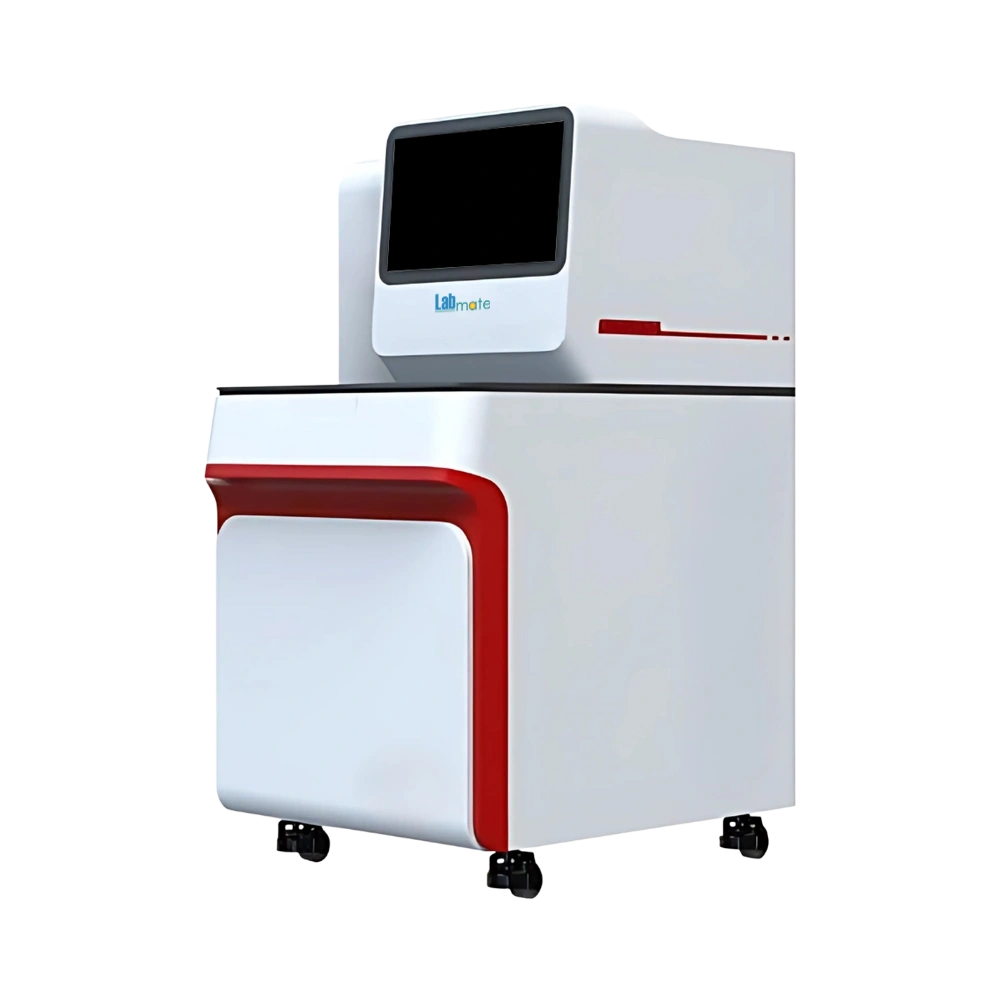
Liquid Scintillation Counter LMSCL-A101 detects α particles from 3 to 10 MeV and β particles from 0 to 5 MeV. It features dynamic and static dual shielding to block external radiation and background interference. Equipped with temperature control system, it stabilizes internal conditions. Incorporates advanced analysis software for quenching curve creation, sample evaluation, and spectral replay functions. Our Scintillation Counter ensure radioactivity detection in waste, medicine, food, and labs.
Specifications
| Detection Range | α: 3 to 10MeV, β: 0 to 5MeV |
| Detection Efficiency (³H) | Greater than 65% |
| Detection Efficiency (¹⁴C) | Greater than or equal to 95% |
| Background Count Rate (³H) | Greater than 1.0cpm |
| Background Count Rate (¹⁴C) | Less than or equal to 1.0cpm |
| Working Temperature Range | 5 to 35℃ |
| Count Change | 0.2% per 24h |
| Maximum Injections Number | 40 |
| Detection System | Main detector, anti-coincidence detector |
| Multi-Channel Analyzer | 65536channels |
| Communication Mode | USB, serial communication |
| Humidity | Less than or equal to 95% |
| Power Consumption | 150W |
| Dimension | 840×1100×1600 mm |
| Weight | 850 Kg |
Pricing
| Product | Price | Unit | Action |
|---|---|---|---|
| Liquid Scintillation Counter LMSCL-A101 | $ 172700 | Each of 1 |
Features
Touch display
No gamma source
Light blocking
Low background noise
Mixed particle counting
Mobily casters
Standard Accessories
Model No. | Accessory name |
LMSCL-A101-L1 | Lead chamber |
LMSCL-A101-C1 | Main and anti-coincidence probe |
LMSCL-A101-S1 | Scintillation liquid bottle |
LMSCL-A101-P1 | Polyethylene plastic sample bottles |
LMSCL-A101-P2 | Pipette |
LMSCL-A101-P3 | Pipette tips |
Applications
Liquid Scintillation Counter LMSCL-A101 is ideal for radioactivity measurement in nuclear waste treatment, environmental protection, archaeological dating, medical analysis, food safety, and scientific research.
Selection Guide
Liquid Scintillation Counter LMSCL-A101 is a highly efficient system designed for detecting low-energy beta emitters like tritium (³H), carbon-14 (¹⁴C), phosphorus-32 (³²P), and sulfur-35 (³⁵S), making it suitable for research studies in environmental monitoring, radiolabeling, pharmaceutical development, and biochemical assays. It supports both aqueous and organic samples, with advanced features such as automatic background correction, quench correction, and high sample throughput to ensure accurate and reliable results. Commonly used in life sciences, nuclear medicine, and radiation safety labs, it is equipped with user-friendly software for streamlined data handling. Certified to meet international safety and quality standards (ISO, CE), this model provides dependable performance and compliance assurance, making it a valuable choice for researchers and professionals in regulated laboratory environments.
Similar Products

$ 36650 / Each of 1
Frequently Asked Questions
1 What is a Liquid Scintillation Counter?
A Liquid Scintillation Counter is an apparatus designed to detect and measure beta particles emitted by radioactive samples.
2 What is the principle of operation in Liquid Scintillation Counter?
It measures radioactivity by detecting light emitted from a scintillation cocktail upon beta particles absorption.
3 What types of samples can be analyzed using Liquid Scintillation Counter?
It can analyze a variety of samples such as biological, environmental, chemical and radioactive samples.
4 Can Liquid Scintillation Counter be used in high-throughput labs?
It rapidly counts multiple samples therefore is suitable for high-throughput labs.
5 What is the role of the Photomultiplier Tube (PMT) in Liquid Scintillation Counter?
It is used for amplifying the light emitted by the scintillation cocktail upon interaction with beta particles.
6 How is the efficiency of Liquid Scintillation Counter determined?
Its efficiency is determined by calibrating the system using standards with known radioactivity.
7 What is the role of the scintillation cocktail in Liquid Scintillation Counter?
It absorbs the energy from beta particles and re-emits it as light (scintillations) that is detected by photomultiplier tubes to measure the radioactivity.
8 Can Liquid Scintillation Counter detect low-level radioactivity?
It is highly sensitive and can detect trace amounts of radioisotopes.