
Get Quote
Contact us now to receive a detailed quotation.
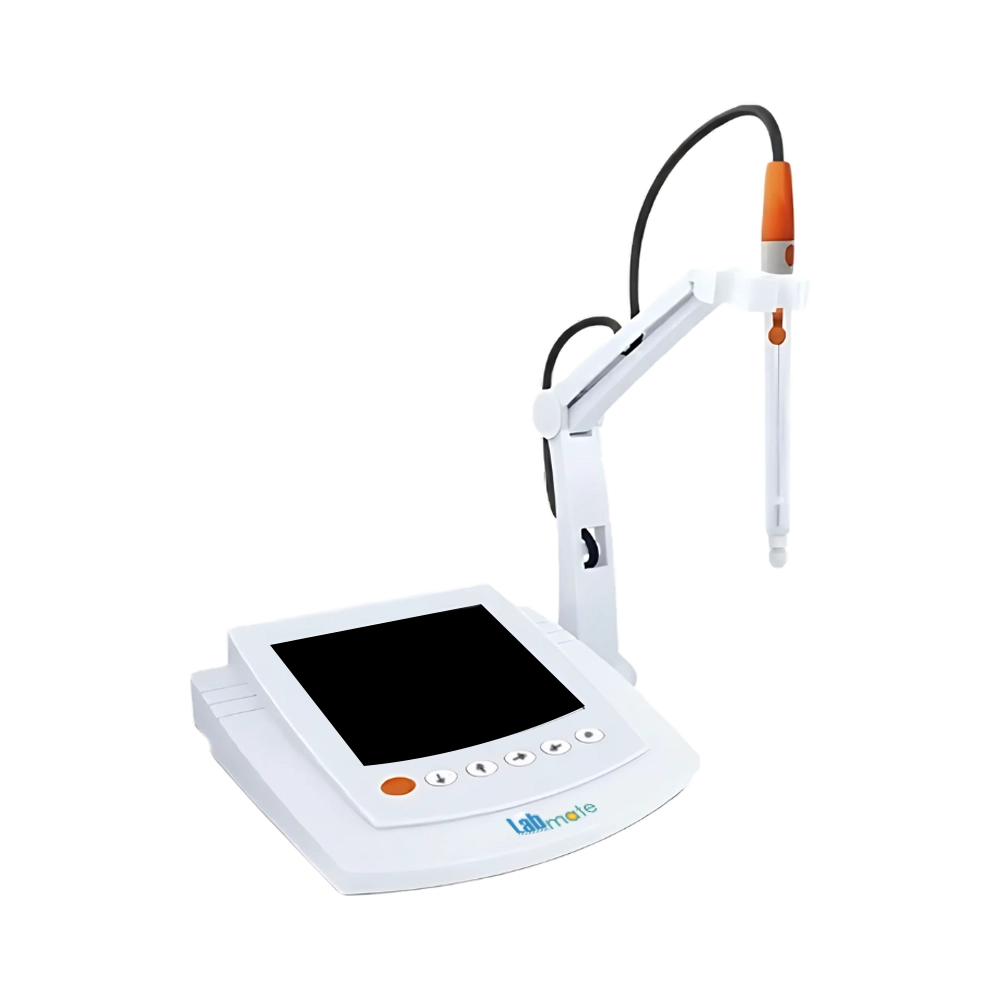
Lead Meter LMLDM-A100 is equipped with a lead ion-selective electrode, which offers a measuring range from 0.2 to 20,700 ppm. It operates within a temperature range of 0 to 105 ℃, with temperature compensation for precise results. Provided a system menu that enables the setting of 8 parameters like calibration points and stability conditions. Incorporates a stability indicator for real-time analysis of data.
Specifications
| Pb Measurement Range | 1×10⁸ to 0.1M, 0.2 to 20700 ppm |
| Pb Measurement Accuracy | ± 1 % F.S. |
| Resolution | 0.001, 0.01, 0.1, 1 |
| Temperature Measurement Range | 0 to 105 °C, 32 to 221 °F |
| Temperature Accuracy | ± 0.5 °C, ± 0.9 °F |
| Temperature Resolution | 0.1°C |
| Temperature Compensation | 0 to 100 °C, 32 to 212 °F |
| mV Range | (-1999.9) to 1999.9 Mv |
| mV Accuracy | ± 0.2 mV |
| mV Resolution | 0.1 mV |
| Calibration Points | 2 to 5 points |
| Calibration Solutions | 0.001, 0.01, 0.1, 1, 10, 100, 1000, 10000 ppm, mol / L, mg / L |
| Compensation Mode | Manual or automatic |
| Data Hold Function | Manual or automatic endpoint detection |
| Reset Function | Yes |
| Stability Condition | Low or high |
| Calibration Due | 0 to 31 days |
| Power Off | Manual or automatic (10,20,30 minutes) |
| Memory | Stores up to 500 sets of data |
| Output | USB communication interface |
| Connector | BNC |
| Display | LCD (130 × 110 mm) |
| Dimension (L × W × H) | 210 × 188 × 60 mm |
| Weight | 1.5 kg |
Pricing
| Product | Price | Unit | Action |
|---|---|---|---|
| Lead Meter LMLDM-A100 | $ 2037.5 | Each of 1 |
Features
Fitted with a large LCD display
Advanced with a reset setting function
Integrated with auto hold function for better recording
Designed with a built-in real-time clock to timestamp events
Upgraded with a calibration due reminder for regular calibration of the meter
Employs USB communication interface for effortless data transfer
Offers direct ion concentration readout for accurate measurement
Standard Accessories
Lead ion selective electrode Temperature probe Standard solution (1000 ppm) Ionic strength adjuster (30 mL) USB cable DC 5 V Power adapter
Optional Accessories
Pb ion selective electrode range: 1×10⁸ to 0.1M, 0.2 to 20700 ppm Ion standard solutions: 480 mL / bottle Ionic strength adjuster: 480 mL / bottle Temperature probe with sensor
Applications
Lead meter is a used for measuring the concentration of lead ions in a solution. Utilized for occupational safety, water quality testing, environmental monitoring and in research and development.
Frequently Asked Questions
1 What is a Lead Meter?
A Lead Meter is an apparatus designed to measure the concentration of lead in laboratory samples such as water, soil, or biological fluids.
2 Why is Lead Meter important in testing?
It is important because it provides critical data for environmental monitoring, health assessments, and regulatory compliance.
3 What samples can be tested using Lead Meter?
It can test samples such as drinking water, wastewater, soil, paint chips, and blood.
4 Can Lead Meter be used in forensic investigations?
It is often employed in forensic toxicology to detect lead poisoning or contamination in evidence samples.
5 Can Lead Meter be used in pharmaceutical testing?
It is used in pharmaceutical testing to detect trace levels of lead in drug products or raw materials.
6 What role does Lead Meter play in mining and metallurgy labs?
It is used to measure lead concentrations in ore, slag, and smelted metals.
7 How is Lead Meter used in agricultural labs?
It is used in agricultural labs to analyze soil, irrigation water, and crops for lead contamination.
8 Is Lead Meter applicable in climate research or environmental monitoring?
It is used to analyze ice cores, sediments, and atmospheric samples for historic and present-day lead pollution.
9 How is Lead Meter used in aviation or aerospace material testing?
It is used to analyze metal alloys, coatings, and lubricants for trace lead content in aerospace materials.
10 Is Lead Meter applicable in the textile and dye industry?
It is used to test dyes, fabrics, and textile wastewater for lead contamination.