

Get Quote
Contact us now to receive a detailed quotation.

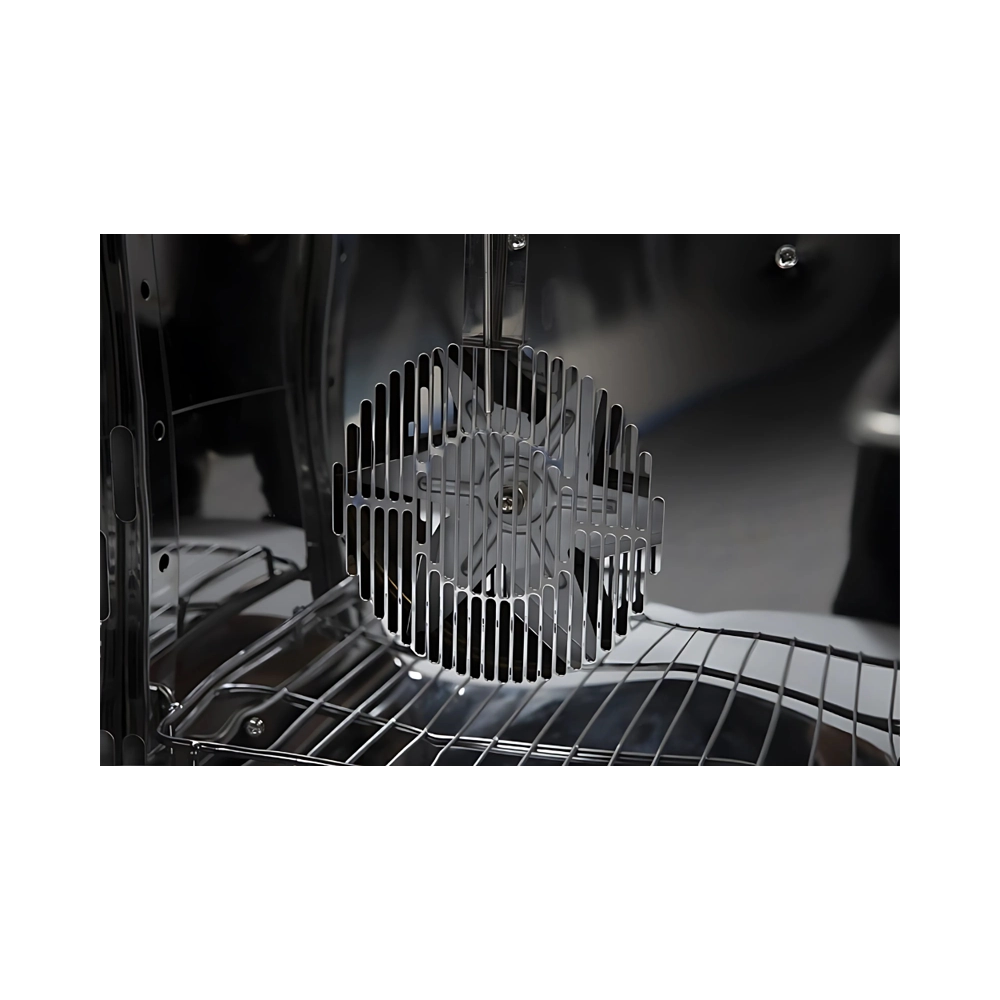
Electric Heating Incubator LMEI-A102 is equipped with 130 litres volume. Its LCD display offers clear temperature readings and simplifies real-time monitoring. Its 6-stage speed regulation ensures customizable airflow control for consistent temperature distribution. It features double-door design with glass inner door for easy observation and insulation. Our Electric Heating Incubator is ideal for microbial growth, cell culture, and enzyme assays.
Specifications
| Volume | 130 L |
| Temperature Range | Room temperature +5 to 100 °C |
| Temperature Fluctuation at 37°C | ±0.3 °C |
| Temperature Uniformity at 37°C | ±0.8 °C |
| Heating-up Time to 60°C | 20 min |
| Recovery Time (after 30 Seconds door open at 60°C) | 13 min |
| Number of Shelves | 2 (Standard) 7 (Maximum) |
| Countdown Time | 99 hours and 59 minutes |
| Program settings | 10 segments, 100 cycles |
| Power Consumption | 500 W |
| Internal Dimension | 570×400×570 mm |
| External Dimension | 715×616×842 mm |
| Net Weight | 57 kg |
| Gross Weight | 75 kg |
Pricing
| Product | Price | Unit | Action |
|---|---|---|---|
| Electric Heating Incubator LMEI-A102 | $ 3325 | Each of 1 |
Features
Bright I Control System
Countdown Reservation Function
Double Over-Temperature Alarm
6-Stage Speed Regulation
Preheating Chamber
RS-485 Connectivity
Optional Accessories
Model No | Accessory |
LMEI-A102-P1 | External printer |
LMEI-A102-F1 | Air filter |
LMEI-A102-F2 | Outlet air filter |
Applications
Electric Heating Incubator LMEI-A102 provides controlled environment for microbial growth, cell culture, and enzyme assays, in pharmaceuticals, biotechnology, and biochemical analysis.
Similar Products

$ 2450 / Each of 1

$ 3400 / Each of 1

$ 2137.5 / Each of 1

$ 2450 / Each of 1

$ 6275 / Each of 1

$ 4462.5 / Each of 1

$ 3075 / Each of 1

$ 1950 / Each of 1

$ 3700 / Each of 1

$ 4900 / Each of 1

$ 2812.5 / Each of 1

$ 4150 / Each of 1

$ 2325 / Each of 1

$ 2700 / Each of 1

$ 2650 / Each of 1
Frequently Asked Questions
1 What is an Electric Heating Incubator?
An Electric Heating Incubator is an apparatus designed to maintain a constant temperature environment for the growth of microbiological cultures, utilizing electric heating elements for precise temperature control.
2 How does an Electric Heating Incubator work?
It works by using electric heating coils combined with a thermostat or digital controller to maintain a stable internal temperature, ensuring ideal conditions for incubation.
3 Can Electric Heating Incubator be used for bacterial culture growth?
It is widely used for bacterial culture growth as it provides a stable, warm environment ideal for microorganism reproduction.
4 How is Electric Heating Incubator used in pharmaceutical testing?
In pharmaceutical testing, it is used to incubate drug samples under controlled conditions to assess microbial contamination and stability.
5 How is Electric Heating Incubator applied in environmental monitoring?
In environmental monitoring, it is used to incubate air, water, and soil samples to detect microbial presence and evaluate environmental quality.
6 What role does Electric Heating Incubator play in clinical diagnostics?
It plays a key role in clinical diagnostics by incubating patient samples like blood or swabs to culture pathogens for identification and sensitivity testing.
7 Can Electric Heating Incubator be used in agricultural research?
In agricultural research, it is used to study plant pathogens, soil microbes, and to support seed germination tests under regulated temperatures.
8 Can Electric Heating Incubator be used in biotechnology research?
It is used in biotechnology research for culturing genetically modified organisms and studying microbial expression systems.
9 How is Electric Heating Incubator used in water quality testing?
It is used in water quality testing to incubate water samples with specific growth media for detecting coliform bacteria and other pathogens.
10 What is the role of Electric Heating Incubator in forensic laboratories?
In forensic labs, it is used to culture microbial evidence from crime scenes or biological specimens for investigative analysis.