

Get Quote
Contact us now to receive a detailed quotation.
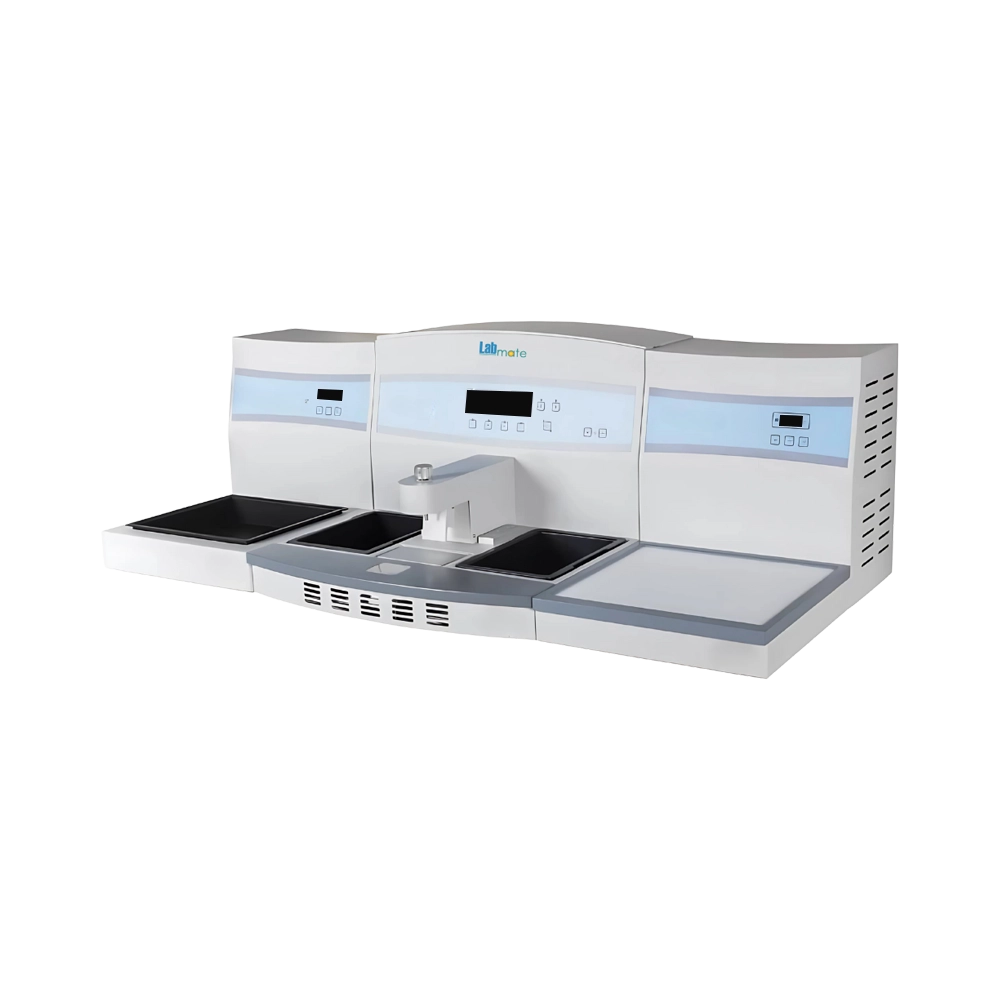
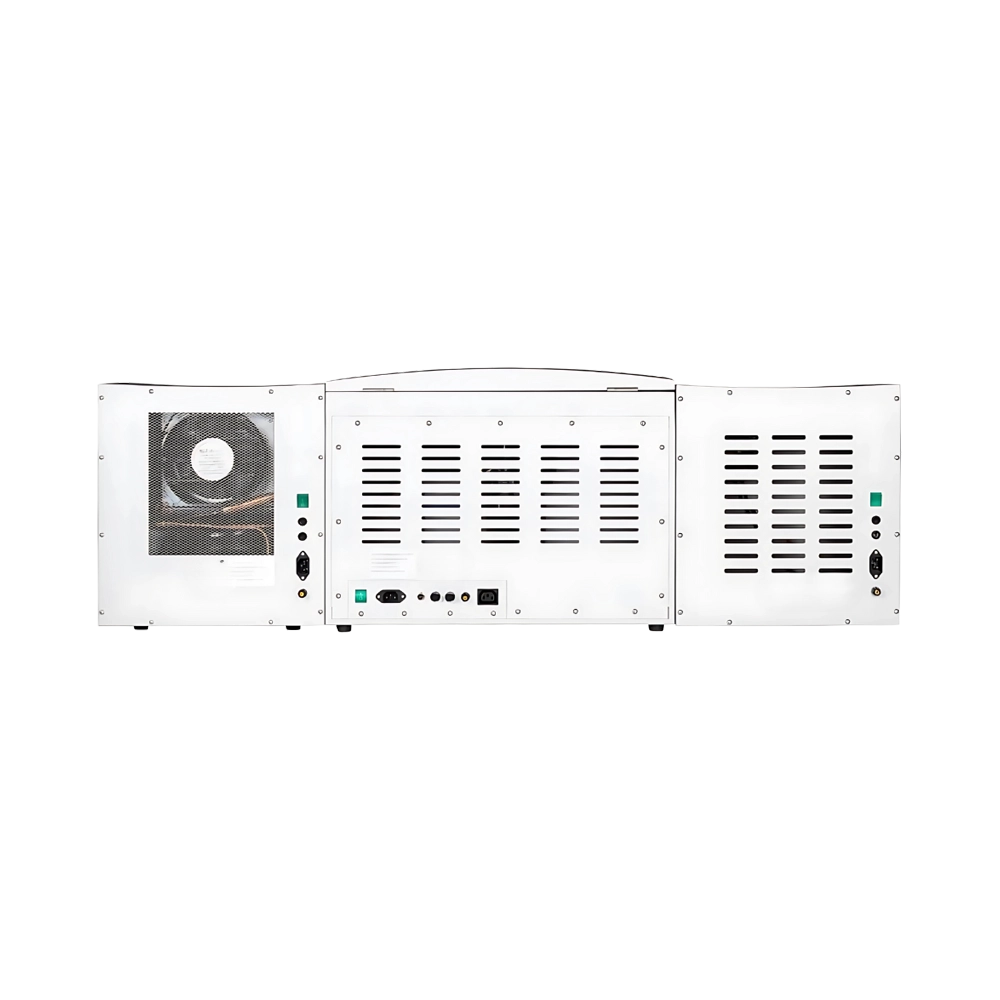
Tissue Embedding System LMTES-A100 has 4 L paraffin tank capacity. It offers fully programmable computer control for automatic start and stop. Equipped with temperature-sensing blocks and LCD with working status icons. Integrated with multi-channel control and overheating protection for safe reliable operation. Our System ensures consistent paraffin embedding with automatic memory restoration.
Specifications
| Paraffin Chamber Capacity | 4L |
| Thermal Storage Compartment Capacity | 4.5L |
| Paraffin Chamber Temperature Range | Room temperature to 85℃ |
| Paraffin Dispenser Temperature Range | Room temperature to 85℃ |
| Working Plate Temperature Range | Room temperature to 85℃ |
| Temperature Control Precision | ±1% |
| Forceps Wells Temperature Range | Room temperature to 85℃ |
| Paraffin Flow Control | Finger touch plate Optional foot pedal |
| Cryo Module Temperature Range | Room Temperature to -20℃ |
| Cryo Module Temperature Setting | -15℃ |
| Thermal Storage Plate Temperature Range | Room Temperature to 85℃ |
| Paraffin Chamber Power Consumption | 1000W |
| Cryo Module Power Consumption | 300W |
| Conserving Table Power Consumption | 180W |
| Paraffin Chamber Power Supply | AC220V/ AC110V ± 10% 50Hz/60Hz |
| Paraffin Chamber Working Plate Size | 155mm × 90mm |
| Paraffin Chamber Dimension (W × D × H) | 670 × 590 × 445 mm |
| Cryo Module Small Cold Plate Size | 60mm ×50mm |
| Cryo Module Large Cold Plate Size | 340mm × 322mm |
| Cryo Module Dimension (W × D × H) | 685 × 380 × 430mm |
| Conserving Table Dimension | 620 × 380 × 425mm |
| Packaging Dimension | 900 × 500 × 360mm |
| Paraffin Chamber Net Weight | 33 Kg |
| Cryo Module Net Weight | 26 Kg |
| Conserving Table Net Weight | 15 Kg |
| Net Weight | 74 Kg |
| Gross Weight | 80 Kg |
Pricing
| Product | Price | Unit | Action |
|---|---|---|---|
| Tissue Embedding System LMTES-A100 | $ 7650 | Each of 1 |
Features
Dual ON/OFF control
Heated forceps wells
Memory restoration
Low-voltage illumination
Standard Accessories
Model No. | Accessory |
LMTES-A100-E1 | Embedding center |
LMTES-A100-C1 | Cold plate |
LMTES-A100-T1 | Conserving table |
Applications
Tissue Embedding System LMTES-A100 is designed for embedding biological tissue samples in paraffin. It is primarily applied in histopathology laboratories within hospitals and research institutions.
Similar Products
$ 3400 / Each of 1
Frequently Asked Questions
1 What is a Tissue Embedding System?
A Tissue Embedding System is a laboratory apparatus designed to embed biological tissue samples in a solid medium for sectioning and microscopic examination.
2 How does Tissue Embedding System work?
It works by infiltrating tissue with molten paraffin and solidifying it in a mold for sectioning.
3 How is Tissue Embedding System used in routine biopsy processing?
It is used in routine biopsy processing to embed fixed tissue samples in paraffin, allowing precise sectioning for microscopic diagnosis.
4 How does Tissue Embedding System support cancer diagnostics?
It supports cancer diagnostics by preserving cellular details in tissue blocks, enabling accurate pathological analysis of tumors.
5 How does Tissue Embedding System help in comparative pathology studies?
It helps in comparative pathology by enabling consistent embedding techniques across species and experimental groups.
6 How does Tissue Embedding System improve slide reproducibility?
It improves slide reproducibility by providing consistent embedding orientation, which results in uniform tissue sectioning.
7 How does Tissue Embedding System contribute to rare disease research?
It contributes to rare disease research by enabling high-quality sample preparation for precise histopathological and molecular analysis.
8 How does Tissue Embedding System support toxicology studies?
It supports toxicology studies by enabling the preparation of consistent tissue sections for evaluating dose-dependent tissue responses.
9 Can Tissue Embedding System be used in personalized medicine research?
It is used in personalized medicine research to prepare tissue sections for biomarker studies and individualized treatment analysis.
10 How does Tissue Embedding System enhance sample traceability in clinical labs?
It enhances traceability by integrating with labeled cassettes and tracking systems to maintain accurate sample identification.