

Get Quote
Contact us now to receive a detailed quotation.
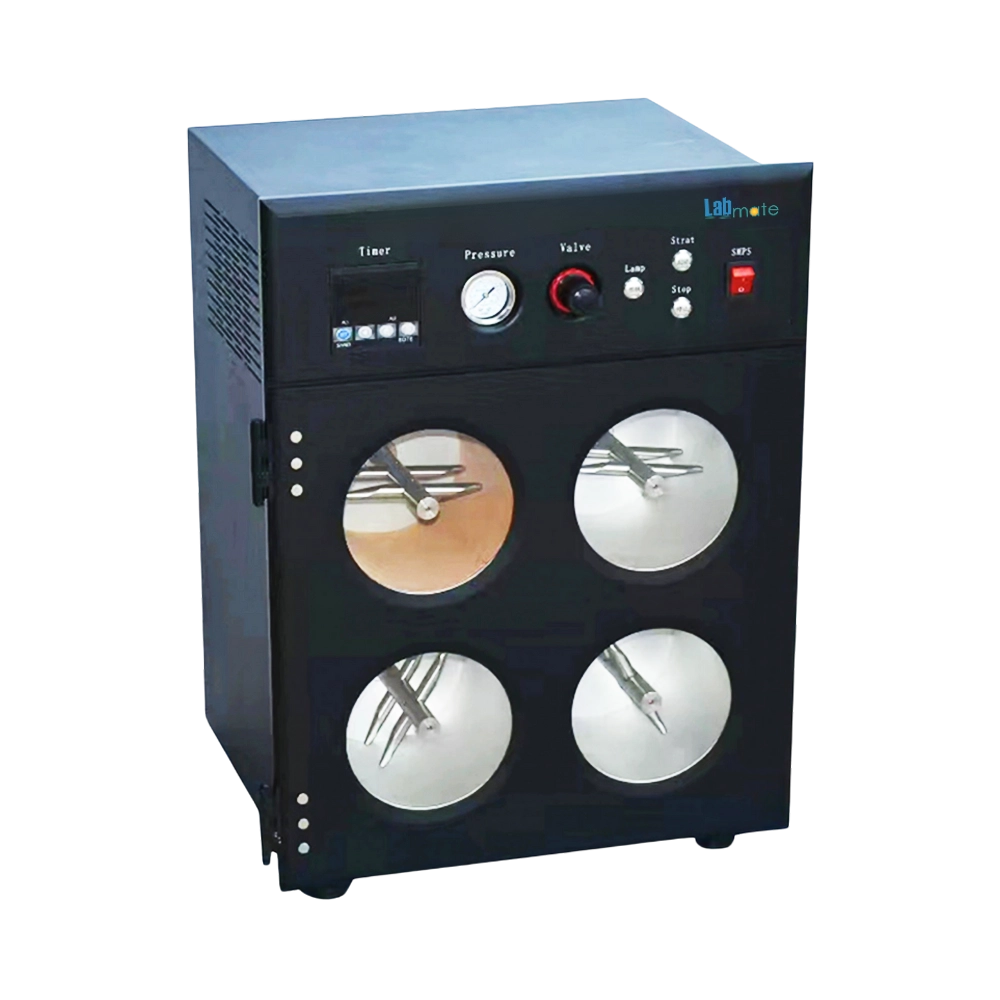
Pilling Tester LMPLL-D100 offers 2 working surfaces for efficient comparative analysis. Operates at reciprocating speed of 60 cycles per minute along circular motion path. Designed to simulate surface wear through controlled fabric-to-brush friction. Features wide specimen area and adjustable brush height for flexible testing. Our lightweight yet durable Pilling Tester ensures energy-efficient performance.
Specifications
| Working Surface | 2 |
| Test Speed | 60 times/min |
| Movement Track | Φ40mm±1mm, circular track |
| Counting Range | 1 to 999900 times |
| Brush Height | 2 to 10mm |
| Specimen Diameter | 112.8mm |
| Specimen Area | 100cm² |
| Dimension | 560×260×360mm |
| Weight | 32 Kg |
Pricing
| Product | Price | Unit | Action |
|---|---|---|---|
| Pilling Tester LMPLL-D100 | $ 3150 | Each of 1 |
Features
Automatic digital counting
User-friendly control panel
Heavy-duty base construction
Corrosion-resistant components
Versatile fabric compatibility
Applications
Pilling Tester LMPLL-D100 is employed to evaluate the pilling resistance of pure, blended, knitted, and woven textiles made from wool and synthetic fibers.
Similar Products

$ 6862.5 / Each of 1

$ 5962.5 / Each of 1

$ 10125 / Each of 1
$ 7262.5 / Each of 1

$ 5962.5 / Each of 1

$ 8200 / Each of 1

$ 6337.5 / Each of 1
Frequently Asked Questions
1 What is a Pilling Tester LMPLL-D100?
A Pilling Tester LMPLL-D100 is an apparatus designed to evaluate the pilling and fuzzing resistance of textile materials.
2 How does Pilling Tester LMPLL-D100 work?
Pilling Tester LMPLL-D100 uses controlled circular motion and brush pressure to mimic textile friction and measure pilling formation.
3 Can Pilling Tester LMPLL-D100 be used for both woven and knitted fabrics?
Pilling Tester LMPLL-D100 is suitable for evaluating pilling resistance on both woven and knitted fabrics under standard testing conditions.
4 Can Pilling Tester LMPLL-D100 be used in garment quality control?
Pilling Tester LMPLL-D100 is widely used in garment manufacturing quality control labs to ensure fabric durability before production.
5 How is Pilling Tester LMPLL-D100 used in research and development?
In R&D labs, Pilling Tester LMPLL-D100 helps compare new fabric treatments or fibers by measuring their resistance to pilling under controlled conditions.
6 Can Pilling Tester LMPLL-D100 test treated or coated textiles?
Pilling Tester LMPLL-D100 is used to evaluate the pilling performance of treated or coated fabrics to assess how finishes impact surface durability.
7 Is Pilling Tester LMPLL-D100 suitable for high-throughput testing in production environments?
Pilling Tester LMPLL-D100 is ideal for high-throughput environments due to its dual-sample design and programmable cycle counter.
8 Is Pilling Tester LMPLL-D100 applicable for automotive textile testing?
Pilling Tester LMPLL-D100 is suitable for testing automotive seat covers and interior fabrics to assess their resistance to wear-induced pilling.
9 Is Pilling Tester LMPLL-D100 effective for comparing different knit structures?
Pilling Tester LMPLL-D100 is widely used to test how different knit structures like single jersey, interlock, or rib resist pilling under wear conditions.
10 Can Pilling Tester LMPLL-D100 be used to evaluate eco-friendly fabrics?
Pilling Tester LMPLL-D100 is suitable for testing eco-friendly fabrics such as bamboo, hemp, or organic cotton to assess their surface durability and pilling resistance.
11 What is a Pilling Tester?
A Pilling Tester is an apparatus designed to assess the resistance of textiles and fabrics to pilling, which is the formation of small fiber balls on the fabric surface.
12 How does a Pilling Tester work?
It simulates wear by rubbing fabric samples together under controlled conditions to evaluate how quickly pilling occurs and to what extent.
13 Why is Pilling Tester important in the textile industry?
It is important in the textile industry because it helps manufacturers determine fabric durability and quality.
14 Can Pilling Tester be integrated into sustainable textile practices?
It is integrated into sustainable textile practices by helping manufacturers select longer-lasting materials, reducing waste and the need for frequent replacements.
15 How is Pilling Tester used in textile research labs?
In textile research labs, it is used to conduct controlled studies on new fiber blends, surface finishes, and manufacturing processes to analyze their resistance to pilling.
16 Can Pilling Tester simulate long-term wear in a short time?
It is designed to simulate long-term wear in a controlled, accelerated manner, allowing manufacturers to predict how a fabric will perform over months or years of usage.
17 How is Pilling Tester used in the automotive industry?
It is used in the automotive industry to test seat covers, headliners, and other textile interiors for resistance to pilling caused by repeated contact and friction.
18 How does Pilling Tester impact the lifecycle assessment of fabrics?
It impacts the lifecycle assessment of fabrics by identifying materials that maintain integrity and appearance longer, contributing to more sustainable and long-lasting textile products.
19 Is Pilling Tester relevant for testing recycled or eco-friendly fabrics?
It is very relevant for testing recycled or eco-friendly fabrics, helping ensure that sustainable materials also meet performance expectations in terms of surface wear and longevity.
20 Can educational institutions use Pilling Tester in textile programs?
Educational institutions use Pilling Tester in textile and fashion programs to teach students about fabric performance testing, quality control procedures, and real-world industry standards.