
Get Quote
Contact us now to receive a detailed quotation.
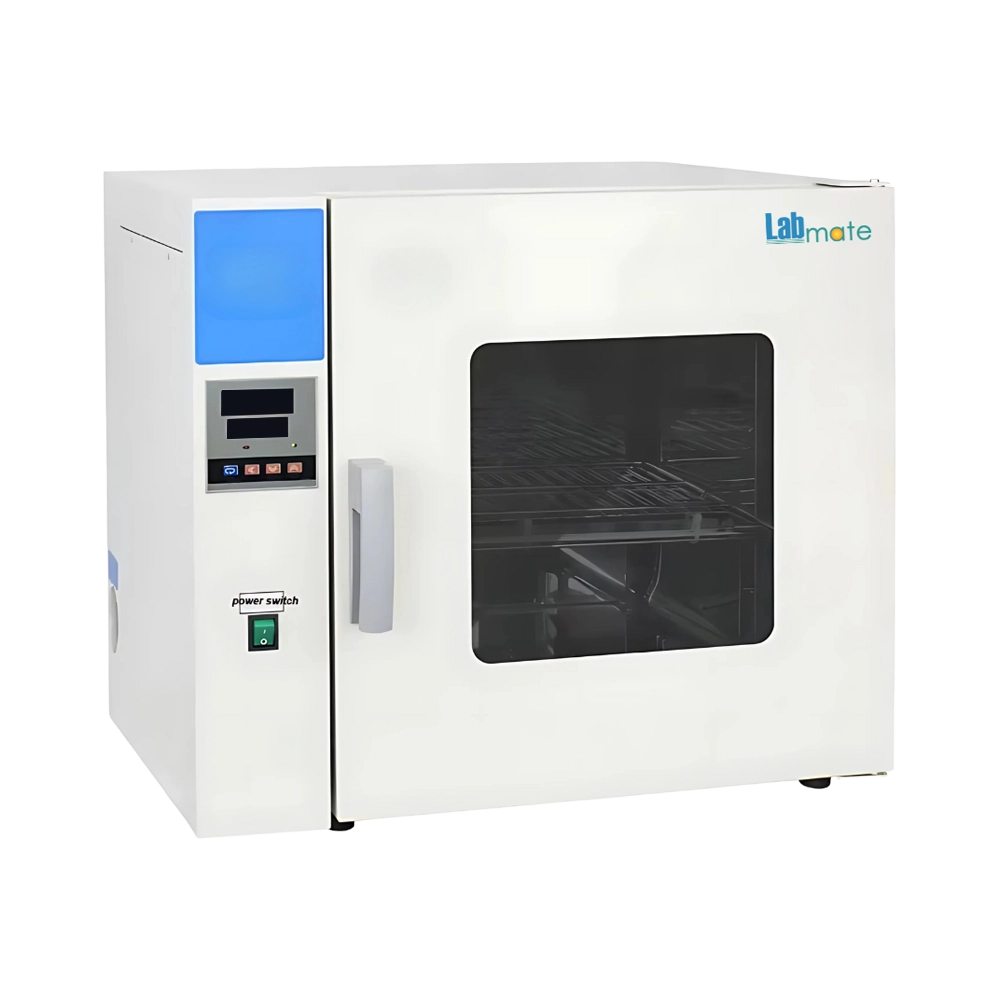
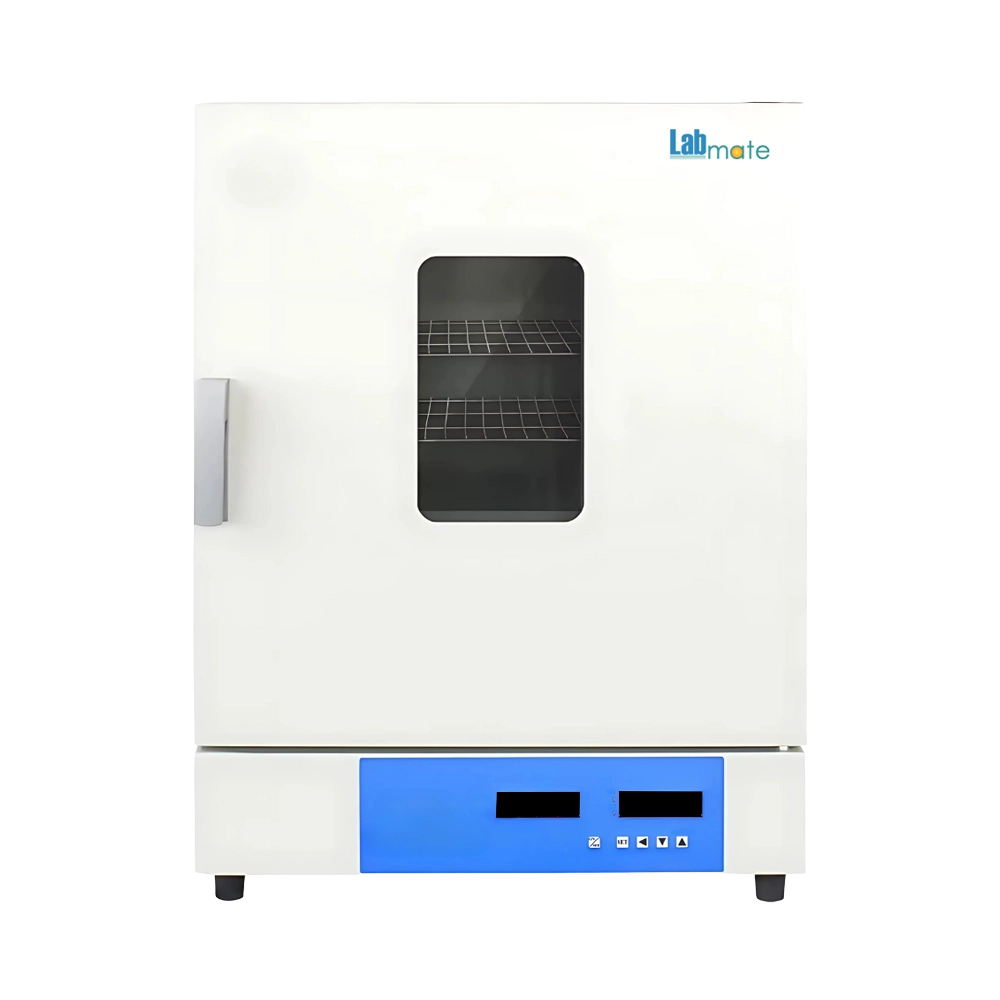
The Natural Convection Oven boasts a comprehensive set of programmable functions and safety enhancements for improved operability. Its temperature control spans from a precise ±5°C in ambient conditions to a maximum of 200°C, and the integrated timer can be set anywhere from a brief one minute to an extensive 103 hours and 59 minutes. Powered by a PID controller, this oven ensures rapid, precise, and uniform heat distribution. With a versatile capacity range, it is available in 49 L, 91 L, 150 L, 250 L, and 972 L variants to accommodate various needs. Notably, it features a front-facing window made of triple-paned safety glass, enhancing implosion protection. This design not only facilitates monitoring but also underscores safety in the laboratory environment, making it an ideal choice for a wide range of applications.

$ 1950 / Each of 1

$ 2075 / Each of 1
$ 2162.5 / Each of 1

$ 2362.5 / Each of 1

$ 2625 / Each of 1

$ 2325 / Each of 1

$ 2462.5 / Each of 1

$ 2762.5 / Each of 1
$ 3550 / Each of 1

$ 4075 / Each of 1
Frequently Asked Questions
1 Can Natural Convection Oven be used for drying filter papers or membranes?
It is ideal for drying filter papers or membranes as it provides gentle airflow that prevents disruption or curling of delicate materials.
2 Is Natural Convection Oven suitable for stability testing of materials?
It is suitable for stability testing, especially when slow, consistent heating is required to observe the long-term effects of temperature on physical or chemical properties.
3 Can Natural Convection Oven be used in pharmaceutical labs for product stability testing?
It can be used in pharmaceutical labs for product stability testing at controlled temperatures.
4 Can Natural Convection Oven be used in forensics labs for drying evidence?
It is used in forensic labs for drying trace evidence like cloth, paper, or soil under controlled conditions without risking contamination.
5 What is a Natural Convection Oven?
A Natural Convection Oven is an apparatus designed to use natural air circulation to maintain uniform temperature for drying, curing, or heat treatment of samples.
6 How does a Natural Convection Oven work?
It operates by relying on the natural rise and fall of heated air to distribute temperature throughout the chamber, making it ideal for gentle and uniform heating in lab experiments.
7 Can Natural Convection Oven be used for drying laboratory glassware?
It is commonly used in laboratories for drying glassware because it provides gentle, uniform heat without disturbing lightweight items with airflow.
8 Can Natural Convection Oven be used for thermal aging studies?
It is well-suited for thermal aging studies where prolonged exposure to consistent heat is required to simulate long-term material degradation.
9 Is Natural Convection Oven useful for removing moisture from soil or environmental samples?
It is commonly used for drying soil and environmental samples to determine moisture content without aggressive airflow that could disturb fine particles.
10 Can Natural Convection Oven be used for evaporating solvents from chemical solutions?
It is used to evaporate solvents from non-flammable chemical solutions, though caution is needed with volatile or flammable solvents due to the lack of ventilation.