
Get Quote
Contact us now to receive a detailed quotation.
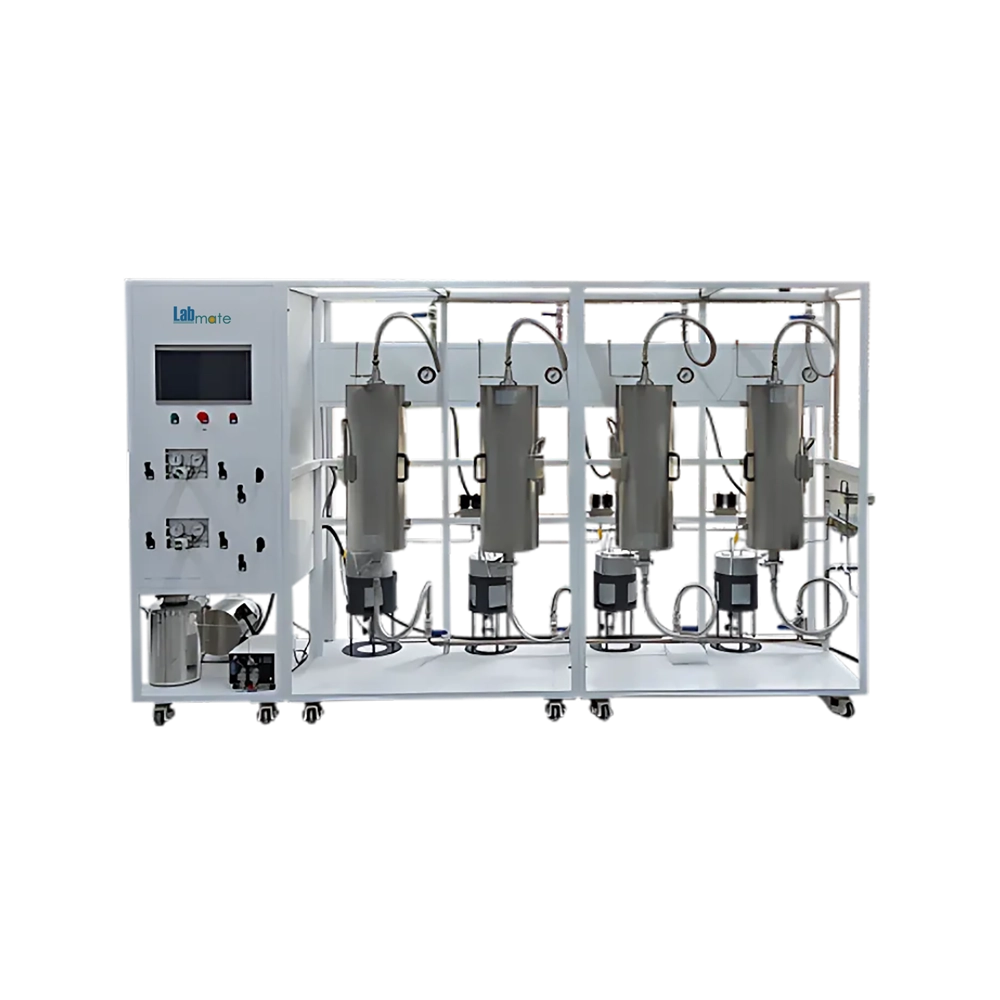
Multi-tube Fixed Bed Reactor LMMFR-A100 offers 1 to 12 reaction channels for efficient reactive screening. It features a versatile catalytic medium compatible with various materials. Equipped with advanced separation technology ensures efficient gas-solid and gas-liquid separation, enhancing product purity. Integrated safety mechanisms provide over-pressure and over-temperature protection for reliable operation. Our Multi-tube Fixed Bed Reactor is ideal for chemical, petrochemical, and pharmaceutical industrial processes.
Specifications
| Reaction Channels | 1 to12 |
| Maximum Operating Temperature | 800℃ |
| Maximum Operating Pressure | 10 MPa |
| Gas Isolation Flow Rate | 2 to 10 L/min |
| Liquid Flow Rate | 1 to 4 mL/min |
| Feed Distribution Error | 1% |
| Catalyst Loading | 0.5 to 200 ml |
| Ground resistance | < 4Ω |
| Reaction Tube Inner Diameter | 10 to 60 mm |
| Catalytic Bed Height | 10 to 500 mm |
Pricing
| Product | Price | Unit | Action |
|---|---|---|---|
| Multi-tube Fixed Bed Reactor LMMFR-A100 |
Features
High-temperature alloys
Feed Pretreatment
Syringe and plunger pumps
Cyclone separator
Multi-mode sampling
GC/MS/IR analysis
Applications
Multi-tube Fixed Bed Reactor LMMFR-A100 is engineered for catalyst screening, hydrocarbon reforming, flow synthesis of pharmaceutical intermediates, gas purification and renewable energy research.
Frequently Asked Questions
1 What is a Multi-Tube Fixed Bed Reactor?
A Multi-Tube Fixed Bed Reactor is a type of chemical reactor with multiple catalyst-filled tubes used for efficient heat management in catalytic reactions.
2 Why is a Multi-Tube Fixed Bed Reactor ideal for ammonia synthesis?
It is ideal for ammonia synthesis because it efficiently manages the large exothermic heat release while maintaining optimal catalyst performance.
3 How is Multi-Tube Fixed Bed Reactor applied in petrochemical refining?
In petrochemical refining, it is used for hydroprocessing and alkylation reactions that require stable temperature profiles and long catalyst life.
4 How is Multi-Tube Fixed Bed Reactor used in environmental applications?
It is used in environmental applications, where it facilitates catalytic conversion of pollutants under controlled conditions.
5 How does Multi-Tube Fixed Bed Reactor benefit fine chemical manufacturing?
It benefits fine chemical manufacturing by enabling continuous, selective catalytic reactions with high purity outputs.
6 What makes Multi-Tube Fixed Bed Reactor suitable for gas-phase reactions?
It is suitable for gas-phase reactions due to its uniform heat distribution and ability to handle high-throughput continuous processes.
7 How does Multi-Tube Fixed Bed Reactor contribute to energy-efficient chemical production?
It contributes to energy-efficient chemical production by allowing precise thermal regulation and catalyst optimization, reducing waste and energy losses.
8 How is Multi-Tube Fixed Bed Reactor used in ethylene oxide production?
It is used in ethylene oxide production by catalyzing the partial oxidation of ethylene, where the reactor’s design ensures precise heat control and high selectivity.
9 How does Multi-Tube Fixed Bed Reactor support renewable diesel production?
It supports renewable diesel production by catalytically hydrodeoxygenating vegetable oils and fats at high temperatures and pressures.
10 How does Multi-Tube Fixed Bed Reactor facilitate aromatics production?
It facilitates aromatics production, such as benzene or toluene, by supporting catalytic reforming reactions under thermally stable conditions.