

Get Quote
Contact us now to receive a detailed quotation.
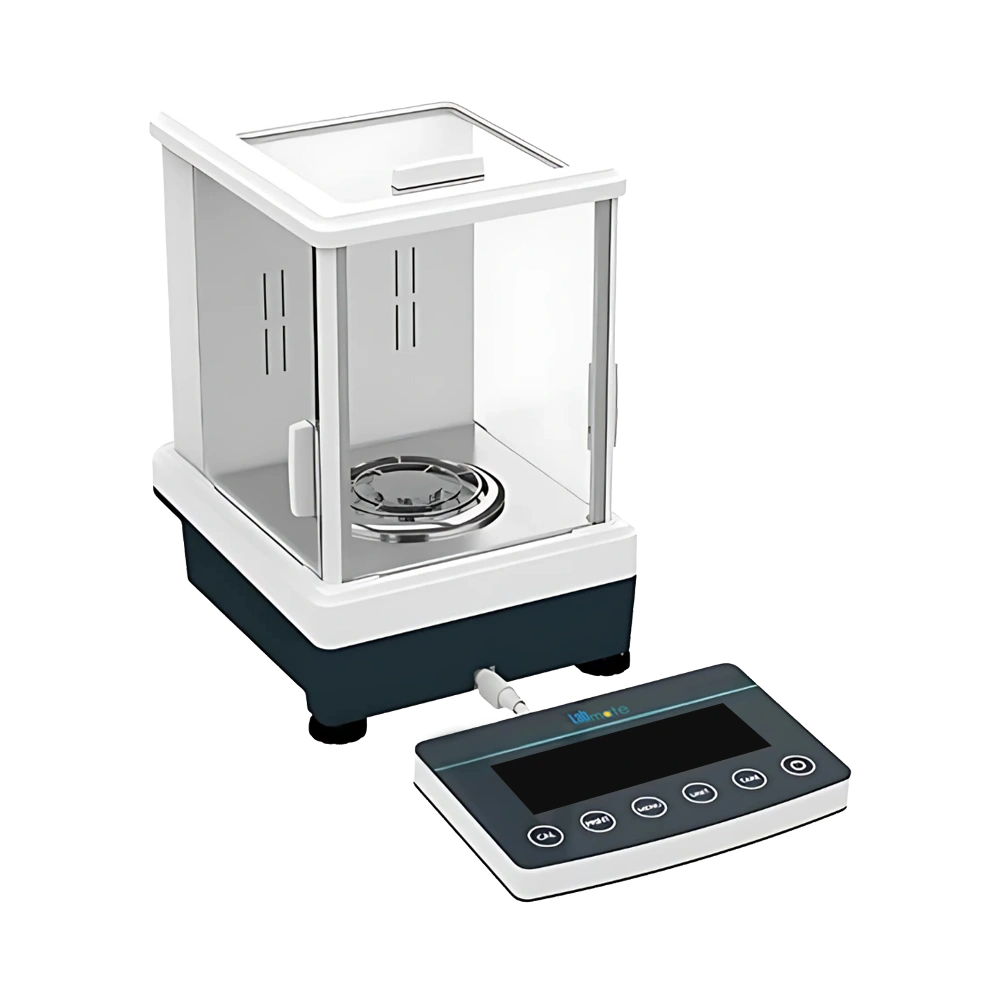
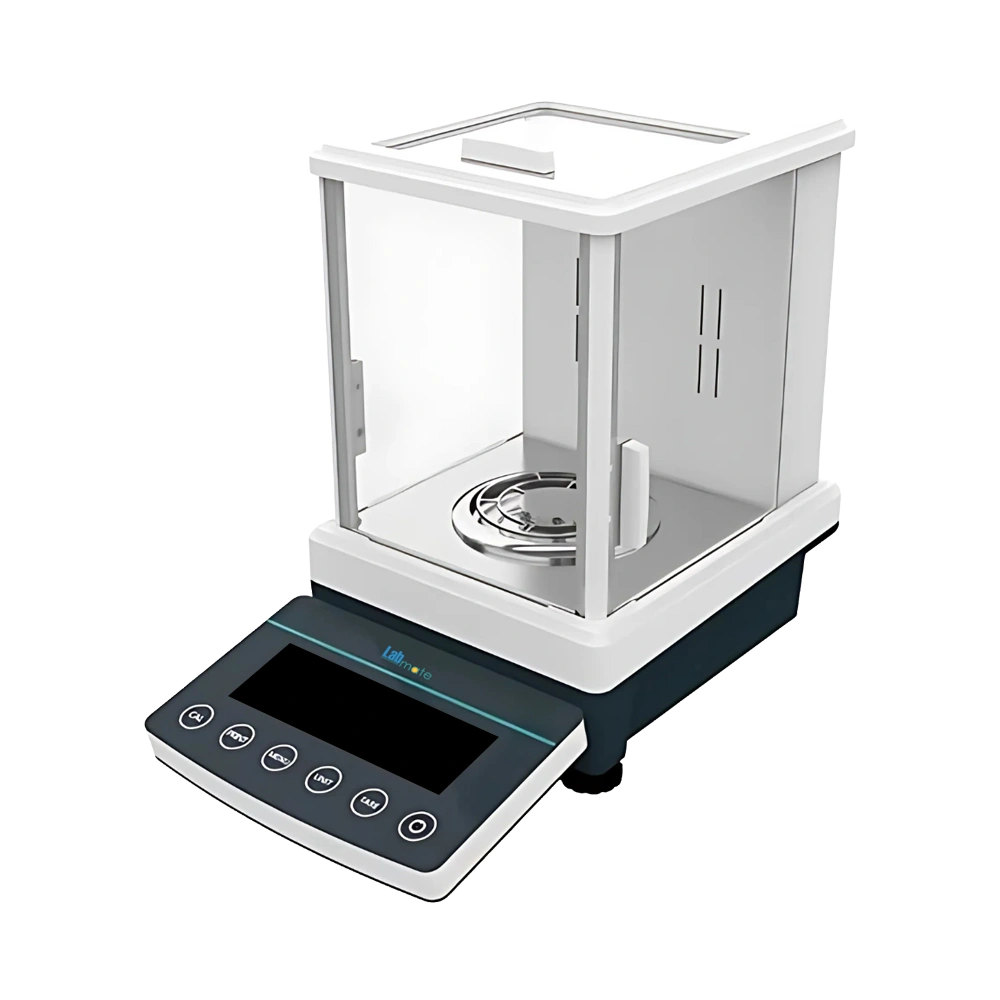
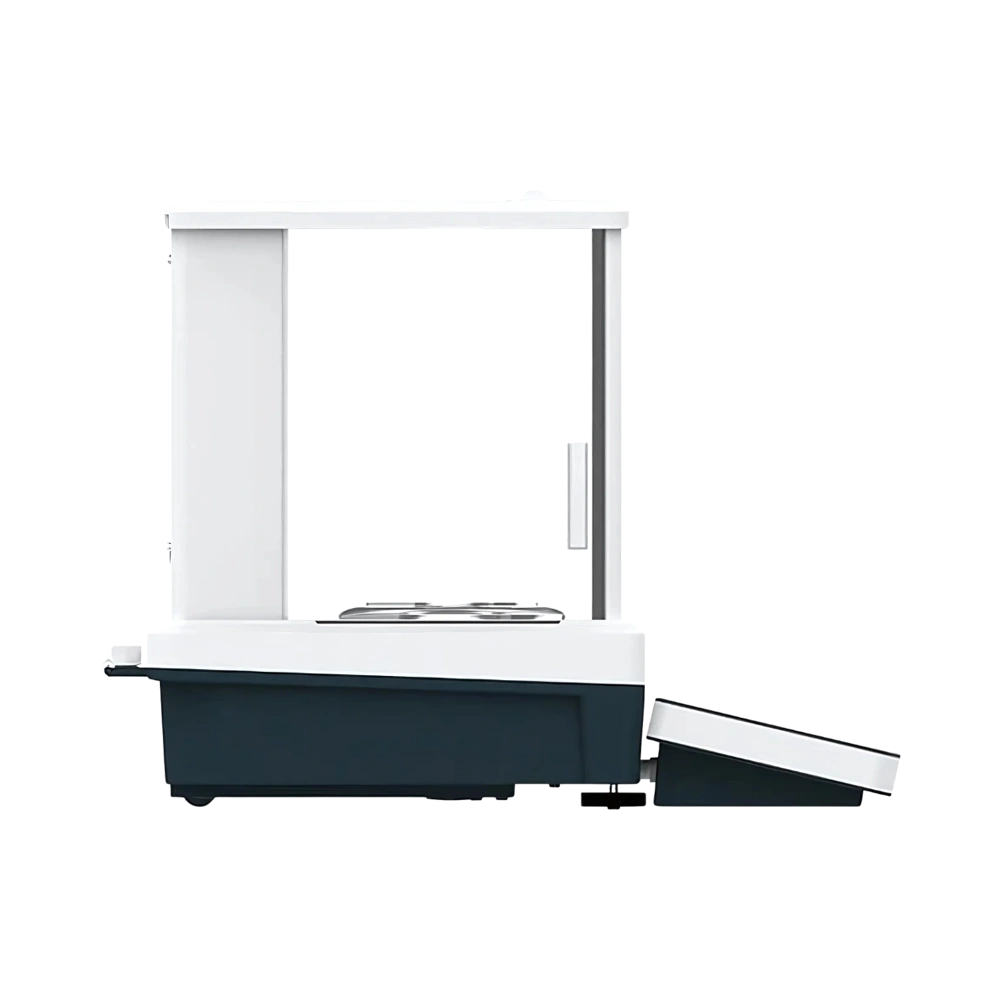
Dual Range Analytical Balance LMBAD-B200 offers dual weighing capacities of 120g and 31g. It supports measurement in grams, ounces, carats and milligrams for versatile purpose. Equipped with RS232 and USB interfaces for seamless data transfer and device connectivity. Built with an external calibration system for consistent performance. Our analytical balances provide consistent operation with a working duration between 30 and 60 minutes.
Specifications
| Capacity | 120g / 31g |
| Readability | 0.1mg / 0.01mg |
| Calibration | External |
| Repeatability | ±0.1mg / ±0.03mg |
| Pan Size | 90 mm |
| Accuracy | 0.1mg / 0.01mg |
| Linearity | ±0.2mg / ±0.03mg |
| Weighing Units | Gram, carat, pound, ounce, newton |
| Stability Time | 2 to 3 seconds |
| Working Time | 30 to 60min |
| Communication Interface | RS232, USB |
| Dimension | 273× 210× 310 mm |
| Weight | 10 kg |
Pricing
| Product | Price | Unit | Action |
|---|---|---|---|
| Dual Range Analytical Balance LMBAD-B200 | $ 3462.5 | Each of 1 |
Features
Fast Stability Time
Robust Pan Size
Ergonomic Design
Compact and Portable
Clear Level Indicator
Standard Accessories
Power cable
Weighing pan
Applications
Dual Range Analytical Balance LMBAD-B200 is essential for weighing chemicals, powders, and active pharmaceutical ingredients (APIs) in pharmaceutical research.
Similar Products

$ 3675 / Each of 1

$ 3900 / Each of 1
Frequently Asked Questions
1 What is a Dual Range Analytical Balance?
A Dual Range Analytical Balance is a precision weighing instrument that provides two different readability ranges, allowing for both fine and coarse measurements with high accuracy.
2 Can Dual Range Analytical Balance be used for weighing micro-doses in pharmaceutical applications?
It is ideal for pharmaceutical micro-dosing, as it provides high sensitivity for low-weight measurements while still accommodating heavier compounds in its upper range.
3 How is Dual Range Analytical Balance useful in chemical formulation processes?
In chemical formulation, it allows accurate measurement of both minute ingredients and larger bulk components within the same weighing session.
4 Can Dual Range Analytical Balance be integrated into quality control workflow?
It is widely used in quality control to verify product consistency by accurately weighing samples of varying sizes with dual precision.
5 Is Dual Range Analytical Balance suitable for environmental testing labs?
It is suitable for environmental testing where precise weighing of small particulate matter or chemical residues is required alongside standard sample masses.
6 How does Dual Range Analytical Balance benefit research and development in materials science?
In materials science R&D, it supports precise weighing of nano-scale samples and larger raw materials, ensuring accuracy throughout the experimental process.
7 Can Dual Range Analytical Balance handle weighing tasks in food testing labs?
It is valuable in food testing labs where both trace nutrient additives and bulk ingredients need to be measured accurately in food composition analysis.
8 What role does Dual Range Analytical Balance play in forensic analysis?
In forensic labs, it helps accurately weigh both trace evidence and larger exhibits, maintaining evidentiary integrity across sample sizes.
9 Is Dual Range Analytical Balance useful in petrochemical analysis?
It is useful in petrochemical labs where both minute catalyst weights and larger sample residues need to be measured during analysis and synthesis.
10 Can Dual Range Analytical Balance be used in pesticide residue testing?
It allows for the detection and quantification of pesticide residues at microgram levels, which is critical for compliance with safety regulations.