Get Quote
Contact us now to receive a detailed quotation.
Overview
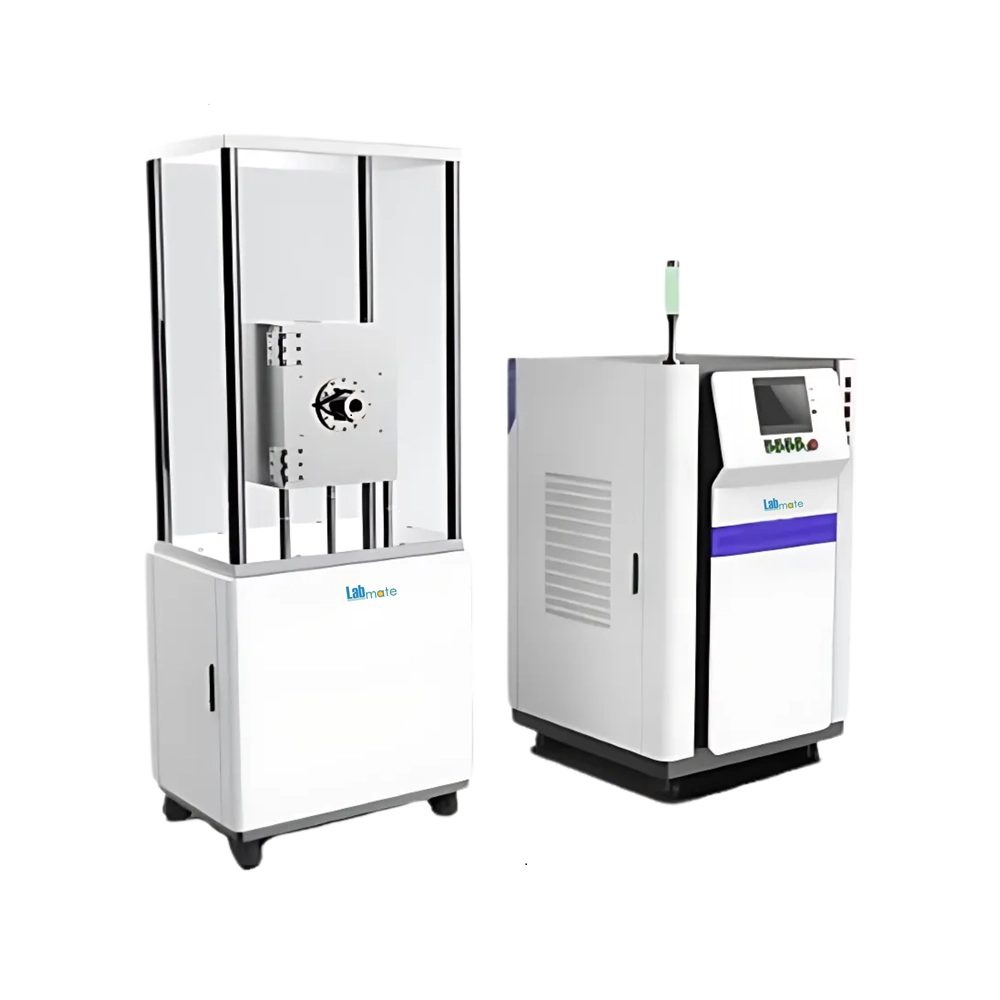
High Temperature Joule Heating Device LMJHD-A102 achieves rapid processing with ≥2000℃/min heating and 10T pressure. It reduces processing time and ensures high-density material formation with strong particle bonding. A dual cooling mechanism maintains thermal stability, preventing overheating during prolonged operation. Built with durable stainless steel and heat-resistant materials, it ensures longevity and safety. Our High Temperature Joule Heating Device is well-suited for metallurgy, and advanced composite sintering.
Features :
Advanced PID Control
Double-Probe Sensor
Quartz Observation Window
Graphite Mold
Specifications :
| Temperature | ≤2200℃ |
| Pressure | ≤10T |
| Maximum Pressure | 100 MPa |
| Vacuum Pump | VRD-30 |
| Cold Max Vacuum | 6×10⁻³ Pa |
| Accuracy | ±1%FS |
| Sample Diameter | 20 to 50 mm |
| Sample Thickness | ≤10 mm |
| Maximum Sample Mold Size | φ 40×10 mm |
| Power supply | 30/60KW |
| Chamber dimension | 400×430×500 mm |
| Dimensions (L×W×H) | 1400×2400×1350 mm |
Applications :
High Temperature Joule Heating Device LMJHD-A102 is suitable for materials research, metallurgy, and advanced ceramics for high-density material formation. It is essential for semiconductor development, composite material fabrication, and high-temperature component testing.
Selection Guide :
High Temperature Joule Heating Device LMJHD-A102 is designed for extreme thermal processing applications, providing accurate control and rapid heating for advanced materials research. With a maximum operating temperature of ≤2200℃ and pressure capability up to 100 MPa, this system is well-suited for high-temperature, high-pressure synthesis and sintering experiments, such as in material science, nanotechnology, and advanced ceramics. The device supports a vacuum environment of ≤10T and is equipped with a VRD-30 vacuum pump for maintaining stable, low-pressure conditions. Customers should consider this research model that demands both thermal and mechanical stress testing. Certifications relevant to lab-grade heating equipment and pressure safety standards further ensure reliability. When selecting this device, users should match their experimental needs with these specifications and verify compatibility with sample size, heating rates, and pressure vessel requirements.