

Get Quote
Contact us now to receive a detailed quotation.
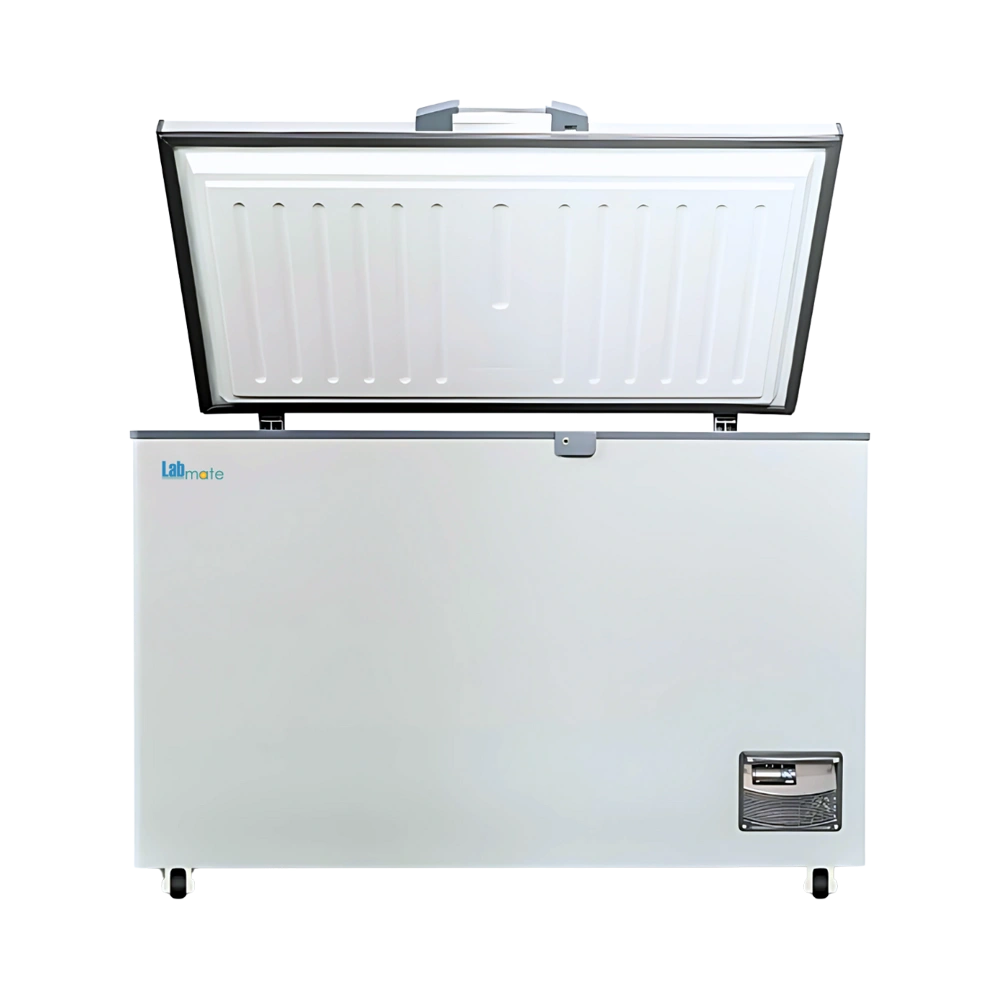
-60℃ Low Temperature Freezer LMLTF-A103 offers 170L capacity tailored for cold storage of sensitive samples. Designed with direct cooling technique, it ensures even temperature circulation. Features microprocessor-based control system to maintain consistent internal conditions. Insulated with CFC-free polyurethane foam, it reduces energy usage by limiting heat exchange. Our Freezer incorporates user-friendly LED interface for continuous monitoring and effortless control.
Specifications
| Capacity | 170L |
| Cooling Performance | -60℃ |
| Temperature Range | -30 to -60℃ |
| Climate Class | N |
| Cabinet Type | Chest |
| Cooling Type | Direct cooling |
| Defrost Mode | Manual |
| Refrigerant | CFC-free |
| Controller | Microprocessor |
| Internal Material | PCM |
| External Material | Galvanized steel powder coating |
| Insulation | CFC-free polyurethane foam |
| Basket | 2 |
| Display | LED |
| Power Consumption | 210W |
| Interior Dimension (W×D×H) | 750×410×625mm |
| Exterior Dimension (W×D×H) | 940×705×865mm |
| Package Dimension (W×D×H) | 1000×745×940mm |
| Net Weight | 70kg |
| Gross Weight | 82kg |
Pricing
| Product | Price | Unit | Action |
|---|---|---|---|
| -60℃ Low Temperature Freezer LMLTF-A103 | $ 3100 | Each of 1 |
Features
Manual defrost mode
Sensor error alert
Galvanized steel powder coating
Multiple malfunction alarms
Power on delay function
Heavy-duty casters
Safety door lock
Applications
-60℃ Low Temperature Freezer LMLTF-A103 is employed in research institutes, clinical facilities, and laboratories for storing vaccines, pharmaceuticals, blood components, cells, and other biological materials.
Similar Products

$ 2525 / Each of 1

$ 3325 / Each of 1

$ 3200 / Each of 1

$ 3687.5 / Each of 1

$ 3487.5 / Each of 1

$ 3362.5 / Each of 1
Frequently Asked Questions
1 What is a -60°C Low Temperature Freezer?
A -60°C Low Temperature Freezer is an apparatus designed to store biological samples, pharmaceuticals, vaccines, enzymes, and other materials that require ultra-low temperatures for preservation.
2 How does -60°C Low Temperature freezer work?
It works by using a powerful refrigeration system to achieve and maintain ultra-low temperatures for preserving sensitive materials.
3 What kind of maintenance does -60°C Low Temperature Freezer require?
Routine maintenance includes regular cleaning, checking temperature monitoring systems, defrosting, and ensuring that the door seals are intact.
4 How is -60°C Low Temperature freezer used in research labs?
It is used to store biological specimens, tissue samples, and reagents for experiments that require preservation at ultra-low temperatures to prevent degradation.
5 Is -60°C Low Temperature Freezer used in the pharmaceutical industry?
It is used in the pharmaceutical industry to store vaccines, biologics, and other sensitive drugs that require ultra-low storage conditions to maintain stability and efficacy.
6 Can -60°C Low Temperature Freezer be used for storing forensic samples?
It is used to store DNA samples, blood, and tissue specimens for long-term preservation and analysis in criminal investigations.
7 Is -60°C Low Temperature Freezer used in clinical trials?
It is used to store trial materials, biological samples, and medications that need to be preserved under controlled low-temperature conditions to ensure integrity during the trial period.
8 Is -60°C Low Temperature Freezer used in genetic research?
It is commonly used in genetic research for preserving DNA, RNA, and other genetic materials that require ultra-low temperatures to prevent degradation and ensure accurate analysis.
9 How does -60°C Low Temperature Freezer aid in the preservation of cell cultures?
It is used in cell culture labs to store frozen cell lines, which can be thawed and used for research or production at a later time without compromising cell viability.
10 Can -60°C Low Temperature Freezer store materials for space research?
It is used in space research to store biological and chemical samples that are subjected to extreme temperature conditions during space missions.