

Get Quote
Contact us now to receive a detailed quotation.
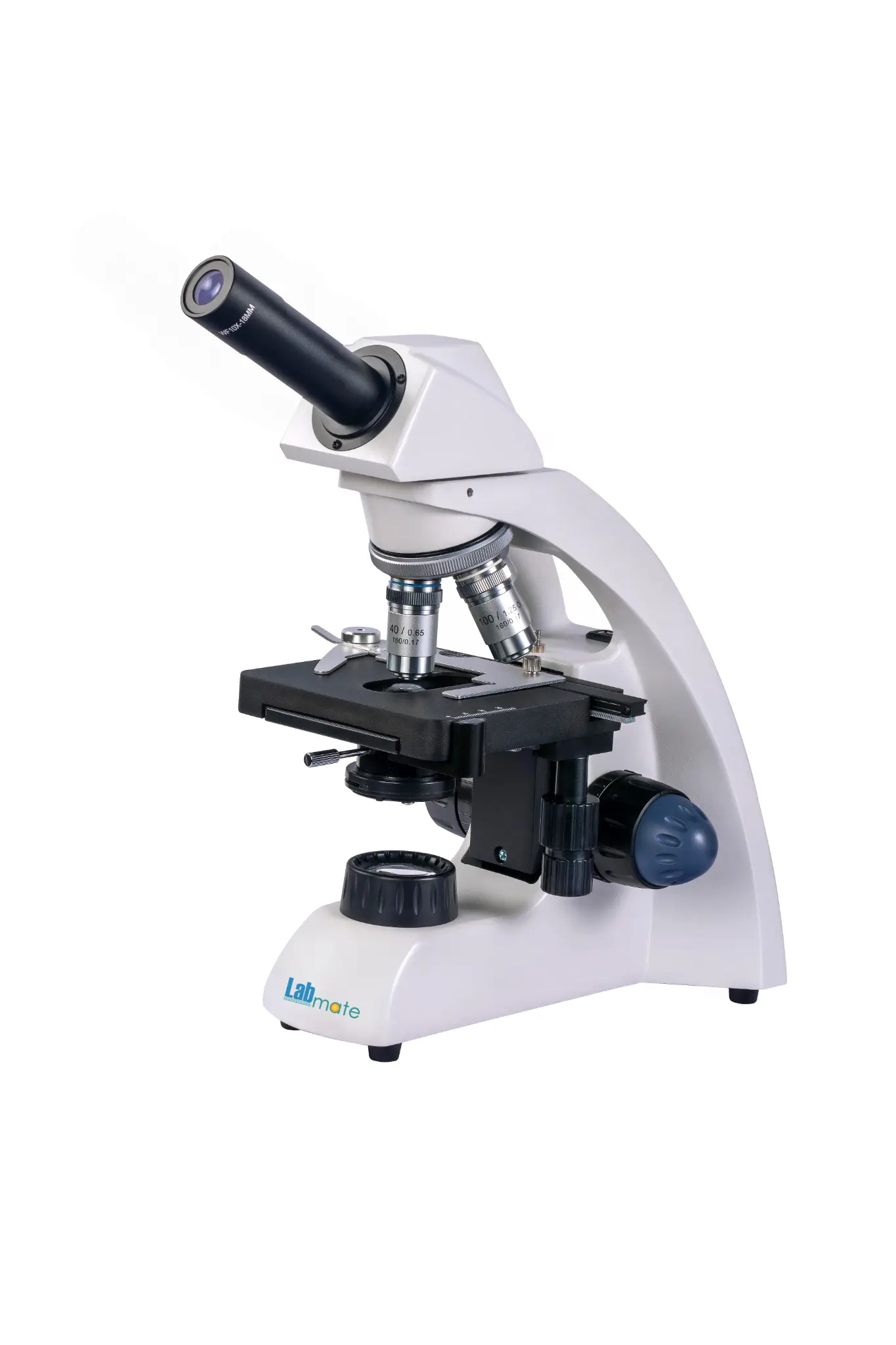
Biological Microscope LMBM-403 is designed for specimen examination in pathology, microbiology, clinical diagnostics, and medical research. Its plan achromatic optical system, bright-field observation, and 4X, 10X, and 40X objectives support routine microscopic analysis. A 9-inch HD monitor with built-in camera enables image capture and viewing, while the double-layer mechanical stage provides secure specimen placement.
Specifications
| View Tube | Monocular, 30° inclined |
| Diopter Adjustment | ± 5 diopters |
| Eyepiece | WF10X/18 mm |
| Nosepiece | Three-position |
| Observation Method | Bright field |
| Stage | Double Layer Mechanical Stage: 110×120 mm/60×30 mm |
| Objective | Plan Achromatic 4X, 10X, 40X |
| Optical System | Plan achromatic optical system |
| Condenser | Abbe NA1.25 |
| Illumination | 1W LED |
| LCD Panel | 9-inch HD LCD monitor |
Pricing
| Product | Price | Unit | Action |
|---|---|---|---|
| Biological Microscope LMBM-403 | $ 1825 | Each of 1 |
Features
Coarse focusing knob
Fine focusing knob
Corrosion-resistant body
Interpupillary distance adjustment
Pixel-level magnification
Movable specimen recording
Optional Accessories
Digital Camera
Applications
Biological Microscope LMBM-403 supports live blood cell analysis in medical research, and is ideal for pathology studies, microbiological analysis, and clinical diagnostics.
Similar Products

$ 1887.5 / Each of 1

$ 1900 / Each of 1

$ 7525 / Pack of 1

$ 2125 / Each of 1

$ 1937.5 / Each of 1
$ 1625 / Each of 1

$ 2112.5 / Each of 1

$ 2800 / Each of 1

$ 1850 / Each of 1

$ 2737.5 / Each of 1

$ 2650 / Each of 1

$ 3125 / Each of 1

$ 1587.5 / Each of 1

$ 1800 / Each of 1

$ 2775 / Each of 1
Frequently Asked Questions
1 What is a Biological Microscope?
A Biological Microscope is an optical instrument designed for viewing small specimens such as cells, tissues, and microorganisms that are not visible to the naked eye.
2 How does Biological Microscope work?
It works by using a series of lenses to magnify the image of a biological sample, allowing detailed observation of microscopic structures.
3 What specimens can be observed under Biological Microscope?
It is commonly used to observe specimens such as blood cells, bacteria, plant tissues, and animal cells.
4 How should Biological Microscope be maintained?
It should be kept clean, covered when not in use, and regularly calibrated to ensure accurate observation and longevity.
5 How is Biological Microscope used in medical diagnostics?
It is used in medical diagnostics to examine blood smears, tissue biopsies, and bodily fluids for the presence of abnormal cells, bacteria, or parasites.
6 How does Biological Microscope help in microbiology research?
In microbiology research, it allows scientists to study the structure, morphology, and behavior of microorganisms like bacteria and fungi under controlled conditions.
7 How is a Biological Microscope applied in botanical studies?
It is used in botanical studies to observe plant cell structures, stomata, and tissue organization, helping researchers understand plant physiology and development.
8 How does Biological Microscope support pathology labs?
In pathology labs, it is essential for analyzing tissue samples to detect diseases such as cancer, based on cellular abnormalities and histological patterns.
9 Is Biological Microscope useful in forensic investigations?
It is useful in forensic investigations for analyzing biological evidence such as hair, fibers, and bodily fluids to assist in criminal cases.
10 Can Biological Microscope assist in environmental monitoring?
It assists in environmental monitoring by enabling the study of microorganisms in water and soil samples, helping to detect pollution and ecological imbalances.